 +919871148514
 info@memorableindia.com
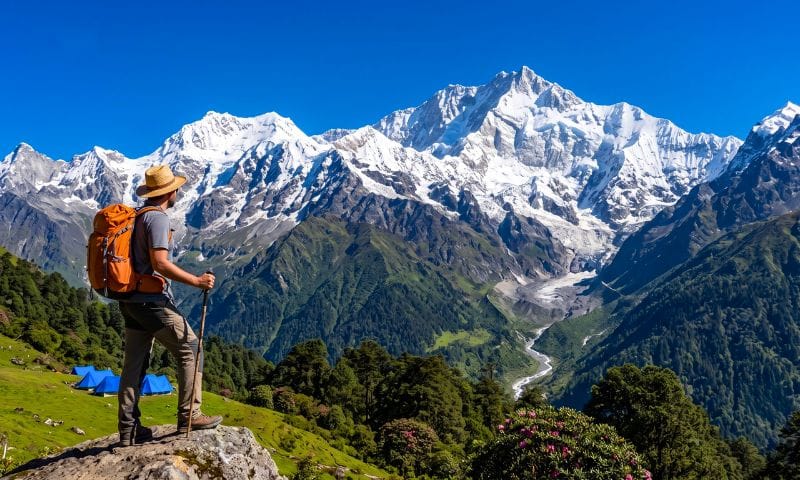
Sikkim is a compact state, but its trekking map is anything but small. The trails here climb from mossy rhododendron forests at 2,000 metres to windswept passes above 4,900 metres, often within the same week. Kanchenjunga, the world’s third highest peak, watches over most of them, and the routes are woven around ancient Buddhist villages, glacial lakes and monastic rest stops that give each expedition a distinct character. This guide lists ten trekking expeditions in Sikkim that consistently reward the effort, from the celebrated Goecha La route to lesser walked trails in the west and north. Alongside each trek, you will find the essentials on difficulty, duration, altitude and the season that suits it best.
Few Indian states pack this much variety into such tight geography. In one expedition you can move through subtropical forest, cross alpine meadows dotted with yaks, camp beside a frozen tarn and stand at a viewpoint that frames five of the world’s highest peaks. The trails fall inside or around Khangchendzonga National Park, a UNESCO World Heritage mixed site, which has kept the ecosystems remarkably intact. Add reliable homestay networks in Yuksom, Uttarey and Lachen, well marked routes maintained by local yak herders, and a permit system that filters crowds, and you understand why serious trekkers keep returning. For a wider view of the region beyond trails, our guide to adventurous things to do in Sikkim is a good companion read.
Two windows dominate. March to late May brings rhododendron blooms, dry trails and moderate temperatures, and it is the season that photographers plan around. October to mid December offers the clearest mountain views of the year, with cold nights but stable weather at high camps. The monsoon months from June to September bring landslides and leeches, and most operators pause work then. Winter treks above 4,000 metres are technical and best avoided unless you are travelling with a specialised expedition team.
The Goecha La trek is the flagship expedition of Sikkim and, for many, the most rewarding trek in India. Beginning at Yuksom in West Sikkim, the trail climbs through Khangchendzonga National Park to a viewpoint at roughly 4,600 metres that opens directly onto the southeast face of Kanchenjunga. Expect eight to ten days on trail, forested camps at Tshoka and Dzongri, and a pre-dawn push to View Point 1. Difficulty is moderate to challenging, and prior high altitude experience helps. The rhododendron corridor between April and May is spectacular, while October gives the sharpest peak views.
If Goecha La feels too long, Dzongri is its shorter, equally scenic cousin. The trek shares the same Yuksom base and passes through the same enchanted forests, but turns back after the Dzongri ridge at around 4,020 metres. Five to six days is the usual duration. The Dzongri Top sunrise, with Kanchenjunga, Pandim and Kabru lined up on the horizon, is worth the early climb. It suits fit first-time high altitude trekkers, families with older teens and travellers short on time who still want a genuine expedition feel.
This is a serious expedition rather than a casual trek. Starting again from Yuksom, the route extends beyond Goecha La towards the moraines below the south face of Kanchenjunga, crossing high pastures and glacial streams. Duration is typically eleven to fourteen days, with camping above 4,500 metres for several nights. Trekkers need strong fitness, acclimatisation and cold weather kit. The reward is a sense of scale that day hikes cannot replicate, with the world’s third highest peak rising directly above camp.
Green Lake sits at the snout of the Zemu Glacier in North Sikkim, framed by the north face of Kanchenjunga. This is one of the most restricted trekking expeditions in Sikkim, requiring special permits routed through the Sikkim Tourism department and an approved operator. The trail begins at Lachen and climbs through Yakthang and Jakthang before reaching Green Lake at around 4,900 metres. Ten to twelve days is standard. It is remote, cold and technically demanding, but experienced trekkers rank it among the finest high altitude walks in the Indian Himalayas.
The Singalila Ridge forms the natural border between Sikkim and Nepal, and the Uttarey approach is the quieter, greener way to walk it. Starting from Uttarey village in West Sikkim, the trail climbs to Chiwabhanjan, then follows the ridge past Phoktey Dara and Dhor before descending. Duration is typically six to seven days at moderate difficulty. Views stretch from Everest and Makalu in the west to Kanchenjunga in the east on clear autumn mornings. Homestays along the route offer warm meals and generous hospitality.
Although often associated with Darjeeling, the Sandakphu Phalut trek can also be joined from the Sikkim side via Uttarey. The route peaks at Sandakphu at 3,636 metres, the highest point in West Bengal, and continues to Phalut where the ridge falls sharply into Sikkim. It is a moderate five to seven day trek, popular in spring for rhododendron blooms and in autumn for the famous view of the Sleeping Buddha, the outline formed by Everest, Lhotse, Makalu and Kanchenjunga. It suits beginners with reasonable fitness.
Varsey, also spelled Barsey, is Sikkim’s gentlest trekking option, and one of the most photogenic in April. The trail begins at Hilley in West Sikkim and reaches the Varsey Rhododendron Sanctuary in a couple of hours, with the option to stay overnight at the trekker’s hut. Elevation stays around 3,050 metres, which makes it accessible to older travellers and families with children. When the rhododendrons flower in shades of pink, crimson and cream between March and mid May, the sanctuary looks unreal.
Tosar Lake sits high above Uttarey at roughly 4,100 metres, on a lesser walked branch of the Singalila ridge system. The trek runs four to five days from Uttarey through Chiwabhanjan and Megu Dara before reaching the glacial lake, which locals consider sacred. Difficulty is moderate, and the trail sees only a fraction of the traffic of Goecha La or Sandakphu. It is a good pick for trekkers who have done a season or two of Himalayan walking and are looking for solitude, alpine views and a compact itinerary.
Phoktey Dara is a short, high-value trek that delivers big mountain views for modest effort. Starting from Uttarey, the trail climbs through oak and rhododendron forest to a ridge at around 3,200 metres, where the eastern Nepal peaks and Kanchenjunga come into view in one long panorama. Two to three days is enough. It works well as an acclimatisation trek before a longer expedition, or as a standalone weekend option for travellers combining trekking with the sacred Khecheopalri Lake and other cultural sites in the district.
Kasturi Odar, sometimes clubbed with the Uttarey to Chiwabhanjan circuit, is a lesser known moderate trek that runs three to four days through the same Singalila foothills. The trail passes through mixed forest before opening onto grazing meadows used by local herders. Elevations stay below 3,500 metres, which keeps altitude sickness at bay and makes it a good introduction to Sikkim trekking. Expect quiet trails, resident birdlife including monals and blood pheasants, and campsites where the only sound at night is the wind on the ridge.
Beginners and families are usually best served by Varsey, Phoktey Dara or Kasturi Odar. Fit first-timers with time in hand should look at Dzongri or the Sandakphu Phalut route. Experienced high altitude trekkers will find Goecha La, Kanchenjunga South Base Camp and Green Lake among the most rewarding trekking expeditions in Sikkim, and arguably in the country. If you would like to combine one of these trails with cultural stops in Gangtok, Pelling and Darjeeling, our Splendor of Eastern Himalaya tour is a strong starting point, and can be tailored around a trekking leg. For a broader menu of Himalayan expeditions across India, browse our trekking tour packages or read our companion piece on things to do in Sikkim to build the rest of the itinerary.
Sikkim rewards trekkers who plan carefully and walk respectfully. The trails are shared with monasteries, yak herders and a fragile alpine ecosystem, and the payoff for treating them well is a mountain experience that stays with you long after the boots come off. To design a trip around any of these ten expeditions, permits included, our team is happy to help. Reach out through the contact us page and a travel specialist will respond within 24 hours with an itinerary shaped to your dates, fitness and travel style.
The Varsey Rhododendron trek and Phoktey Dara trek are the two most beginner friendly options. Both stay below 3,300 metres, take two to three days and offer strong Kanchenjunga views without demanding technical skills or extensive acclimatisation.
March to May and October to mid December are the two prime windows. Spring brings rhododendron blooms and pleasant days, while autumn delivers the clearest mountain views. Avoid the June to September monsoon due to landslides and leeches on forested trails.
Yes. All trekkers need a trekking permit for restricted areas, and foreign nationals additionally require an Inner Line Permit and, for zones such as Goecha La and Green Lake, a Protected Area Permit. Registered operators arrange these along with mandatory guides.
Goecha La is a moderate to challenging trek. It runs eight to ten days, reaches around 4,600 metres and involves long walking days at altitude. Prior experience of a Himalayan trek above 3,500 metres, along with structured pre-trek conditioning, is strongly recommended.
Beginners should build up gradually. Start with Varsey, Phoktey Dara or Kasturi Odar, then progress to Dzongri or Sandakphu. Attempting Goecha La, Kanchenjunga Base Camp or Green Lake without prior altitude experience is not advisable, even with a strong fitness base.
Plan for a minimum of seven days on the ground for a short trek such as Dzongri or Sandakphu, and ten to fifteen days for expeditions like Goecha La, Kanchenjunga Base Camp or Green Lake. Add two extra days at the start and end for travel and buffer against weather delays.
Best Time to Visit Tadoba National Park, Maharashtra: A Season-by-Season Guide
09 Jul 2026
12 Jyotirlingas of Lord Shiva in India and Their Mythological Importance in Hindu Religion
08 Jul 2026
10 Romantic Retreats in Bhutan: The Perfect Honeymoon Spot
07 Jul 2026
10 Most Popular Festivals in Arunachal Pradesh You Should Plan Your Trip Around
06 Jul 2026
10 Most Beautiful Villages in Uttarakhand You Must Visit
05 Jul 2026


