 +919871148514
 info@memorableindia.com
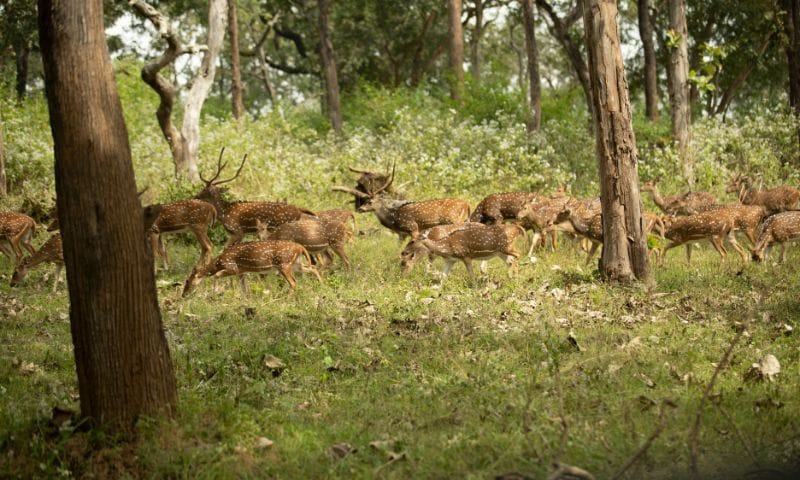
Chhattisgarh rarely features on the typical wildlife tourist’s radar. That distinction tends to go to Madhya Pradesh, Rajasthan, or Karnataka, states with more marketing muscle and more famous parks. Yet tucked into the Mahasamund district, roughly 100 kilometres from the state capital Raipur, sits Barnawapara Wildlife Sanctuary, a 245-square-kilometre stretch of tropical dry deciduous forest that offers one of central India’s most genuine and uncrowded wildlife experiences. Named after the Bar and Nawapara forest villages at its heart, the sanctuary was established in 1976 under the Wildlife Protection Act of 1972 and has since developed into Chhattisgarh’s most visited protected area.
What makes Barnawapara worth the trip is not a single headline species but the overall density and variety of wildlife in a compact, accessible forest. The Indian gaur (wild bison) is the sanctuary’s signature resident, sighted with a reliability that larger parks cannot always match. Leopards, sloth bears, four-horned antelopes, striped hyenas, and over 150 bird species round out an ecosystem that rewards patient visitors. For anyone based in Raipur, Bhilai, Nagpur, or the broader central Indian belt, Barnawapara is a genuinely practical weekend wildlife getaway that does not require a flight, a long drive, or a premium budget.
Barnawapara’s terrain is mostly flat with occasional low hillocks, at altitudes ranging between 265 and 400 metres above sea level. The forest type is tropical dry deciduous, dominated by teak, sal, bamboo, terminalia, mahua, semal, and tendu. During the winter months (November to February), the forest canopy thins enough to improve visibility from safari vehicles, making wildlife sighting probabilities noticeably higher than during the leafier months.
Water bodies within and around the sanctuary play a critical role in wildlife concentration. Small streams, seasonal nullahs, and man-made waterholes draw animals to predictable locations, especially during the drier months between February and May. This is when the sanctuary becomes most rewarding for photographers and first-time safari visitors, as gaur herds, spotted deer, sambar, and nilgai gather near water sources in the open. The Mahanadi river system, which feeds the broader region, supports the forest’s ecological health and maintains groundwater levels that keep the habitat viable through the summer.
The Indian gaur, India’s largest wild bovine, is Barnawapara’s most reliably sighted large mammal. Herds of 10 to 20 individuals are regularly encountered along forest tracks, particularly in the early morning hours. Beyond the gaur, the sanctuary’s mammal list includes leopards (present but elusive, with sightings more likely during summer), sloth bears, four-horned antelopes (chousingha, a species increasingly rare elsewhere in India), striped hyenas, jackals, jungle cats, wild boar, spotted deer (chital), sambar, barking deer, nilgai, flying squirrels, and porcupines. Wild dogs (dholes) have been recorded in the sanctuary, though sightings are infrequent. The forest’s compact size means that game drives cover a meaningful portion of the habitat in a single outing, increasing the chances of encountering multiple species in one safari.
Barnawapara is an underrated birdwatching destination. Over 150 species have been recorded here, including Indian peafowl, racket-tailed drongos, Indian scops owl, white-rumped vultures (a critically endangered species), red-wattled lapwings, woodpeckers, kingfishers, parakeets, and the crow pheasant. The open grasslands and waterhole edges are productive spots for photographing raptors and wading birds, while the denser forest sections shelter smaller passerines. For birdwatchers who have exhausted the more popular birding circuits in Uttarakhand or the Western Ghats, Barnawapara offers a fresh and far less competitive environment. Memorable India’s guide to the best wildlife safaris in India covers several parks that pair well with a Barnawapara visit for an extended Central India wildlife circuit.
The sanctuary’s reptile population includes cobras, Indian pythons, and monitor lizards. While reptile sightings are less predictable than mammal or bird encounters, the rocky terrain and waterhole edges are the areas where they are most commonly spotted, particularly during the warmer months when reptiles bask in open areas.
Safari timings vary by season. During winter (November to February), the morning slot runs from approximately 6:45 AM to 11:00 AM and the afternoon slot from 2:30 PM to 5:30 PM. During summer (March to June), the morning slot shifts to 6:00 AM to 10:30 AM and the afternoon to 3:00 PM to 6:30 PM. Early morning safaris consistently offer the best wildlife sighting probability, as animals are most active during the cooler hours.
Entry fees are INR 55 per person for Indian visitors and INR 200 per person for foreign nationals. A trained forest guide, available for approximately INR 250, is strongly recommended. Gypsy vehicle hire (typically an eight-seater) costs between INR 1,300 and INR 2,800 for a 30-kilometre circuit, depending on the vehicle type and operator. Photography and videography for personal, non-commercial use do not attract additional charges.
The safari experience at Barnawapara is notably different from the more commercialised parks in Rajasthan or Madhya Pradesh. Vehicle density is low, even during peak season, which means the forest feels quieter and the sightings feel more personal. There are 22 trained tourist guides available within the sanctuary, and advance booking through a resort or tour operator is recommended for weekend visits during December and January, when visitor numbers peak.
The sanctuary operates from 1 November to 30 June each year and remains closed during the monsoon months (July to October) to allow the forest to recover and the roads to remain safe.
November to February is the ideal window for most visitors. Temperatures are comfortable (daytime highs of 25°C to 30°C, cooler mornings), the forest is lush from the preceding monsoon, and animal activity is high. December and January draw the most visitors, so midweek visits offer a quieter experience.
March to May is the best period for serious wildlife sightings, especially of leopards and sloth bears. As water sources dry up, animals concentrate around the remaining waterholes, making them easier to locate. The trade-off is heat: daytime temperatures regularly cross 40°C. The early morning safari slot becomes the only comfortable option.
June is the final month before monsoon closure. The forest is at its driest, sightings remain strong, but visitor numbers drop sharply due to the approaching rains. For visitors comfortable with heat, this is the quietest month to visit.
By air: Swami Vivekananda Airport in Raipur is the nearest airport, approximately 85 kilometres from the sanctuary. Raipur is well connected by direct flights from Delhi, Mumbai, Kolkata, Hyderabad, and Bangalore. From the airport, a hired car takes roughly two to two and a half hours.
By rail: Mahasamund Railway Station, about 60 kilometres from the sanctuary, is the nearest railhead. Raipur Junction, a major station on the Mumbai-Howrah mainline, is 100 kilometres away and offers broader connectivity. From either station, road transfer to the sanctuary is straightforward.
By road: The drive from Raipur to Barnawapara via NH 53 and state highways takes approximately two to two and a half hours. The road is well surfaced for most of the route. For visitors coming from Nagpur (roughly 300 km) or Bhilai (roughly 130 km), the sanctuary is reachable within a half-day’s drive. Memorable India’s India travel guide includes practical transport advice for reaching offbeat destinations across the country.
Sirpur is the most significant nearby attraction, located approximately 45 kilometres from the sanctuary. This ancient archaeological site dates back to the 5th to 12th centuries and contains Hindu, Buddhist, and Jain monuments, including the Laxman Temple (one of the finest examples of early brick temple architecture in India), the Anand Prabhu Kuti Vihar (a Buddhist monastery), and excavated ruins that are still being studied. Combining a day at Barnawapara with a half-day at Sirpur creates a nature-plus-heritage itinerary that gives the trip more depth.
Champaran, about 60 kilometres from Raipur, is the birthplace of Saint Vallabhacharya and a pilgrimage site with a modest but historically significant temple complex. For families combining a Barnawapara visit with a broader Chhattisgarh itinerary, destinations across India that pair well with central Indian wildlife trips include Bandhavgarh, Kanha, and Panna in neighbouring Madhya Pradesh.
Accommodation options near Barnawapara are modest compared to the luxury lodge ecosystem around parks like Ranthambore or Bandhavgarh. The Chhattisgarh Tourism Development Corporation operates a forest rest house within the sanctuary, which offers basic but clean rooms with proximity to the forest. Private eco-lodges and resorts in the buffer zone provide slightly more comfortable stays, with some offering guided nature walks and bonfire evenings. For visitors who value eco-friendly accommodation, the simpler properties around Barnawapara naturally align with low-impact travel principles, as the infrastructure here has not been over-built.
Raipur-based visitors also have the option of making Barnawapara a day trip, departing early morning and returning by evening. This works well for a single-safari experience, though an overnight stay allows for both morning and afternoon drives and a significantly better chance of varied sightings.
Wear muted, earth-toned clothing. Bright colours and white fabrics are discouraged inside the sanctuary, as they can startle wildlife. Sturdy, closed-toe shoes are recommended for any walking segments. Carry binoculars (essential for birdwatching) and a camera with a reasonable zoom lens (200mm or above for wildlife photography). Insect repellent is useful, especially during the late afternoon safari slot. Carry your own drinking water and snacks; the sanctuary does have a canteen, but options are limited. Mobile network coverage inside the forest is patchy to nonexistent, so download offline maps and communicate logistics with your driver or guide before entering.
For visitors looking to combine Barnawapara with other wildlife safari destinations in India, the sanctuary pairs logically with Achanakmar Tiger Reserve (250 km north, in Bilaspur district) for a Chhattisgarh-focused wildlife circuit, or with Bandhavgarh National Park in Madhya Pradesh for a cross-state Central India itinerary.
Barnawapara Wildlife Sanctuary is not trying to compete with Ranthambore’s tiger fame or Jim Corbett’s Himalayan setting. What it offers instead is an honest, uncrowded, and affordable wildlife experience in a forest that has not been reshaped by mass tourism. The gaur herds, the quiet forest tracks, the 150-plus bird species, and the genuine sense of being inside a working ecosystem rather than a curated safari park make it a rewarding destination for anyone who values substance over spectacle.
If you are planning a wildlife trip to Central India and want to include an offbeat sanctuary alongside the more established parks, Memorable India’s travel specialists can help design an itinerary that combines Barnawapara with Chhattisgarh’s heritage sites or a broader Central India wildlife circuit covering Bandhavgarh, Kanha, or Ranthambore. Share your travel dates, group size, and interests, and the team will build a plan from scratch.
Barnawapara Wildlife Sanctuary is located in the Mahasamund district of Chhattisgarh, approximately 100 kilometres from Raipur. The drive from Raipur takes roughly two to two and a half hours via NH 53 and state highways. The nearest airport is Swami Vivekananda Airport in Raipur (85 km), and the nearest railway station is Mahasamund (60 km).
The best time to visit is November to February for comfortable weather and lush post-monsoon forest conditions. March to May offers the best wildlife sighting probabilities, as animals gather around shrinking water sources, though temperatures are high. The sanctuary is closed from July to October during the monsoon season.
The Indian gaur (wild bison) is the most reliably sighted large mammal. Other species include leopards, sloth bears, four-horned antelopes, striped hyenas, spotted deer, sambar, nilgai, barking deer, wild boar, jackals, jungle cats, and flying squirrels. Over 150 bird species have been recorded, including critically endangered white-rumped vultures, Indian peafowl, racket-tailed drongos, and kingfishers.
Winter safari timings are approximately 6:45 AM to 11:00 AM and 2:30 PM to 5:30 PM. Summer timings shift to 6:00 AM to 10:30 AM and 3:00 PM to 6:30 PM. Entry fees are INR 55 per person for Indian visitors and INR 200 for foreign nationals. A forest guide costs approximately INR 250, and gypsy vehicle hire ranges from INR 1,300 to INR 2,800 for a 30-kilometre circuit.
Yes, Barnawapara is well suited for families. The compact safari routes, low vehicle density, and high probability of gaur and deer sightings keep children engaged. The flat terrain and short driving distances within the sanctuary make it comfortable for younger visitors. An overnight stay at a nearby eco-lodge adds a bonfire and nature walk component that families typically enjoy.
Yes. Barnawapara pairs well with Sirpur (45 km away, an ancient archaeological site) for a nature-plus-heritage itinerary within Chhattisgarh. For a broader Central India wildlife circuit, it can be combined with Achanakmar Tiger Reserve (250 km north) or with Bandhavgarh and Kanha national parks in neighbouring Madhya Pradesh. Memorable India can design multi-destination itineraries that include Barnawapara as part of a larger wildlife tour.
12 Top Tourist Destinations in Jammu and Kashmir for a Memorable 2026 Trip
13 Oct 2026
12 Tips to Remember Before Holidaying in the Northeast Indian States
11 Oct 2026
10 Things to Do on a Family Vacation in Shimla, Himachal Pradesh
09 Oct 2026
10 Days in India: Where to Go and What to See
05 Oct 2026
10 Best Places in North India for Corporate Outings to Recharge and Build Team Spirit
01 Oct 2026


