 +919871148514
 info@memorableindia.com

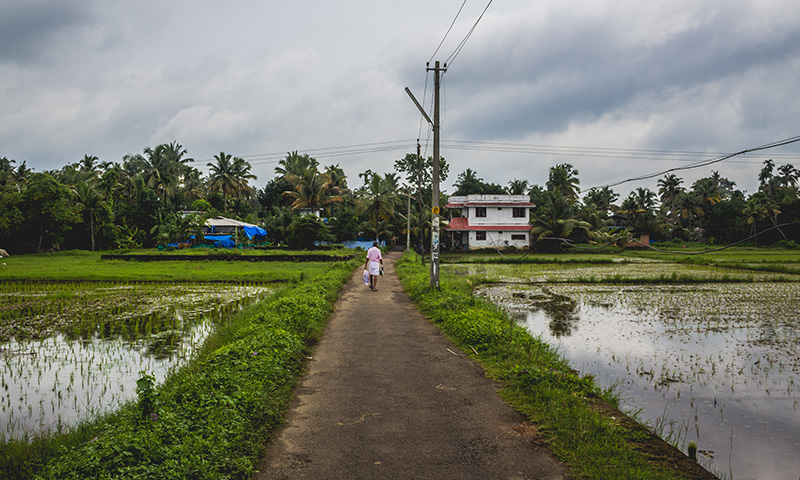
Most first trips to India follow a familiar line: Delhi, Agra, Jaipur, perhaps Varanasi. The forts, palaces and the Taj Mahal deserve every bit of attention they get. Yet the India that most Indians actually live in sits a short drive beyond those city limits, in places where the day starts with cattle bells and ends around a cooking fire.
An Indian village tour takes you into that world for a few hours or a few nights. You meet potters who still shape clay by hand, listen in on a conversation with the village council, eat a meal cooked on a wood stove and watch crafts being made by families who have practised them for generations. It is slower travel, and that is exactly the point.
This guide covers what a village visit involves, which villages are worth the detour, how to fit one into a wider itinerary, and how to travel in a way that leaves the community better off.
In simple terms, it is a guided visit to a rural community where travellers observe and take part in daily life: farming, crafts, cooking, festivals and local governance. Tours range from a half-day walk near a major city to multi-night homestays in remote regions.
Rural India is not a niche. According to the rural-urban figures from the Census of India 2011, about 68.8 percent of Indians lived in rural areas, spread across more than 6.4 lakh villages. Seeing the country without visiting a single village is a bit like judging a restaurant by its lobby.
Most tours include some mix of the following:
City sightseeing shows you what India built. A village shows you how India lives. Here is why so many travellers come home saying the village day was the highlight of their trip:
India has hundreds of thousands of villages, so any list is only a starting point. The six below are well established for visitors, sit close to popular travel circuits, and each shows a clearly different side of rural life.
Rajasthan is the easiest place to begin, because its villages sit close to the Golden Triangle. Sawarda, roughly 60 km from Jaipur, is a working agricultural village where visitors meet elders, teachers and members of the Panchayat, the elected village council. You will see pottery wheels turning, silversmiths and cobblers at work, traditional huts, old temples and small stepwells, with the option of a night in a heritage home. We include this village immersion day in our Delhi, Agra, Jaipur and Sawarda tour package, which suits first-time visitors who want the classic monuments plus one genuine rural day.
Travellers with more time can go deeper. Our 14-day Rajasthan villages tour with the Taj Mahal moves through Osian for a camel safari and a night in a tented camp, Luni for time with metal, clay and wood artisans below Fort Chanwa, and Kalakho in the Aravalli Hills, home to the Meena tribal community.
Best time: October to March, when desert days are warm rather than punishing.
Dhordo sits at the edge of the Great Rann of Kutch, the white salt desert north of Bhuj. The Ministry of Tourism has confirmed that UNWTO selected Dhordo as one of its Best Tourism Villages in 2023, recognising how the community built tourism around its own culture. Expect circular mud houses called bhungas, fine mirror and thread embroidery, and the Rann Utsav festival during the cooler months. Nearby Hodka offers a quieter, community-run alternative.
Best time: November to February. Festival dates shift every year, so confirm them before you book.
Pochampally, an easy day trip from Hyderabad, is often called the silk city of India for its Ikat weaving. Threads are tie-dyed before they go on the loom, so the pattern appears as the fabric is woven, a process that demands remarkable precision. Pochampally appears on the UNWTO Best Tourism Villages 2021 list. Walking past homes with handlooms clacking inside is the clearest lesson you will get in how much skill sits behind a single saree.
Best time: October to February.
Majuli is a river island in the Brahmaputra and the centre of Assam’s Vaishnavite satra culture. Satras are monasteries that keep devotional music, dance and drama alive, and some, such as Samaguri Satra, are known for traditional mask making. The Majuli district administration highlights stilt houses called chang ghar in tribal villages, Assamese and tribal food, and women weaving on handlooms. Most visitors arrive by ferry from Nimati Ghat near Jorhat.
Prefer to see the region at a gentler pace? The M V Mahabaahu Brahmaputra cruise includes Majuli, a Mishing village visit and a Satriya dance performance at Kamalabari Satra, with the comfort of a river cruise between stops.
Best time: November to March. Monsoon floods can disrupt ferries and access.
Roughly 90 km from Shillong, near the Bangladesh border, Mawlynnong is a Khasi village that has been widely described as one of the cleanest villages in Asia for over two decades. Bamboo dustbins line the paths, plastic is discouraged and residents share cleaning duties. A short drive away at Riwai is a living root bridge, formed over many years by guiding the roots of rubber fig trees across a stream.
Best time: October to April for comfortable walking. The monsoon brings heavy rain but very green landscapes.
Around 14 km from Puri, Raghurajpur is a heritage crafts village where almost every home doubles as a studio. Families paint pattachitra, detailed cloth paintings of mythological scenes, alongside palm-leaf engravings and papier mache masks. The village is also closely linked to Gotipua, a traditional dance that shaped Odissi. It pairs naturally with a Puri and Konark trip.
Best time: October to March.
Every village is different, but a well-run day usually follows a pattern like this:
On the practical side, facilities are basic but clean. Heritage homes and tented camps offer attached bathrooms, while simpler homestays may have shared ones. Mobile coverage varies, which is rarely a bad thing.
A good rural experience depends far more on planning than on luck. Here is how to approach it.
Here is how one rural night fits into a classic first trip without adding stress:
The village night sits after the busy city days on purpose. By then, travellers are ready to slow down and tend to get far more out of it.
Village hospitality in India is generous, and a little awareness goes a long way.
Village tourism only works when the village gains from it. The Ministry of Tourism’s National Strategy for Promotion of Rural Homestays positions homestays as a source of local income and community development, and its rural tourism programme runs a Best Tourism Village competition that recognises communities managing visitors well.
For travellers, responsible practice comes down to small choices: keep groups small, pick operators who pay hosts fairly, carry a refillable water bottle, leave no plastic behind and spend on local food and crafts. This is how Memorable India designs its rural experiences, with local guides, family-run stays and a pace that respects daily routines rather than interrupting them.
India’s monuments tell you about its kings and empires. Its villages tell you about everyone else: the farmers, weavers, potters and families who keep the country running. A single day in the countryside can change how you see the rest of your trip.
Not sure which village fits your route? Speak to our India travel specialists and we will shape a village experience around your dates, interests and comfort level, either within an existing package or as a fully custom itinerary.
It is a guided visit to a rural community where you see daily life up close: farming, crafts, home cooking and local customs. It can last half a day or include overnight homestays, and it is usually led by a local guide who handles introductions and translation.
Popular choices include Sawarda and Kalakho in Rajasthan, Dhordo in Kutch, Pochampally in Telangana, Majuli in Assam, Mawlynnong in Meghalaya and Raghurajpur in Odisha. Each offers a different focus, from desert crafts and Ikat weaving to river island monasteries and living root bridges.
A half day is enough for a first taste near a city like Jaipur. One night lets you experience the evening and early morning, which are the most authentic hours. Travellers interested in crafts or slow travel usually spend two to four nights across one or two villages.
Yes, when it is arranged through a reputable operator. Recommended homestays and heritage homes are clean and family-run, with hosts used to welcoming guests. Facilities are simpler than city hotels, so ask in advance about bathrooms, bedding and dietary needs.
October to March suits most regions, with pleasant days and cooler nights. Avoid peak summer in Rajasthan and Gujarat. In the Northeast, plan around the monsoon, because heavy rain and floods can affect roads and ferry crossings to places like Majuli.
Travel in small groups, ask before taking photographs, dress modestly and buy directly from artisans. Avoid giving money or sweets to children, carry a refillable bottle and choose operators who pay local hosts fairly so that tourism income stays in the village.
Indian Village Tour: A Walk Through Real India
26 Nov 2026
Indian Women Travellers Who Will Give You Serious Wanderlust
26 Nov 2026
Famous Festivals in Nepal: A Traveller’s Guide to Its Rich Culture and Traditions
25 Nov 2026
Solo Backpacking in Nepal: My 10 Day Route Through Kathmandu, Pokhara and the Annapurna Foothills
25 Nov 2026
A Place Where I Found My Lost Self: Mechuka in Arunachal Pradesh
24 Nov 2026


