 +919871148514
 info@memorableindia.com

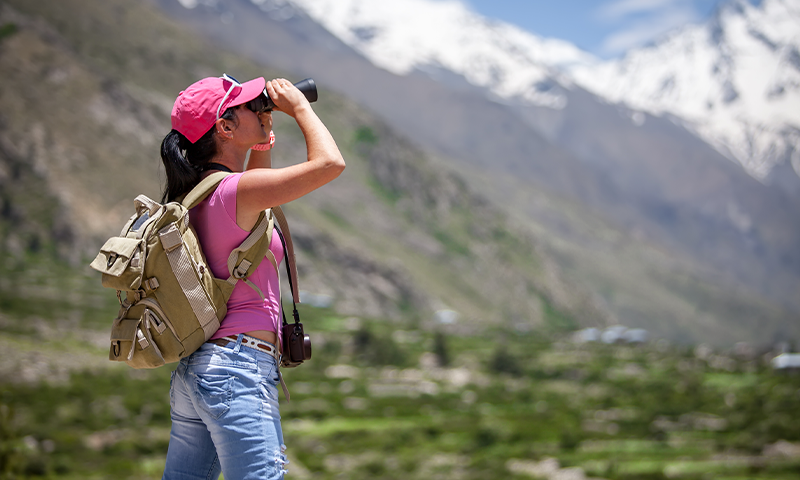
Most travel inspiration arrives as a photo of a beach you will never quite match. The stories below work differently. They belong to women from Uttarkashi, Bomdila, Bengaluru, Mumbai, Dehradun and Delhi who treated the map as a set of suggestions rather than a set of rules.
Some of them climbed the highest point on Earth. One swam in Antarctic water close to freezing. Another rode a motorbike from the southern tip of India to the Himalayas with no support vehicle. A few did something quieter but just as bold: they left steady jobs, gave away most of what they owned, or built a travel company for people the industry had ignored.
This list is not a ranking. It is a mix of record setters, storytellers and changemakers, chosen because each one offers a lesson an everyday traveller can actually use. Read it with your own next trip in mind. By the end, you will probably have a destination, a travel style, or at least a firm nudge to stop postponing that trip.
For a long time, the default image of an adventurer in many Indian homes was a man with a rucksack. Daughters were often told to wait until marriage, or until a brother could come along. That picture is changing, and the women in this list helped change it.
Their stories also answer the practical doubts that stop many people from booking:
Inspiration is useful only when it turns into a plan. Keep that thought handy; we will come back to it at the end.
Bachendri Pal was born in Nakuri village in the Uttarkashi district of present day Uttarakhand, into a family where money was tight and mountains were simply part of daily life. On 23 May 1984, as a member of India’s Everest ’84 expedition, she reached the summit at 1:07 pm, a day before her 30th birthday. Britannica’s profile of Bachendri Pal notes that she went back the following year to lead an all-woman team to the top.
What makes her story bigger than one climb is what came after. For decades she headed the Tata Steel Adventure Foundation and trained a long line of climbers, including two women who appear later in this list.
Wanderlust takeaway: The Garhwal Himalaya that shaped her is open to ordinary trekkers too. The valleys around Uttarkashi and Gangotri make a gentle first taste of high mountain country.
Premlata Agrawal’s climbing career began almost by accident. She had gone to enrol her daughters in an adventure course, and Bachendri Pal asked why she did not join instead. She did.
In May 2011, at 48, she became the oldest Indian woman to summit Everest at that time, a record that held until 2018, as Tata’s own account of her climb explains. Two years later she completed the Seven Summits, the highest peaks on all seven continents, and became the first Indian woman to do so. She received the Padma Shri in 2013.
Her story speaks directly to anyone who thinks adventure comes with an expiry date. She was a homemaker and a mother of two long before anyone called her a mountaineer.
Wanderlust takeaway: You do not need to start young. You need to start prepared. A well paced trek with proper acclimatisation suits travellers of almost any age who train for it.
In 2011, Arunima Sinha, a national level volleyball player from Uttar Pradesh, lost her left leg after robbers pushed her from a moving train. While still recovering in hospital, she reached out to Bachendri Pal and decided she would climb Everest.
She did exactly that. Guinness World Records lists Arunima Sinha as the first female amputee to climb Everest, reaching the summit on 21 May 2013. She did not stop there. In January 2019 she climbed Mount Vinson in Antarctica, the last of a string of continental summits.
Her story is often told as one of grit, and it is. It is also a story about mentorship: one call to the right person changed the direction of her life.
Wanderlust takeaway: Physical limits are real, but they are often negotiable with the right support. Ask for help early. Good guides and tour planners build the trip around your needs, not the other way round.
Anshu Jamsenpa, from Bomdila in Arunachal Pradesh, took up mountaineering after encouragement from sports trainers and went on to become one of the best known Indian women mountaineers of her generation. In May 2017 she summited Everest on the 16th, came back down to base camp, and summited again on the 21st. Guinness World Records confirms this as the fastest time for a woman to climb Everest twice.
She was a mother of two at the time and had already reached the top twice in 2011 and once more in 2013. She was later honoured with the Padma Shri.
Wanderlust takeaway: Northeast India produces world class mountaineers, yet the region still sees far fewer visitors than it deserves. Arunachal’s monasteries, river valleys and high passes reward travellers who make the extra effort to get there.
Bhakti Sharma’s first open water swim, at just 14, took her from Uran port to the Gateway of India in Mumbai. Over the next decade she swam channels and seas around the world, received the Tenzing Norgay National Adventure Award in 2010, and set her sights on the coldest water of all.
In January 2015 she swam 1.4 miles in the Antarctic Ocean at a water temperature of about one degree Celsius, finishing in 52 minutes. The world record earned public praise from the Prime Minister’s Office. She has since written that during the first few minutes she doubted she would make it, and kept going anyway.
Wanderlust takeaway: Adventure is not only about altitude. India’s long coastline, from the Konkan belt to the Andaman Islands, offers plenty of water based experiences for travellers who would rather swim than climb.
In 2014, Roshni Sharma, then a software engineer in Bengaluru, rode her motorbike solo from Kanyakumari to Leh. The ride covered about 5,453 km and 11 states, as YourStory’s report on her solo ride describes, and she is widely credited as the first Indian woman to complete that route alone. The feat later earned her a place in the Limca Book of Records.
Before she set off, people warned her about everything from breakdowns to safety. On the road, she found locals and fellow bikers ready to point the way and lend a hand. She has said she expected hostility and was pleasantly surprised instead.
Wanderlust takeaway: The Manali to Leh and Srinagar to Leh highways remain dream routes for riders. Plan for acclimatisation, permits and mechanical backup, or explore our Leh Ladakh tour packages if you would like a supported road trip with the logistics handled.
Shivya Nath grew up in Dehradun and worked in social media strategy, including a stint with the Singapore Tourism Board, before she walked away from corporate life in her early twenties. In 2013 she gave up her home, sold most of her belongings and began living nomadically, as she explains on her blog, The Shooting Star.
Her memoir of the same name became a bestseller, but her bigger influence is the way she travels: slowly, with a focus on community run stays, local food and low impact choices. She has written about staying in a Ladakh nunnery and living with village families, and she remains one of the most recognised voices for responsible travel among female travel bloggers in India.
Wanderlust takeaway: Slow, responsible travel is not a luxury. Spending more nights in fewer places, choosing locally owned stays and hiring local guides makes a trip richer and puts money where it helps most.
Tanya Khanijow started her YouTube channel in 2012 and turned to travel full time after leaving her corporate job in 2018. The Better India describes her as a passionate solo traveller and travel filmmaker, and her films cover trips across India and abroad.
What sets her apart is the tone. Her videos explain routes, costs and cultural context instead of only showing pretty frames. Over time her work has leaned towards documentary storytelling about wildlife, conservation and the communities she meets, which gives viewers a reason to travel beyond the photo opportunity.
Wanderlust takeaway: Research is part of the fun. Watching how an experienced solo traveller plans her day helps you picture yourself doing it, and picturing it is often the hardest step.
Neha Arora grew up with a father who is visually impaired and a mother with a locomotor disability. Family holidays were rare, not because her parents lacked curiosity, but because hotels, monuments and transport were not built with them in mind.
In 2016 she left a corporate career, which included roles at Nokia and Adobe, to found Planet Abled, a travel company designed for people with disabilities and older travellers. Lonely Planet’s feature on Planet Abled points out that her own first passport expired without a single stamp. In 2019 her company received a National Tourism Award from the Ministry of Tourism.
Wanderlust takeaway: Accessible travel in India is improving steadily. Older parents or relatives with mobility needs can travel comfortably when the itinerary, vehicle and hotels are chosen with care.
Look past the records and the same few patterns show up again and again:
Here is how to turn a burst of travel inspiration for women into an actual booking.
None of the Indian women travellers in this list waited for perfect conditions. They trained, asked for help, planned carefully and then went. Women solo travel in India is no longer a rare exception, and every new traveller makes the road a little more familiar for the next one.
If one of these stories has put a destination in your head, let us help you shape it into a trip that fits your pace, budget and comfort level. Talk to our travel experts and start planning the journey you keep promising yourself.
Bachendri Pal holds that honour. She reached the summit on 23 May 1984 as part of India’s Everest ’84 expedition and later trained many younger climbers, including Arunima Sinha and Premlata Agrawal.
Anshu Jamsenpa from Arunachal Pradesh summited Everest on 16 May 2017 and again on 21 May 2017. Guinness World Records recognises this as the fastest time for a woman to climb Everest twice.
Shivya Nath, author of The Shooting Star, is known for slow and sustainable travel, while Tanya Khanijow is a popular solo travel filmmaker on YouTube. Both share practical, honest content that helps first time travellers plan.
India can be a rewarding destination for women travelling alone when trips are planned sensibly. Choose well reviewed stays, pre-book transfers for late arrivals, share your plans with family, respect local dress norms and consider a private guided tour for your first trip.
Start with a destination that has good connectivity and an established tourist trail, such as Rajasthan, Kerala or Himachal Pradesh. Book your first night in advance, keep a flexible budget, and work with a trusted tour operator if you want local support on the ground.
Yes, with the right planning. Premlata Agrawal climbed Everest at 48, and companies such as Planet Abled specialise in accessible travel in India. Ask your tour planner for step-free hotels, suitable vehicles and a relaxed itinerary with fewer transfers.
Indian Village Tour: A Walk Through Real India
26 Nov 2026
Indian Women Travellers Who Will Give You Serious Wanderlust
26 Nov 2026
Famous Festivals in Nepal: A Traveller’s Guide to Its Rich Culture and Traditions
25 Nov 2026
Solo Backpacking in Nepal: My 10 Day Route Through Kathmandu, Pokhara and the Annapurna Foothills
25 Nov 2026
A Place Where I Found My Lost Self: Mechuka in Arunachal Pradesh
24 Nov 2026


