 +919871148514
 info@memorableindia.com
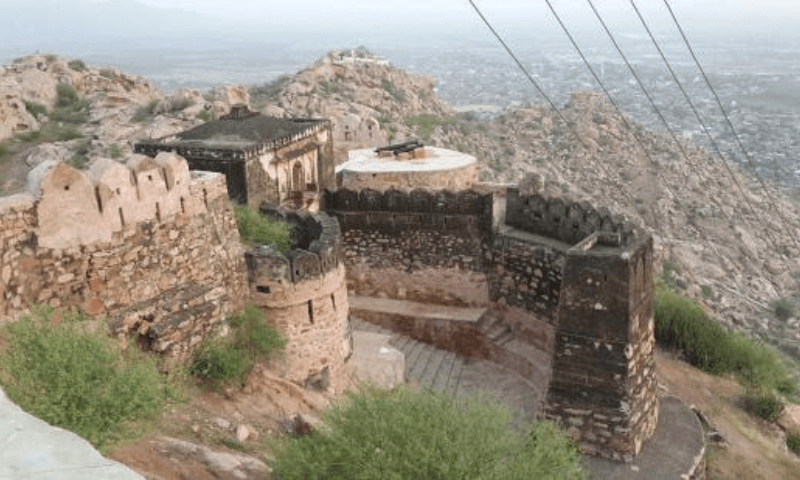
Rajasthan’s most visited cities have a well-rehearsed pitch. Jaipur has its pink facades, Jodhpur its blue lanes, and Udaipur its shimmering lakes. But travel far enough into the state’s southwestern corner, and you arrive at a town that has quietly held onto its history without packaging it for the tourist trail. Jalore, Rajasthan, once known as Jabalipur after the sage Maharishi Jabali and later as Swarngiri (the Golden Hill), sits at the base of a steep rocky hill that has shaped the town’s identity for over a thousand years.
The hill is crowned by one of the most formidable forts in the state, a structure so strategically built that invading armies struggled to breach it for centuries. Below it, the town unfolds with ancient Jain temples, a 900-year-old hilltop shrine dedicated to Goddess Chamunda, and a former Sanskrit school that was later repurposed as a cannon foundry. The Sukri River, a tributary of the Luni, flows nearby, giving the otherwise arid landscape a softer edge.
This Jalore travel guide covers the key attractions, planning details, and practical advice for visiting one of Rajasthan’s most rewarding offbeat destinations.
For travellers who have already covered Rajasthan’s marquee destinations and are seeking something less curated, Jalore makes a compelling case. The town does not have a polished tourism infrastructure, and that is part of its appeal. What you encounter here is raw, unembellished heritage that has not been reshaped for visitor consumption.
Three things set Jalore apart. First, the military history. Jalore Fort is widely considered one of the most impregnable forts ever built in the region, and the story of its last stand under Kanhad Dev Songara against Alauddin Khilji in 1311 remains one of the most stirring chapters in Rajput resistance. Second, the religious diversity within the fort complex itself, where Hindu temples, Jain shrines, and a mosque sit side by side, reflecting the layered political and cultural transitions the town has witnessed. Third, the Sundha Mata Temple, perched at over 1,200 metres in the Aravalli range, offers a pilgrimage experience that combines spiritual significance with genuinely striking hill scenery.
Jalore pairs naturally with a broader Rajasthan itinerary. Travellers exploring the state’s lesser-known heritage circuits will find useful context on the Popular forts in Rajasthan page.
The fort is the centrepiece of any visit. Believed to have been constructed between the 8th and 10th centuries, Jalore Fort stands atop a steep hill at approximately 336 metres, commanding sweeping views of the plains below. The structure was historically known as Sonagir Durg, or the Fortress of the Golden Mount, and was counted among the nine great castles of Maru (the desert region).
The climb to the fort follows a serpentine path that takes roughly an hour on foot. Four massive gates punctuate the ascent. The Suraj Pol (Sun Gate) is angled so that the first rays of morning sunlight pass directly through the main doorway, with a small watchtower perched above it. The Dhruv Pol, Chand Pol, and Siroh Pol follow, each designed to slow down attackers through narrow corridors and sharp turns.
Inside, the fort complex holds a fascinating mix of structures. The ruins of the residential palace, destroyed during Alauddin Khilji’s siege in 1311, still show symmetrical walls and large rock formations. Several Hindu temples, including shrines dedicated to Lord Shiva, sit alongside ancient Jain temples. The Adinath Jain Temple, dating to the 8th century and built in white marble, is particularly striking against the dark stone of the fort walls. The Kila Masjid, a mosque within the fort, displays architectural elements influenced by Gujarati styles from the late 16th century. This religious coexistence within a single fort complex gives Jalore Fort a character that is difficult to replicate elsewhere in the state.
Located in the heart of Jalore city, the Topekhana is one of those structures whose history is as interesting as its architecture. Originally built as a Sanskrit school (pathshala) by King Bhoj between the 7th and 8th centuries, it was later converted into a cannon foundry and armoury during the pre-independence period, which is how it earned the name Topekhana (literally, “cannon house”). The building features a spacious forecourt, an intricately carved colonnade and ceiling, and a raised room about ten feet above the main floor, believed to have been the quarters of the school’s headmaster. Topekhana Jalore is a fascinating example of how a single structure can carry multiple historical identities across centuries.
Situated roughly 105 kilometres from Jalore town, atop Sundha Mountain at 1,220 metres in the Aravalli range, the Sundha Mata Temple is one of the most revered pilgrimage sites in the region. Dedicated to Goddess Chamunda Devi, the temple is approximately 900 years old and was originally constructed by the Dewal Pratiharas with patronage from the Chauhan rulers of Jalore. Inside, three historically significant inscriptions have been found, the earliest dating to 1262 AD.
The temple is built from white marble, and the craftsmanship of its pillars is often compared to the Dilwara Temples at Mount Abu. A ropeway service now makes the ascent easier for pilgrims, covering 800 metres in about six minutes. The surrounding landscape is forested, with waterfalls that flow year-round and a wildlife sanctuary nearby that shelters species including sloth bear, nilgai, desert fox, and over 120 bird species.
Sundha Mata Temple Jalore draws large crowds during Navratri, when a nine-day fair brings devotثees from across Rajasthan and Gujarat.
Perched at 646 metres on Kalashachal Hill, the Sire Mandir was built by Rawal Ratan Singh in honour of Maharishi Jabali. Legend holds that the Pandavas took refuge here during their exile. The three-kilometre walk from the town to the temple passes through quiet terrain, and the hilltop offers a peaceful vantage point over the surrounding landscape.
Commissioned by Alauddin Khilji during his control of Jalore, this mosque was built to honour Malik Shah, the Seljuk Sultan of Baghdad. Located within Jalore Fort, the mosque is architecturally distinctive for its Gujarat-influenced design, making it a notable example of cross-regional stylistic exchange in medieval Rajasthan.
For those exploring Rajasthan’s broader heritage landscape, the blog on Historical sites in India provides a wider context.
No account of Jalore is complete without the story of its most defining historical moment. In the early 14th century, Kanhad Dev Songara, the Chauhan ruler of Jalore, mounted a fierce resistance against Alauddin Khilji’s forces. The fort’s natural defences and steep approach made it extraordinarily difficult to conquer. When it finally fell in 1311 after a prolonged siege, Kanhad Dev and his son Viramdeo died defending the fort, while the women of the royal household performed jauhar, the act of self-immolation to preserve honour.
The episode is recorded in the Kanha Prabandha, an epic text elaborating the war between Kanhad Dev and Khilji, and it remains a source of deep local pride. Walking through the fort’s ruined palace and its narrow passageways with this history in mind adds an emotional weight to the visit that pure architecture cannot provide. Jalore’s story parallels the better-known sieges at Chittorgarh and Ranthambore, yet it receives only a fraction of the scholarly and tourist attention.
Beyond its medieval heritage, Jalore has built a modern identity around its granite industry. The district produces some of the finest granite in the world, and the quarrying industry has driven significant economic growth in recent decades. Travellers passing through will notice the landscape dotted with quarry sites, a reminder that this is a working town rooted in both history and industry.
Local culture in Jalore retains a strong rural Rajasthani character. The town’s goldsmiths and silversmiths carry forward traditional craft practices, and the weekly markets offer handmade goods and local produce. During Holi, Jalore’s folk traditions come alive with a distinctive celebration called the Dhamal dance, in which male dancers perform with sticks while singers narrate folk ballads (lori). This is not a performance staged for visitors. It is a community tradition that continues to thrive organically.
Jalore has a hot, semi-arid climate typical of southwestern Rajasthan, so seasonal timing matters significantly.
October to March is the ideal window. Daytime temperatures during winter range from roughly 12 to 28 degrees Celsius, making the fort climb, the Sundha Mata pilgrimage, and outdoor exploration comfortable. The Navratri fair at Sundha Mata Temple, held twice a year (typically in March or April and again in September or October), adds a vibrant cultural layer if your dates align.
April through June brings intense heat, with temperatures regularly exceeding 40 degrees Celsius. The fort climb becomes strenuous and outdoor sightseeing is best avoided.
July through September is the monsoon period. Rainfall is modest compared to other parts of India, but roads to hilltop temples may become slippery, and the Sundha Mata ropeway may face operational disruptions.
For most travellers, a visit between November and February offers the best combination of weather and comfort.
Jalore does not have an airport. The nearest one is Jodhpur Airport, approximately 140 kilometres away (about three hours by road). Jodhpur is well connected to Delhi, Mumbai, and other major cities through domestic flights. From the airport, a private taxi or hired car is the most convenient option for reaching Jalore.
Jalore has its own railway station, connected to the Jodhpur division network. Trains from Gujarat, Mumbai, and other Rajasthan cities stop here. The station is located close to the town centre, making it a practical option for travellers who prefer rail.
Jalore sits along National Highway 15, and regular bus services operated by Rajasthan State Road Transport Corporation connect the town to Jodhpur, Jaipur, Ahmedabad, Surat, and Mumbai. The road from Jodhpur passes through open Marwar terrain and is generally in good condition.
For those planning a multi-city Rajasthan circuit that includes offbeat destinations like Jalore, the Rajasthan tour packages offer flexible itinerary options.
A few ground-level details to keep in mind when planning your visit to this offbeat Rajasthan destination:
The climb to Jalore Fort is steep and takes about an hour. Wear sturdy footwear, carry water, and start early in the morning to avoid midday heat, especially between October and March when the sun is gentler but afternoons can still warm up.
Accommodation options in Jalore town are limited and primarily consist of budget hotels and guesthouses. If you prefer more comfortable stays, Jodhpur serves as a practical base, with Jalore manageable as a day trip or overnight excursion.
Carry sufficient cash. While ATMs exist in the town, digital payment options are sparse at smaller establishments, temples, and rural areas.
Dress modestly at all religious sites, including Sundha Mata Temple and the Jain temples inside the fort complex.
Photography is generally permitted at the fort and temple sites, but check with local caretakers before photographing interiors.
Two days is a comfortable duration to cover the fort, Topekhana, and a day trip to Sundha Mata Temple.
Jalore works best when woven into a broader itinerary rather than visited in isolation. Its location in southwestern Rajasthan makes it a natural stopover between Jodhpur and Mount Abu, or as an extension from a Udaipur-based circuit heading westward. Combining Jalore with Ranakpur’s Jain temples, the fort towns of Sirohi, or even Dungarpur in the south creates a compelling offbeat Rajasthan loop that avoids the most congested tourist corridors.
For travellers interested in Rajasthan’s fort heritage specifically, the Rajasthan historical forts and Palaces tour provides a structured way to explore multiple heritage destinations across the state.
Jalore does not seek attention. There are no sound-and-light shows at the fort, no curated heritage walks through the old town, and no lakeside restaurants competing for your evening. What the town offers instead is something increasingly rare in Rajasthan: history that has not been smoothed over for consumption. The fort’s ruined palace still carries the weight of its last stand. The Topekhana still puzzles visitors with its double identity. And the Sundha Mata Temple still draws pilgrims the same way it has for nine centuries. For travellers who value substance over spectacle, Jalore is a destination that delivers quietly and memorably.
To build a custom Rajasthan itinerary that includes Jalore and other heritage destinations, connect with the team at Memorable India.
Frequently Asked Questions
Q1: What is Jalore famous for?
Jalore is famous for its imposing hilltop fort, believed to have been built between the 8th and 10th centuries, and for the 900-year-old Sundha Mata Temple dedicated to Goddess Chamunda Devi. The town is also known as the “Granite City” due to its globally recognised granite quarrying industry, and for its ancient Jain temples and the historic Topekhana structure.
Q2: How many days are enough to visit Jalore?
Two days are sufficient to explore Jalore Fort, Topekhana, and a day trip to Sundha Mata Temple. If you plan to include the Sire Mandir on Kalashachal Hill and explore the surrounding countryside, a third day is helpful.
Q3: What is the best time to visit Jalore Rajasthan?
The best time to visit Jalore is between October and March, when temperatures are moderate and outdoor sightseeing is comfortable. The Navratri fair at Sundha Mata Temple, held in spring and autumn, adds a cultural highlight if your visit aligns with those dates.
Q4: How far is Jalore from Jodhpur?
Jalore is approximately 140 kilometres from Jodhpur, which translates to a drive of roughly three hours by road. Jodhpur also has the nearest airport for air travellers.
Q5: Is the climb to Jalore Fort difficult?
The climb to Jalore Fort follows a steep, serpentine path and takes about one hour on foot. It requires reasonable fitness and sturdy footwear. Starting early in the morning is recommended to avoid heat, and carrying water is essential.
Q6: Can Jalore be visited as a day trip from Jodhpur?
Yes, Jalore can be visited as a day trip from Jodhpur, especially if you focus on the fort and Topekhana. However, if you also want to visit Sundha Mata Temple (105 kilometres from Jalore town), an overnight stay in Jalore is advisable to avoid a rushed schedule.
A Journey to Leh and Srinagar: Firsthand Travel Experience
25 Oct 2026
A Guide to Famous Temples in Himachal Pradesh
24 Oct 2026
9 Best Places to Visit in Lakshadweep, a Top Island Getaway in India
23 Oct 2026
7 Reasons Why One Should Travel by Indian Rail
22 Oct 2026
6 Reasons to Visit Chopta Valley in the Himalayas
21 Oct 2026


