 +919871148514
 info@memorableindia.com
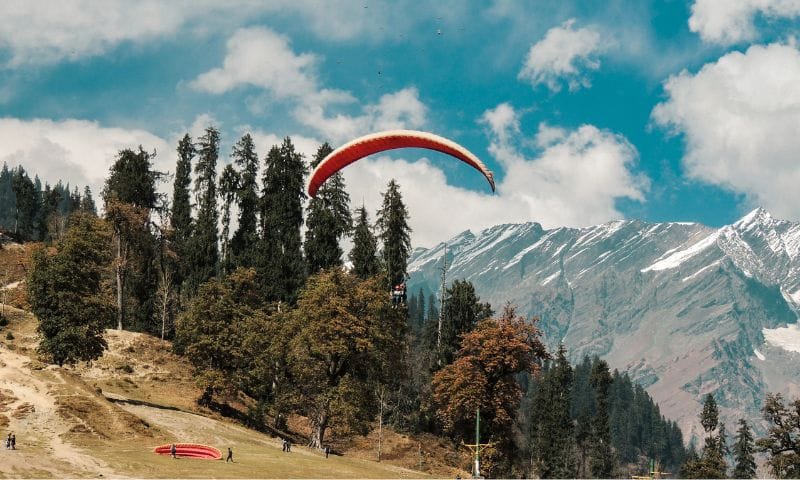
Manali sits at 2,050 metres in the upper Kullu Valley, where the Beas River runs through a corridor of cedar and pine forests backed by snow-covered peaks. That combination of altitude, greenery, and mountain proximity is what has made it one of North India’s most visited hill stations for decades. For families, the appeal is practical as well as scenic. Manali is well connected by road from Delhi (roughly 12 to 14 hours by car or overnight Volvo bus), has accommodation at every price level, and packs a genuine range of activities into a compact area.
The town works for families with children across age groups. Toddlers enjoy the open spaces and snow play. School-age children respond to the adventure activities and temple stories. Teenagers, often the hardest audience to please on a family trip, tend to engage with the rafting, paragliding, and the cafe culture of Old Manali. The key is choosing activities that match your children’s ages and energy, and leaving enough downtime between active days for the altitude and mountain air to do their restorative work.
Here are 10 activities and experiences that consistently work well for families visiting Manali.
Distance from Manali: 14 km | Best For: Adventure activities for all ages
Solang Valley is Manali’s primary adventure playground, and it delivers different experiences depending on the season. In winter (December to February), the valley fills with snow, and families can try skiing, snowboarding, and snow tubing. In summer (April to June), the same slopes host paragliding, zorbing (rolling downhill inside an inflatable ball), and a gondola ropeway that carries passengers up to a viewpoint with panoramic Himalayan views.
For younger children, the snow play areas in winter and the horse and pony rides available year-round are the main draws. Older children and teenagers gravitate toward the paragliding tandem flights and the ropeway. A full day at Solang is realistic, and food stalls at the base serve hot maggi noodles and chai, which have become part of the experience.
Location: Dhungri Forest, 2 km from Mall Road | Best For: Cultural sightseeing and forest walks
The Hadimba Temple is a 16th-century wooden pagoda-style structure dedicated to Hidimba, a character from the Mahabharata. What makes it engaging for children is less the religious context and more the physical setting: the temple sits in the middle of a dense deodar cedar forest where tall trees create a natural canopy. The surrounding area has open ground where children can run, and the local yak and rabbit photo opportunities (handled respectfully) are a predictable hit with younger visitors.
The temple’s architecture, with its tiered wooden roof and carved doorway, is distinctive enough to hold the interest of older children. The visit takes about an hour, including time to walk through the forest.
Distance from Manali: 51 km | Best For: Snow play and high-altitude scenery
Rohtang Pass, at 3,978 metres, is the gateway between the Kullu Valley and the Lahaul-Spiti region. The drive itself is part of the experience: the road climbs through hairpin bends, past waterfalls, and through dramatically changing terrain. At the top, families find snow even in summer months, and children can build snowmen, throw snowballs, and slide on improvised sledges.
A government permit is required to cross Rohtang, obtainable online through the Himachal Pradesh government portal. Vehicle numbers are capped daily, so apply at least a day in advance. The pass is typically open from May to November, though exact dates vary with snowfall. Warm clothing and sun protection are essential at the top, where temperatures drop sharply and UV exposure is high.
Location: Pirdi to Jhiri stretch, near Kullu | Best For: Families with children aged 8 and above
White-water rafting on the Beas River is one of the most popular family activities in the Kullu-Manali belt. The Pirdi-to-Jhiri stretch, roughly 14 kilometres, offers Grade II and III rapids that are exciting without being dangerous for children above the age of eight. Life jackets, helmets, and a trained guide are standard on all licensed rafting trips.
The rapids have names like Roller Coaster and Butterfly, which gives children something to anticipate around each bend. Calmer stretches between rapids let the family float and enjoy the valley scenery. Most operators run the trip in about 90 minutes. The rafting season runs from April to June and September to October, when water levels are suitable.
Location: 3 km from Mall Road | Best For: Relaxed exploration, cafes, and local culture
Old Manali, on the opposite bank of the Manu Nala stream from the main town, has a character entirely different from Manali’s commercial centre. The narrow lanes wind through traditional stone-and-wood Himachali houses, past small guesthouses, bakeries, and cafes that serve everything from Israeli shakshuka to Himachali siddu (a steamed bread stuffed with poppy seed paste).
For families, Old Manali works as a half-day outing. Children enjoy the footbridge crossing over the stream, the Manu Temple (dedicated to the sage Manu, said to have meditated here), and the general atmosphere of a village that has retained its layout even as cafes and shops have moved in. Teenagers particularly appreciate the cafe culture, bookshops, and handcraft stalls.
Location: 3 km from Manali town | Best For: A warm, relaxing break from active sightseeing
The village of Vashisht is built around natural sulphur hot springs that have been channelled into public bathing pools adjacent to the Vashisht Temple. The warm water, naturally heated by geothermal activity, provides a welcome contrast after a cold day at Rohtang or Solang. Separate bathing areas for men and women are available, and the temperature is warm enough to be enjoyable without being scalding.
The village itself has a cluster of guesthouses, cafes, and small shops selling Kullu shawls and Tibetan handicrafts. A walk through Vashisht’s lanes, followed by a soak in the springs, fills a comfortable half day.
Distance from Manali: 21 km | Best For: History, art, and valley views
Naggar Castle is a 15th-century stone and timber fort that served as the capital of the Kullu kingdom before the seat shifted to Kullu town. The castle, now a heritage hotel, is open to day visitors and offers views across the entire Kullu Valley from its upper terrace. The architecture itself, a mix of Himalayan stone masonry and European-influenced woodwork, is visually interesting for older children.
Adjacent to the castle, the Nicholas Roerich Art Gallery houses the work of the Russian painter who settled in Naggar in the 1920s. His Himalayan landscape paintings are vivid and accessible, and the gallery’s small size means a visit takes 30 to 40 minutes, well within a child’s attention span. The drive to Naggar from Manali, along the left bank of the Beas, is scenic in itself.
Starting Point: Vashisht Village | Best For: A short family hike with a rewarding destination
The Jogini Waterfall trek is a gentle 3-kilometre hike from Vashisht Village through apple orchards, small farmsteads, and forest trails. The waterfall, a 40-metre cascade into a rocky pool, is a satisfying endpoint that gives children a tangible goal for the walk. The trail is mostly flat to gently uphill, manageable for children aged five and above.
The hike takes about an hour each way at a family pace, and the route passes through village life that contrasts with the tourist bustle of central Manali. Carry water and snacks, and wear sturdy shoes as the path can be muddy after rain. The trek is best done in the morning before the afternoon clouds roll in.
Location: Main town, near Mall Road | Best For: Cultural exposure and quiet reflection
Manali has a significant Tibetan refugee community, and the Gadhan Thekchhokling Gompa and the Himalayan Nyingmapa Gompa are both located within walking distance of the town centre. The monasteries are visually striking, with brightly painted interiors, prayer wheels lining the entry corridors, and large Buddha statues that hold children’s attention.
The Tibetan market adjacent to the monasteries sells handicrafts, woollen clothing, and Tibetan souvenirs at reasonable prices. For families, a visit to the monasteries combines cultural education with the practical advantage of being close to the town’s restaurants and hotels.
Location: Central Manali | Best For: Evening family time, shopping, and local food
Manali’s Mall Road is the town’s commercial spine, lined with shops selling Kullu shawls, woollen caps, Himachali caps (topis), dried fruit, and local jams. For families, an evening walk along Mall Road serves as a low-effort activity that still feels immersive. Children are drawn to the toy and souvenir shops, and the food stalls selling momos (steamed dumplings), hot chocolate, and roasted corn provide constant fuel for the walk.
The road also connects to Van Vihar, a small public park along the Beas River where families can sit on the grass, and children can run in an open space away from traffic. In the evening, Mall Road has a lively energy without the intensity of a big-city market, making it suitable for families with younger children.
For families, the two strongest windows are late March to June (pleasant weather, snow at Rohtang, Solang activities operational) and October to early November (clear skies, fewer crowds, autumn colours). December to February brings heavy snow, which is ideal for families who specifically want a winter experience but limits access to Rohtang Pass. July to September is monsoon season, when landslides can disrupt road access.
The nearest airport is Bhuntar (Kullu-Manali Airport), 50 kilometres south, with limited flights from Delhi. Most families drive from Delhi (530 kilometres, 12 to 14 hours) or take an overnight Volvo bus operated by HRTC or private operators. Breaking the drive with an overnight stop at Chandigarh or Mandi reduces travel fatigue for children.
The Himachal tour package from Delhi includes the Manali segment with comfortable transfers and guided sightseeing.
For families, hotels in the Mall Road area offer walkable convenience, while properties on the road toward Solang or near Old Manali provide quieter surroundings with valley views. Cottages and resorts with garden space work best for families with younger children who need room to play. Many mid-range and upper-range hotels include breakfast and have in-house restaurants, which simplifies family meal logistics.
For broader Himachal family planning, the kid-friendly summer destinations guide covers Shimla, Kufri, and other destinations that pair well with Manali.
Manali’s strength as a family destination is its range. A single four to five-day trip can include a snow day at Rohtang, an adventure session at Solang, a cultural visit at a temple and a monastery, a short waterfall hike, and multiple evenings of low-effort strolling and eating. That variety keeps every member of the family engaged without requiring the marathon sightseeing schedules that drain energy in other destinations. The mountains do the rest.
Memorable India designs customised Himachal family itineraries covering Manali, Shimla, and Kullu with family-friendly hotels, private transfers, and guided activities. Get in touch to start planning.
Four to five days in Manali is ideal for families. This allows one day each for Solang Valley and Rohtang Pass, a day for Old Manali and Vashisht, a day for Naggar or rafting, and a flexible day for Mall Road shopping, the Jogini waterfall hike, or rest. Combining Manali with Shimla extends the trip to seven to eight days and adds variety.
Manali is safe for children of all ages with standard precautions. The altitude (2,050 metres) is mild enough that altitude sickness is rarely an issue. The main risks are road conditions on mountain drives (use registered vehicles and experienced drivers) and cold temperatures at higher elevations like Rohtang. Dress children in layers and carry warm accessories.
Late April to mid-June is the most family-friendly window. Weather is pleasant in town, Rohtang Pass is open for snow play, Solang Valley’s summer activities are running, and the roads are clear. October is a strong alternative with fewer crowds and stunning autumn colours.
Toddlers enjoy the open spaces at Hadimba Temple, snow play at Rohtang and Solang (in winter), pony rides, and the riverside park at Van Vihar. Active adventure activities like rafting and paragliding are not suitable for very young children, but the natural environment and gentle walking trails provide plenty of stimulation.
The Rohtang Pass trip is suitable for most children but requires preparation. The altitude (3,978 metres) can cause mild breathlessness, so spend time acclimatising in Manali first. The winding road may trigger motion sickness in some children, so carry medication. Dress children warmly and apply sunscreen generously, as UV levels are high at altitude. Children generally love the snow experience once they are comfortable.
Pack layered clothing (thermals, fleece, waterproof jacket), comfortable walking shoes, sunscreen, sunglasses, a basic medical kit, and rain gear. Even in summer, evenings are cool at 2,050 metres. For Rohtang, add snow boots (available for rent locally), gloves, and a warm hat. The packing essentials guide for India provides a comprehensive checklist.
15 Amazing Temple Fairs in India: A Traveller’s Guide to Faith, Colour and Living Tradition
30 Sep 2026
13 Best Places to Explore in the Youngest State of Telangana
29 Sep 2026
12 Less Explored Destinations in Maharashtra Worth Adding to Your Travel List
28 Sep 2026
11 Must-Visit Museums in India for Wildlife Lovers
27 Sep 2026
11 Best Places in India to Celebrate Christmas
26 Sep 2026


