 +919871148514
 info@memorableindia.com
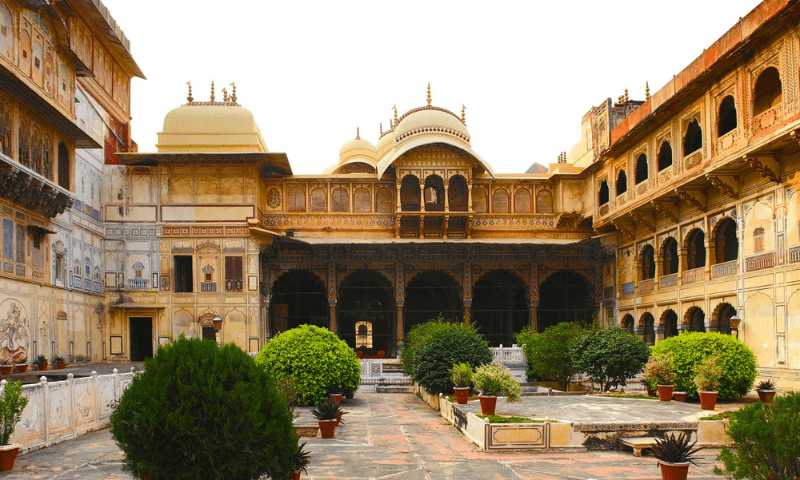
Most Rajasthan itineraries follow a well-trodden loop: Jaipur, Jodhpur, Udaipur, and Jaisalmer. These cities earn their fame, no question. But the state holds a pocket of history and devotion that rarely makes it onto a first-time traveller’s radar. Karauli is one of those pockets, and it is arguably the most underrated.
Tucked into northeastern Rajasthan, about 150 kilometres from Jaipur, Karauli is a walled city with more than 300 temples, a 14th-century palace complex, a living Yaduvanshi (Yadav clan) royal lineage, and a gateway to the Kailadevi Wildlife Sanctuary. The city was founded in 1348 AD by Raja Arjun Dev Yadav, and unlike many princely towns in the state, it has managed to preserve its medieval character without heavy commercialisation. Narrow lanes still wind past red sandstone havelis, lacquer bangle workshops line the old bazaar, and temple bells mark the hours more reliably than any clock.
This Karauli travel guide covers everything a visitor needs, starting from the key heritage sites, spiritual landmarks, wildlife excursions, local food, how to get there, and the best time to plan a visit. Read ahead to know more:
The question most travellers ask is straightforward: with so many celebrated cities in Rajasthan, why add Karauli? The answer lies in what this city offers that the busier destinations do not.
First, there is authenticity without theatre. In Jaipur or Jodhpur, heritage experiences are often designed for tourist consumption. In Karauli, the evening aarti at Madan Mohan Ji Temple, the potters working in the lanes behind the City Palace, and the Rajasthani thali served at a family-run dhaba all exist for the locals, and visitors simply join in. Second, Karauli connects two of Rajasthan’s most interesting landscapes: the Chambal ravines to the east and the Ranthambore forest corridor to the south. For travellers interested in both heritage and nature, the city sits at a compelling crossroads.
For those exploring offbeat heritage destinations in Rajasthan, Karauli adds depth and variety to any trip plan.
The City Palace is the anchor of any visit to Karauli. Originally built in the 14th century by Raja Arjun Pal, the founder of the city, the structure visitors see today was largely reconstructed by Raja Gopal Singh in the 18th century. The architecture blends Rajput, Mughal, and Persian influences, and the result is a sprawling complex of courtyards, balconies, and jharokhas (overhanging enclosed windows).
The Durbar Hall, with its high ceiling and carved walls, is the standout space. The Diwan-e-Aam (Hall of Public Audience) features vivid floral patterns and fine jaali (lattice) work. Frescoes in varying states of restoration cover many of the interior walls. The royal family used the Karauli City Palace as their residence until 1938, when they moved to the Bhanwar Vilas Palace. In the 1950s, the City Palace was transferred to the Madan Mohan Temple Trust, partly as a measure to avoid taxation. Restoration work has since brought several sections back to life.
Within the palace complex, visitors can also see the Madan Mohan Ji Temple, one of the city’s most revered shrines. The evening aarti here is considered a highlight for pilgrims and tourists alike.
If you are planning to explore Rajasthan’s architectural heritage in greater depth, the 15 Days Rajasthan Historical Tour Package covers several of the state’s most significant structures.
Located roughly 25 kilometres away from the city centre, the Kaila Devi Temple is one of the most important religious sites in the Karauli district and a well-known pilgrimage destination in Rajasthan. The temple is dedicated to Goddess Kaila Devi, believed to be an aspect of Yogamaya, the sister of Lord Krishna, and the guardian deity of the Yaduvanshi Rajputs.
The temple draws enormous crowds during the Kaila Devi Chaitra Fair, held every year in March or April. During this fair, devotees travel from across Rajasthan and neighbouring Madhya Pradesh to pay homage. The fair is also an excellent opportunity to shop for hand-crafted lacquer products, silver jewellery, tribal headgear, embroidered textiles, and metal handicrafts.
About 40 kilometres away from the city, the Timangarh Fort is one of Karauli’s most historically significant yet least-visited monuments. Originally constructed around 1100 AD and rebuilt by King Timanpal of Banaya in the mid-11th century, the fort sits on a hilltop and offers sweeping views of the surrounding plains and ravines. The fort’s stone pillars are carved with depictions of mythological figures, and it is known for a rare collection of ashtadhatu (eight-metal alloy) artefacts. The fort has seen considerable damage over centuries of conflict, but its ruined grandeur still conveys the strategic importance it once held.
Those interested in exploring Ancient cities in India will find Timangarh especially worthwhile.
Standing on the bank of the Bhadravati River, the Madan Mohan Ji Temple is roughly 500 years old and one of the most spiritually significant sites in the city. Built with the distinctive red Karauli stone, the temple showcases medieval-era architecture with paintings along the circumambulatory path around the sanctum (garbhagriha). Karauli was historically known as Kalyanpuri, and the city’s identity has long been intertwined with its temples. With over 300 shrines and temples, the city is considered one of the holiest in Rajasthan.
Built in 1938 by Maharaja Ganesh Pal Deo Bahadur as a royal residence, the Bhanwar Vilas Palace has been partially converted into a heritage hotel. It offers visitors a rare chance to stay in rooms that were once part of the royal household. The palace is a good base for exploring the city, and its architecture gives a glimpse into the lifestyle of the Karauli royals during the early 20th century.
For nature enthusiasts, the Kailadevi Wildlife Sanctuary is a major stopover. The sanctuary functions as an extension of the Ranthambore Tiger Reserve, covering an area of over 670 square kilometres between the Banas River to the west and the Chambal River to the southeast. The dense forests here are home to chinkaras, nilgai, jackals, leopards, and a variety of bird species, including sandpipers and kingfishers.
The sanctuary is far less crowded than Ranthambore, offering a quieter, more immersive wildlife experience. Visitors who are combining Karauli with a Ranthambore safari tour can explore both reserves within a single trip.
Karauli’s old bazaar, running through the walled city, is a colourful stretch of shops selling lacquer bangles, handwoven textiles, and local handicrafts. Lacquer work is the city’s signature craft, and watching artisans shape and colour the bangles is an experience in itself.
The food in Karauli follows the traditional Rajasthani palette. Dal Baati Churma, a staple across the state, is widely available and often served at family-run eateries around the old city. Gatte ki Sabzi (gram flour dumplings in a spiced yoghurt gravy) and Ker Sangri (a tangy desert bean and berry preparation) are other dishes that reflect the richness of Rajasthani cooking culture in arid conditions. Sweet lovers should try Malpua, a fried pancake soaked in sugar syrup, often prepared during festivals and fair days.
The Kaila Devi Fair remains the best time to experience local culture at its most vibrant. Traditional Rajasthani folk music and dance performances accompany the religious festivities, and the fairground buzzes with stalls selling everything from sweets to silver ornaments.
Karauli shares the semi-arid climate common to eastern Rajasthan. The ideal window for a visit falls between October and March, when temperatures range from roughly 10 to 27 degrees Celsius. Mornings and evenings are pleasant, and sightseeing is comfortable throughout the day.
March and April bring the added draw of the Kaila Devi Fair, making it a popular period for both pilgrims and cultural travellers. The summer months from April to June see temperatures regularly crossing 40 degrees Celsius, which makes extended outdoor exploration difficult. The monsoon season from July to September brings intermittent rainfall, which greens the landscape considerably but can disrupt road travel.
For those planning a wider Rajasthan circuit during winter, these top tourist attractions in Rajasthan are best enjoyed in this cooler window.
Karauli is well connected by road but does not have its own airport or major railway station. Here is how to plan your approach:
By Air: The nearest airport is Jaipur’s Sanganer International Airport, roughly 150 kilometres away. From the airport, taxis and private transfers are readily available for the drive to Karauli, which takes approximately three to four hours.
By Rail: The nearest significant railway stations are Gangapur City (about 50 kilometres) and Hindaun City. Both stations are connected to Jaipur, Delhi, and Agra by regular train services. From either station, local taxis or buses cover the remaining distance to Karauli.
By Road: Karauli lies about 64 kilometres from Mahuwa, a town situated on the Jaipur-Agra Highway. State buses and private vehicles connect Karauli with Jaipur, Sawai Madhopur, Bharatpur, and other nearby cities. Travellers on a Rajasthan tour package often include Karauli as a stop between Ranthambore and Agra, making the drive a logical addition to the itinerary.
One of Karauli’s practical advantages is its location between several well-known destinations. A trip to Karauli pairs naturally with the following:
Ranthambore National Park (Sawai Madhopur) is roughly 100 kilometres to the south, making it a natural add-on for wildlife enthusiasts. Karauli sits on the route between Ranthambore and Agra, so travellers heading towards the Taj Mahal can stop here without a significant detour.
Bharatpur and the Keoladeo Ghana National Park lie about 180 kilometres to the north, offering one of India’s finest birding experiences.
For travellers building a comprehensive heritage and wildlife itinerary, the Luxury Royal Rajasthan Tour includes Karauli as a cultural stop between Sawai Madhopur and Agra, featuring bazaar walks and heritage exploration.
Accommodation in Karauli is limited compared to larger Rajasthan cities. The Bhanwar Vilas Palace heritage hotel is the most well-known option, and a few guesthouses operate in and around the old town. Booking ahead is advisable, especially during the Kaila Devi Fair season.
Mobile network coverage can be inconsistent in the more rural stretches around the Kailadevi Sanctuary and Timangarh Fort. Carry offline maps and download any essential information before heading out.
Dress modestly when visiting temples and religious sites. Karauli is a deeply spiritual city, and local customs around temple etiquette are observed closely. Removing footwear before entering shrine areas is standard.
For updated information on monument entry fees and timings across Rajasthan, it is worth checking current details before your trip.
Karauli will not suit every traveller. If you are looking for luxury resorts, curated nightlife, or heavily guided tourist circuits, this is not the place. But if your idea of travel involves walking through centuries-old lanes, sitting in on a temple aarti that has not changed in generations, or spotting wildlife in a sanctuary that you might have almost entirely to yourself, then Karauli offers something rare.
It is a kind of destination that rewards slow travel and genuine curiosity. The city has not been reshaped to meet tourist expectations, and that, for the right visitor, is exactly the point.
To plan a customised Rajasthan itinerary that includes heritage cities like Karauli alongside popular destinations, explore Memorable India’s Rajasthan tours, or reach out to our travel specialists for a trip built around your interests.
Frequently Asked Questions
Q1: Why is Karauli famous in Rajasthan?
Karauli is known for its rich heritage, with over 300 temples, the 14th-century City Palace, and the Kaila Devi Temple. It is also the gateway to the Kailadevi Wildlife Sanctuary, an extension of the Ranthambore Tiger Reserve. The city’s traditional lacquer bangle craft and its association with the Yaduvanshi Rajput dynasty add to its cultural significance.
Q2: How do I reach Karauli from Jaipur?
Karauli is approximately 150 kilometres from Jaipur. The most convenient way to reach is by road, with a drive time of around three to four hours. The nearest railway stations are Gangapur City (about 50 km) and Hindaun City, both connected to Jaipur by regular trains.
Q3: What is the best time to visit Karauli?
The best time to visit Karauli is between October and March, when the weather is cool and comfortable for sightseeing. March and April are particularly appealing if you want to attend the annual Kaila Devi Chaitra Fair.
Q4: Can I combine a Karauli trip with Ranthambore?
Yes. Karauli is about 100 kilometres from Ranthambore National Park and sits on the route between Sawai Madhopur and Agra. Many Rajasthan itineraries include Karauli as a cultural stopover between a Ranthambore safari and a visit to the Taj Mahal.
Q5: Are there heritage hotels in Karauli?
The Bhanwar Vilas Palace, built in 1938 as a royal residence, operates partly as a heritage hotel. It offers guests a chance to stay in a property with royal lineage. A few smaller guesthouses are also available in the old town area.
Q6: What local food should I try in Karauli?
Traditional Rajasthani dishes are the mainstay. Dal Baati Churma, Gatte ki Sabzi, and Ker Sangri are widely available. During the Kaila Devi Fair, look for Malpua and other festive sweets at local stalls.
The Kerala Backwaters: 11 Things To Know Before You Visit
23 Sep 2026
Udaipur Itinerary: How to Spend 3 Days in Udaipur
22 Sep 2026
The Best Places to See in Varanasi, India
22 Sep 2026
11 Ancient Temples in Palakkad That Deserve to Be Seen
22 Sep 2026
Best Places to Visit in Tamil Nadu, India: A Traveller’s Guide for 2026
21 Sep 2026


