 +919871148514
 info@memorableindia.com
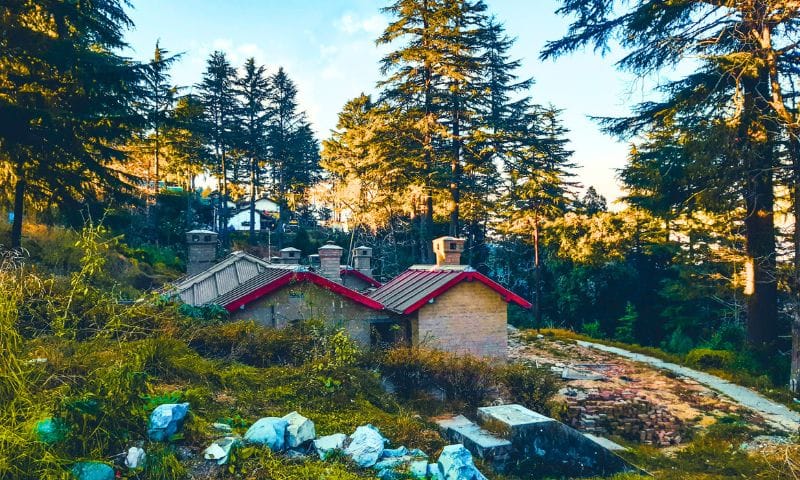
Somewhere between the honking hill-station traffic and the Instagram-famous viewpoints of Uttarakhand, there is another version of the state waiting quietly. It lives in slate-roofed hamlets where the day starts with the smell of woodsmoke and finishes with the last light on a snow peak nobody photographs. These are the villages that hold the actual grammar of the Himalayas, and they are still surprisingly easy to reach if you know where to look.
This guide walks through ten of the most beautiful villages in Uttarakhand, spread across both Garhwal and Kumaon. Each pick has been chosen for a real reason: an unbroken cultural rhythm, a view that stops conversation, or a walking trail that has not yet been paved over. Together, they form a working shortlist for anyone planning a slower, more grounded Himalayan trip.
Often called the mini Switzerland of India, Chopta is less a single village and more a scatter of tea stalls, homestays, and shepherd huts spread across an alpine meadow at roughly 2,680 metres. It sits inside the Kedarnath Wildlife Sanctuary, which means dawn walks come with the chance of a Himalayan monal crossing your path.
The village is best known as the starting point of the Chandrashila trek via Tungnath, the highest Shiva temple in the world at 3,680 metres. A short 3.5 kilometre climb takes you to Tungnath, and another 1.5 kilometres delivers you to the summit ridge with a panorama that includes Nanda Devi, Chaukhamba, and Trishul.
Homestays here are simple but warm, and the Garhwali kitchen is worth the trip on its own. If you want a fully planned trip with treks, meals, and transport handled, our Chopta tour packages cover the loop end to end.
Perched at around 2,290 metres near the India-Nepal-Tibet trijunction, Munsiyari is where the Panchachuli massif seems to stand within touching distance from your balcony. The name loosely translates to a place with snow, and in winter it earns the title fully.
This is one of the most photographed villages in the Kumaon Himalayas, but its real value shows up when you stay two nights instead of one. Short walks lead to Khaliya Top meadow, Thamri Kund lake, and the Tribal Heritage Museum, which records the Bhotiya trade routes that once connected the region to Tibet. Serious trekkers use Munsiyari as the base for the Milam Glacier and Namik Glacier routes.
Homestays in nearby Sarmoli are run by a women-led collective, and they are widely considered among the most authentic in the state.
Kausani earned Mahatma Gandhi’s nickname of the Switzerland of India during his 1929 stay at what is now Anasakti Ashram, and the 300 kilometre stretch of the Nanda Devi and Trishul range that unfolds at sunrise still justifies the label. The village sits on a narrow ridge at 1,890 metres, surrounded by pine forests and tea gardens.
The pace here is deliberately slow. Mornings go to the Kausani Tea Estate, afternoons to the Rudradhari Falls trail, and evenings to the terrace-top view that faces one of the widest Himalayan panoramas visible from any road-accessible village in Uttarakhand.
Kausani is a natural pairing with Almora, Binsar, and Jageshwar. Our detailed guide to the best places to visit in Kumaon region maps out how these clusters fit together across a 7 to 10 day trip.
Sitting three kilometres beyond Badrinath at 3,219 metres, Mana was long known as the last Indian village before the Tibet border. In 2022, the Uttarakhand government and Ministry of Tourism officially redesignated it as the first village of India, and the signboards were changed accordingly.
Mana is inhabited by the semi-nomadic Bhotiya community and remains open only from May to October. The village walk covers Vyas Gufa and Ganesh Gufa, both linked to the writing of the Mahabharata, the wooden Bhim Pul over the Saraswati river, and the mouth of the Saraswati itself where the river surfaces briefly before disappearing.
The famous last, or now first, tea stall is worth the stop, and the wool shawls sold by village women are among the finest examples of high-altitude Himalayan weaving in Garhwal.
Cut off from motorable roads until relatively recently, Kalap sits at 2,250 metres above the Tons valley in a dense cedar forest. Reaching it still involves a nine kilometre walk from Netwar, which is part of the appeal.
The village has around 65 families, most of whom follow farming, sheep herding, and seasonal migration patterns that have been unchanged for generations. The temple to Karna, the Mahabharata hero worshipped as the local deity, is central to village life and hosts festivals worth timing a visit around.
Kalap is one of Uttarakhand’s best examples of community-led tourism. Homestays are basic, the food is entirely local, and the night sky over the Dhauladhar direction is genuinely dark. Winter access is limited by snow, so plan a Kalap visit between April and early November for both weather and the local festival calendar.
Osla sits at roughly 2,550 metres on the Har Ki Dun trek route, and its wooden houses with intricate slate roofs look almost identical to how they would have appeared 300 years ago. The village temple, dedicated by locals to Duryodhana, is one of the rare shrines in India honouring the Kaurava prince.
The village is a stopover on the trail through what is often called the valley of the gods. Our field notes on the Har Ki Dun trek route cover the full walk from Sankri through Taluka, Osla, and beyond, along with seasonality advice.
Osla is not a drive-in destination. You reach it on foot, over roughly two days of walking, which is exactly why the village culture has held its shape.
Chaukori is what Kausani used to be before the tour buses arrived. At 2,010 metres, it faces the same wall of Nanda Devi, Panchachuli, and Nanda Kot peaks, but the village itself has kept to a handful of hillside guesthouses and tea garden trails.
The old British-era tea estate still functions, and the 9th-century Patal Bhuvaneshwar limestone cave temple is a comfortable day trip away. Chaukori also serves as a good pause point between Binsar and Munsiyari for travellers stitching together a longer Kumaon loop.
Sunrise from the terraced ridge is the reason to book at least two nights here, since one is almost always lost to cloud cover.
Lohajung sits at 2,320 metres and functions as the base camp for one of India’s most talked-about high-altitude walks, the Roopkund trek. The village name means iron battle, and local folklore links it to a mythological confrontation between the goddess Parvati and a demon.
Even without the trek, Lohajung offers a rewarding two or three-day stopover. The Wan village walk, the nearby Bedni Bugyal meadow trailhead, and the ridge views of Trishul and Nanda Ghunti keep the visit full without any strenuous climbing. Homestays are simple and the Garhwali rajma-chawal here is a benchmark.
Because of the ecological pressure on Roopkund itself, the Uttarakhand government has restricted trekking to the lake in recent years. Lohajung, however, remains fully open and increasingly popular for its own sake.
At 2,000 metres, Sari is the tiny hamlet that serves as the trailhead for one of the most photographed lakes in Uttarakhand, Deoriatal. The lake sits 2.5 kilometres up a walkable trail, and on a clear morning it holds a perfect reflection of the Chaukhamba peaks in its surface.
The village itself is small enough to walk end to end in about ten minutes. What makes Sari worth staying at rather than passing through are the terraced fields, the stone-and-slate houses, and the ridge walks that link it toward Chopta. Homestays here are family-run, and the evening thali is usually built around foraged greens and local millet rotis.
For photographers, sunrise at Deoriatal followed by breakfast back in Sari is one of the most rewarding morning routines in Garhwal.
Khirsu is the quiet counterpoint to more commercial Garhwal destinations. At 1,700 metres and about 19 kilometres from Pauri town, it is surrounded by deodar, oak, and apple orchards, with a wide-angle view of over 300 kilometres of Himalayan peaks including Bandarpunch, Swargarohini, Chaukhamba, and Trishul.
The village has one small temple, a handful of homestays, and almost no market. That is the point. It works best for travellers who want a genuinely low-key retreat, especially couples and older parents looking for a hill stay without the crowds of Mussoorie or Nainital.
Morning walks lead through orchards to Ghandiyal Devta temple, and afternoons can be given entirely to sitting on a wooden verandah with a book. There is very little else to do, which is exactly what Khirsu is good at.
For travellers coming from Delhi, Khirsu is one of the easier village stays to reach, roughly a nine-hour drive with a comfortable overnight halt at Rishikesh or Devprayag.
Village timing in Uttarakhand splits cleanly by altitude. Low and mid-altitude villages like Khirsu, Kausani, Chaukori, and Sari are comfortable from March through late November, with September and October offering the clearest mountain views of the year. Higher villages like Mana, Munsiyari, Lohajung, and Chopta are best visited between May and mid-October, since heavy snow closes access in winter.
Osla and Kalap, both reached on foot, are best walked into from April to June and again from September to early November. Monsoon months of July and August bring landslides across most Garhwal routes and are best avoided for both trekking and driving.
The single biggest mistake with a village trip is trying to fit too many stops into too few days. These places reward slow travel, and cramming a Kausani, Chaukori, Munsiyari, and Kalap into a single week means you spend more time in the car than in the villages themselves.
For a fully planned itinerary that balances driving days, homestay nights, and short walks, our team can build a custom route based on your dates and pace. Browse our full range of Uttarakhand tour packages or share your preferences directly.
Village tourism in Uttarakhand is fragile. Water is scarce at altitude, waste management is community-run, and cultural boundaries are real even when they are not spelled out. A few small habits go a long way.
The most beautiful villages in Uttarakhand are not the ones with the biggest signboards. They are the ones where you can hear the river, follow a footpath to a viewpoint nobody named, and eat food that has been cooked the same way for four generations. Chopta, Munsiyari, Kausani, Mana, Kalap, Osla, Chaukori, Lohajung, Sari, and Khirsu each offer a slightly different flavour of that experience, and any two of them together make for a trip worth remembering.
When you are ready to plan the route, dates, and stays, our Uttarakhand travel specialists respond within 24 hours. Reach out through our contact page and we will build the itinerary around the pace and pockets of the trip you actually want.
There is no single answer, but Chopta, Munsiyari, and Mana consistently top most lists. Chopta offers alpine meadows and Tungnath temple, Munsiyari delivers the widest Panchachuli view in Kumaon, and Mana is the historic first village of India near Badrinath. Your choice depends on whether you want views, culture, or trekking access.
Mana village in Chamoli district was long called the last village of India. In 2022, the Uttarakhand government officially redesignated it as the first village of India, since it is the first Indian settlement seen when travelling into the country from the Tibet border. It sits three kilometres beyond Badrinath at 3,219 metres.
Yes. Almost all of these villages offer homestays, ranging from simple rooms in family homes to community-run cooperatives. Sarmoli near Munsiyari, Kalap, Sari, and Khirsu are particularly well known for high-quality homestay experiences that include home-cooked Garhwali or Kumaoni meals.
March to June and September to November are ideal for most Uttarakhand villages. September and October offer the clearest mountain views. High-altitude villages like Mana and Munsiyari are best visited between May and October. Avoid July and August due to monsoon landslides across the region.
Most villages are reached by a combination of flight, train, and road. Jolly Grant airport in Dehradun serves Garhwal villages, while Pantnagar airport is closer to Kumaon. From there, road transfers vary from three hours (Khirsu, Sari) to ten hours (Munsiyari). Villages like Kalap and Osla require an additional trek from the nearest roadhead.
Yes. Uttarakhand villages are widely considered among the safest travel destinations in India, including for solo women. Community-run homestays add another layer of comfort, and locals are used to hosting travellers. Standard mountain precautions around weather, altitude, and road conditions still apply.
15 Best National Parks and Wildlife Sanctuaries in North East India
25 Aug 2026
16 Best Romantic Hill Stations in India for Honeymoon Holidays
23 Aug 2026
Top 30 Must-See Forts and Palaces in Rajasthan
21 Aug 2026
Top 30 Krishna Temples in India: A Complete Pilgrim and Traveller Guide
21 Aug 2026
Top 25 Award Winning Heritage Hotels in India: A Curated Guide to Royal Stays
20 Aug 2026


