 +919871148514
 info@memorableindia.com
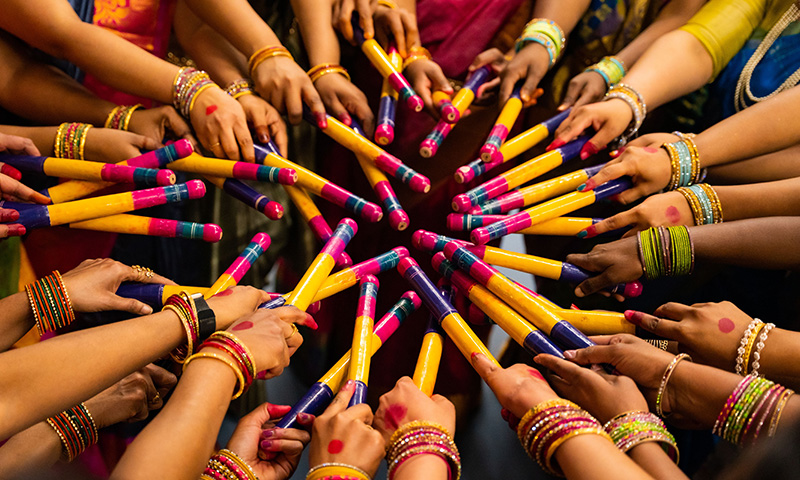
Every October, Gujarat trades its regular rhythm for something far more urgent. Streets clear out by nine, apartment lobbies empty into shared cars, and thousands of dancers converge on grounds where dhol, mandli vocals, and clapping feet run past midnight. Navratri here is not a passing observance; it is the state’s largest civic gathering. In December 2023, UNESCO formally inscribed Garba of Gujarat on the Representative List of Intangible Cultural Heritage of Humanity, and any traveller who has stood on a Vadodara ground at 2 a.m. will understand why.
The 2026 festival runs from 11 October to 19 October, with Dussehra on 20 October. If you are planning to be part of it, venue choice matters more than most people realise. Some grounds pull crowds close to 50,000 a night; others keep numbers small, traditional, and deeply devotional. A few blend celebrity concerts with Garba beats; a few strip everything back to a temple courtyard and a single lit lamp. Picking the right one shapes the entire trip. Here are ten venues worth building a Navratri itinerary around, spread across Ahmedabad, Vadodara, Rajkot, Surat, Banaskantha, and Kutch.
Garba, danced around a perforated earthen lamp called the garbo, honours the feminine energy of Shakti during the nine nights of Sharad Navratri. Dandiya Raas builds on the same devotional core but adds paired sticks and a partner-based choreography that reads almost like a courtly duel set to folk beats. Gujarat treats both forms as living tradition, not performance. That distinction matters. When you walk into a ground at Ahmedabad or Rajkot, you are joining a ritual that begins with the aarti and only later loosens into fast-paced footwork. Coming for the party alone tends to feel hollow; coming for the devotion first tends to feel unforgettable.
Three questions usually narrow the field quickly. First, how large a crowd do you want to be part of? Grounds like United Way of Baroda and GMDC run at stadium scale; club venues cap at a few thousand; temple towns feel almost intimate. Second, how traditional do you want the music and choreography? Rajkot, Ambaji, and Kutch stay closest to folk roots, while Ahmedabad’s private events lean into fusion. Third, who is travelling with you? Families with children do better at Baal Raas or Karnavati Club; younger solo travellers gravitate to Mirchi Rock N Dhol or Surat’s independent nights. Match the venue to the answers, not the other way around.
If Gujarat has one Navratri venue with global reputation, this is it. Hosted at M.M. Patel Farm in Atladara, United Way of Baroda has drawn crowds of 40,000 to 50,000 dancers a night for over four decades, and the money raised funds a network of charitable causes across Vadodara. The choreography is old-school, the mandli is live, and the ground is famous for how tightly it holds tradition despite scale. For 2026, the Rutumbara Group leads the vocals, continuing the legacy built by Atul Purohit. Passes sell fast; weekend nights typically go first.
Come dressed in a proper chaniya choli or kediyu, and expect to spend the early hours learning steps by watching the concentric circles closest to the centre. This is not a venue for shortcuts. It rewards patience, and by night three most first-timers are dancing without hesitation.
Best for: serious Garba enthusiasts, cultural purists, large group energy.
Organised annually by the Gujarat Tourism department at Gujarat Mineral Development Corporation Ground on University Road, GMDC is the flagship state-hosted Navratri venue. The scale is stadium-level, the sound system is engineered for arena-grade output, and the guest lineup usually features leading Gujarati playback artists and folk singers. Dance floors here open in phases, with dedicated zones for competitive Garba groups and a general seating perimeter for spectators who prefer to watch.
GMDC is the place to visit if you want the full modern spectacle: LED walls, professional lighting, and choreographed opening ceremonies. It also happens to be one of the most accessible venues for out-of-state visitors, with a wide range of pass tiers and clearer entry protocols than smaller grounds. Ahmedabad’s metro network makes reaching University Road straightforward from most parts of the city, which matters when you are heading home well after 1 a.m.
Best for: first-time visitors, working professionals, spectators who want polish.
Rajpath Club on the S.G. Highway hosts one of Ahmedabad’s most sought-after members-and-guests Garba events. The scale is smaller than GMDC, but the crowd is deeply committed, and the venue’s manicured lawns lend the whole celebration a distinctly upmarket feel. Live orchestras, structured dance zones, and a strong food court define the experience. Membership rules apply, so travellers usually need a local host or a guest pass through a corporate sponsor.
If you can access it, Rajpath rewards you with cleaner sound, less shoving, and a demographic mix that runs from schoolchildren to senior dancers who have been on this floor for decades. The pace stays high but never chaotic.
Best for: premium experience seekers, families, structured Garba nights.
Karnavati Club on Sarkhej Gandhinagar Highway runs a parallel Navratri programme that many locals rate on par with Rajpath. Its outdoor Garba ground is generously sized, and the club invests significantly in stage design, decor, and live music. Expect professional mandli groups, curated theme nights, and a food and beverage setup that keeps you fuelled through the small hours.
The venue draws a family-heavy crowd, so families with children or older parents often find it more manageable than public grounds. Entry works through membership and select guest access, similar to Rajpath. Locals tend to alternate between the two clubs across the nine nights.
Best for: club members, family groups, curated experience without stadium chaos.
Hosted by Radio Mirchi, this is the venue that reshaped Ahmedabad’s Navratri map. Rock N Dhol blends live traditional Garba with contemporary Bollywood and Gujarati fusion, professional DJs, and a stage that regularly features top Indian playback singers. Younger crowds gravitate here, and the ticket structure makes it accessible without club membership.
Expect a slick, high-energy production with a heavy tilt toward the second half of the night, when the DJ sets get louder and the crowd density peaks. The traditionalist purist may find it too polished, but for a first Navratri experience with visible glamour and celebrity headliners, few venues in Gujarat match its scale.
Best for: Gen Z, Bollywood-Garba fusion fans, celebrity spotters.
Rajkot is where Saurashtra’s older Garba traditions still hold ground, and Race Course is the city’s headline venue. The dance style here retains a raw, folk-forward character; the mandli often includes traditional Kathiawadi vocalists, and the choreography tends to be less rehearsed than in Ahmedabad, more improvised and community-driven.
Locals swear by Rajkot Garba for its authenticity. The city itself is easier to navigate than Ahmedabad or Vadodara, hotel rates during Navratri stay reasonable, and food halts around Race Course are excellent for a late-night thali or a plate of fafda-jalebi at dawn. It is a strong pick if you want the festival without the metropolitan intensity, and it pairs well with a short Saurashtra circuit through Junagadh and Somnath.
Best for: authenticity seekers, Saurashtra travellers, calmer Navratri pacing.
Surat’s Navratri scene is younger, glossier, and heavily driven by the city’s diamond and textile professional crowd. VR Surat mall hosts one of the most publicised commercial Navratri events, and independent organisers like Sanedo run large-format Garba nights across the Vesu, Adajan, and Piplod belts. Expect elaborate outfits, competitive dance floors, and events that lean into social media ready production.
Surat’s edge is variety. On any given night, you can pick between a stadium-scale ticketed event, a mid-size private organiser, and a neighbourhood-society celebration, all within a ten-kilometre radius. Traffic during Navratri is heavy, so ride-hailing works better than self-drive.
Best for: young professionals, fashion-forward attendees, social media documenters.
This one deserves its own category. Adukiyo Dadukiyo runs Gujarat’s best-known mother-and-child Garba event, held near Thaltej Shilaj Road. The programme is designed for children up to age 16 accompanied by a parent, and the choreography, lighting, and even ticketing structure are built around family comfort. Past editions have featured novelties like a robotic aarti, which the organisers use to draw children into the ritual side of the celebration rather than only the performance.
For travellers arriving with kids who would otherwise be excluded from adult-heavy grounds, Baal Raas is the venue that lets a family experience Navratri together. It sells out early.
Best for: parents with children, first-time family visitors, gentle introduction to Garba.
For travellers who want the devotional core of Navratri rather than the ticketed spectacle, Ambaji is unmatched. One of the 51 Shakti Peethas, the temple sits in the Aravalli foothills near the Rajasthan border and draws massive pilgrim numbers through all nine nights. Sheri Garba, the traditional street-corner form performed around a lit garbo, plays out across the temple town’s lanes with a spiritual weight that stadium venues cannot replicate.
The pacing is different here. Aartis, temple queues, and community meals structure the day; Garba emerges organically after sunset. Accommodation books out months ahead, so plan early or base yourself in Palanpur.
Best for: pilgrims, spiritual travellers, seekers of unfiltered tradition.
Kutch treats Navratri as a village festival that happens to be shared with the world. Bhuj and surrounding villages like Hodka and Bhirandiyara host community Garba nights that stay resolutely folk, often accompanied by Kutchi bhajans and regional instruments alongside standard Garba beats. The atmosphere is intimate, the outfits are heritage-crafted rather than mass-produced, and the entire experience layers naturally onto a broader Kutch itinerary that can extend into the Rann Utsav season starting shortly after.
Combining Kutch Garba with a wider Gujarat circuit works well for travellers who want more than just Navratri from their trip. A curated Gujarat tour package can bundle Bhuj, Ahmedabad, and Vadodara into a single itinerary that peaks at Navratri.
Best for: slow travellers, folk-culture enthusiasts, Rann Utsav crossover trips.
Passes and tickets: Major grounds like United Way of Baroda and GMDC begin selling passes in early September. Weekend nights sell first. Buy directly from official platforms or verified event pages.
Dress code: Traditional attire is not compulsory but strongly recommended. Chaniya choli for women, kediyu with kafni pyjama for men. Law Garden in Ahmedabad is Gujarat’s largest festival attire market and starts stocking two months out.
Timing: Most grounds open around 8 p.m. with aarti at 8.30. Serious Garba begins around 10 p.m. and runs past 2 a.m. Weekends often continue until dawn.
Accommodation: Ahmedabad, Vadodara, and Surat hotels book out for the Navratri weekend six to eight weeks in advance. Rajkot and Bhuj remain relatively easier.
Transport: Self-drive is inadvisable in Ahmedabad and Vadodara during Navratri. Ride-hailing and metro combinations work best, especially post-midnight when private cabs surge.
Fasting and food: Many Gujaratis observe a nine-day fast that permits fruits, dairy, and specific grains like sama and singhoda. Restaurants across all major venues offer curated farali menus. Non-fasting travellers will find abundant regular Gujarati thalis nearby.
Safety and etiquette: The aarti is not optional courtesy; stepping onto the dance floor while it is being performed is considered disrespectful. Wait for it to conclude. Photography is generally allowed at commercial venues but restricted at Ambaji and other temple settings.
For a broader planning view across Gujarat’s calendar, our complete travel guide to Gujarat covers routing, weather, and season-linked highlights alongside a wider look at fairs and festivals across India.
Navratri in Gujarat rewards travellers who commit to it. Choosing between United Way’s devotional intensity, GMDC’s engineered spectacle, Rajkot’s Saurashtra folk core, or Ambaji’s temple pulse comes down to what you want the festival to feel like rather than which venue is best. Many first-time visitors end up building itineraries that combine two or three, spending nights in different cities to compare styles.
Planning a Navratri trip that fits your travel pace, group size, and budget is easier with a specialist. To design a Gujarat Navratri itinerary that connects the venues you want to see, get in touch with Memorable India and our team will build a route around your dates.
Navratri 2026 in Gujarat runs from Sunday, 11 October to Monday, 19 October 2026, followed by Dussehra on 20 October. The nine nights are dedicated to Garba and Dandiya Raas celebrations at venues across the state.
United Way of Baroda in Vadodara is widely considered the biggest and most iconic Garba venue in Gujarat, drawing around 40,000 to 50,000 dancers each night at M.M. Patel Farm, Atladara. It also holds a long-standing charitable legacy.
Garba is a circular devotional dance performed around a lit earthen lamp or the goddess’s image, typically before the aarti concludes. Dandiya Raas is a partner-based dance using two decorated sticks and usually follows Garba later in the night.
Yes. Major venues like United Way of Baroda, GMDC Ground, Rajpath Club, and Mirchi Rock N Dhol release passes from early September, and weekend nights sell out fastest. Booking three to six weeks ahead is recommended for popular venues.
Traditional attire is strongly recommended. Women typically wear chaniya choli with heavy jewellery; men wear kediyu with kafni pyjama or a decorated kurta. Comfortable dance-friendly footwear is essential given the late hours.
Yes. Family-friendly venues include Rajpath Club and Karnavati Club in Ahmedabad, along with Adukiyo Dadukiyo Baal Raas, which is specifically designed for parents and children up to age 16. Ambaji Temple offers a devotional family experience.

The Kerala Backwaters: 11 Things To Know Before You Visit
23 Sep 2026
Udaipur Itinerary: How to Spend 3 Days in Udaipur
22 Sep 2026
The Best Places to See in Varanasi, India
22 Sep 2026
11 Ancient Temples in Palakkad That Deserve to Be Seen
22 Sep 2026
Best Places to Visit in Tamil Nadu, India: A Traveller’s Guide for 2026
21 Sep 2026


