 +919871148514
 info@memorableindia.com

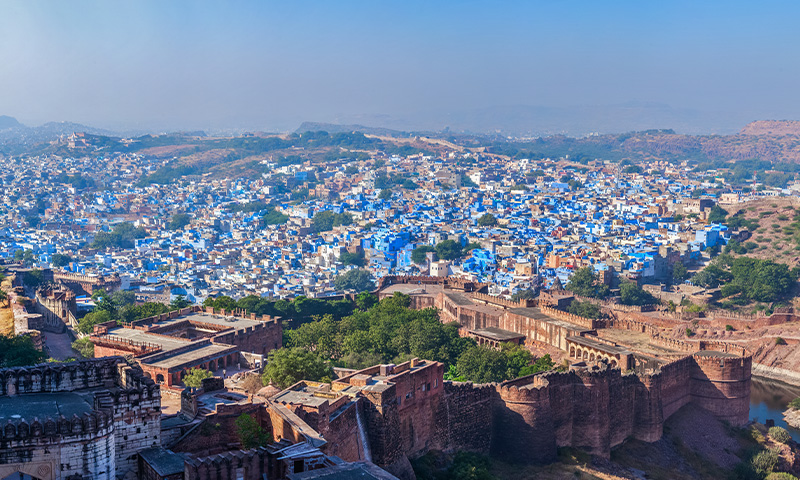
I booked a solo trip to Jodhpur for one simple reason: I wanted four days when nobody needed anything from me. No group chat deciding lunch, no colleague asking for a quick call. Just me, a backpack and the Blue City of Rajasthan.
By the second evening, that plan had quietly fallen apart. A shopkeeper had fed me kachori, a fort guard had walked me to a viewpoint he said only locals use, and a grandmother on a rooftop had corrected my Marwari greeting three times. I came home with a very different lesson from the one I went looking for.
This piece is part travel story, part planning guide. If travelling alone in India is on your mind and Jodhpur is on your list, here is the honest version: what the days felt like, where I went, what worked and what I would do differently next time.
The short answer: Jodhpur is one of the friendliest cities in Rajasthan for a first solo trip. Its compact old city, the walkable stretch between Mehrangarh Fort and the Clock Tower, and a strong local culture of hospitality make it easy to explore alone without feeling lonely. Plan three to four days, go between October and March, and stay in or near the old city.
I had shortlisted three cities. Jaipur felt too busy for a first attempt, and Udaipur felt like a town built for couples. Jodhpur sat comfortably in the middle: big enough to have good stays and connections, small enough at its core to explore on foot.
A few practical points tipped the decision:
For a quick overview before you go, the Memorable India guide to the best places to see in Jodhpur is a handy way to build a rough list, which you can then happily ignore once you arrive.
I checked into a small guesthouse in Navchokiya, one of the old neighbourhoods below the fort, dropped my bag and walked out with no plan. Within twenty minutes, my map app had given up. The lanes twist, split and narrow until two people have to turn sideways to pass each other.
I expected to feel anxious. What actually happened was this: every time I paused at a junction, somebody noticed. A boy on a cycle pointed me left without being asked. A woman drying red chillies on her doorstep warned me that the lane ahead was a dead end. Nobody wanted money. They simply did not like the idea of a visitor going the wrong way.
The famous blue walls look striking in photographs, but up close they are somebody’s home. Washing lines, parked scooters, temple bells and neighbourly gossip fill every corner. Walk slowly, keep your voice low in residential lanes and always ask before photographing people or their doorways.
By evening I had drifted down to the Ghanta Ghar, the Clock Tower that marks the edge of the old city. It was built between 1880 and 1911 by Maharaja Sardar Singh, and the busy market around it carries his name, according to Incredible India’s page on Ghanta Ghar.
I sat on a step with a glass of thick makhaniya lassi and watched the market wind down for the night. A spice seller, noticing that I had been sitting there for an hour, waved me over and handed me a paper twist of roasted cumin “for your mother’s kitchen”. The next evening, he remembered my name. On the third, he asked if I had eaten. That is how quickly you stop being a tourist here.
Mehrangarh is the reason most people come to Jodhpur, and it earns its reputation. The fort crowns the rocky ridge above the old city, and the museum inside, run by the Mehrangarh Museum Trust, holds palanquins, armour, miniature paintings and period rooms from the Rathore court.
I arrived as the gates opened, mainly to beat the heat and the tour groups. Halfway along the ramparts, a security guard asked where I was from, then spent ten unhurried minutes pointing out landmarks below: the blue cluster of Brahmpuri, the dome of Umaid Bhawan Palace on the far hill and the line of the old city wall.
“People come alone and only look at their phone,” he told me. “Look at the city. The city is looking back.” I have thought about that line on every trip since.
A few practical notes for your fort visit:
After the fort, I nearly skipped the park at its foot. I am glad I did not. Rao Jodha Desert Rock Park was created in 2006 to restore the natural ecology of a rocky wasteland next to the fort, and it now spreads across roughly 70 hectares of native desert plants and volcanic rock.
The trails were almost empty. For an hour, my only company was a pair of bulbuls, a squirrel with strong opinions about my snack, and a gardener pulling out weeds by hand. In a mix of Hindi and gestures, he explained that the land had once been choked by a thorny invasive shrub, and that his team had spent years bringing back plants that truly belong to the Thar.
It struck me that this was a different kind of never being alone. Even in the quietest corner of the city, someone had been caring for the ground under my feet long before I arrived. For travellers who value responsible tourism, the park is a good example of heritage and ecology being looked after together.
Every solo trip needs one place where you do nothing at all. In Jodhpur, mine was Toorji ka Jhalra, the restored stepwell a short walk from the Clock Tower. It dates to the 1740s, during the reign of Maharaja Abhay Singh, and lay neglected for years before it was cleaned up and restored. Incredible India’s guide to Toorji ka Jhalra covers its background in more detail.
I spent two late afternoons on its sandstone steps. Children dangled their feet near the water while their friends filmed reels. An elderly man fed the fish, one handful at a time. A couple from Pune asked me to take their photo and, twenty minutes later, I had a dinner invitation.
Sitting still in a public place, it turns out, is one of the easiest ways to meet people. You do not need an opening line. You just need to be there long enough for someone to say hello.
Eating alone is the part many solo travellers dread. In Jodhpur, I barely managed it once. If the city shows its warmth anywhere, it is at the table.
A few moments I still think about:
None of it was planned. All of it happened because I was alone and therefore, in the eyes of the city, a person who needed looking after.
I went to Jodhpur to be by myself. I came back understanding that being alone and being lonely are two very different things.
Here is what shifted in my thinking:
Think of it like turning up at a big Indian wedding without a plus-one. You may walk in alone, but nobody lets you sit for long with an empty plate.
October to March is the most comfortable window. Days are warm and evenings are pleasant, which makes long walks through the old city realistic. The summer months, roughly April to June, bring intense desert heat, and walking between sights in the afternoon can be draining. The Incredible India Jodhpur page lists typical month-wise temperatures if you want to compare.
Three to four days suits a first visit well. Here is the rhythm that worked for me:
Pick a heritage guesthouse or family-run homestay in the old city, around Navchokiya, Brahmpuri or near the Clock Tower. Most of my best conversations began at these breakfast tables. Read recent reviews from other solo guests, and confirm that an auto-rickshaw can reach the property after dark.
In my experience, Jodhpur felt welcoming and easy to manage alone, though everyday precautions still apply:
Solo women travellers may find it reassuring to book a few guided segments, such as an early fort visit or a food walk, for the first day or two while they find their feet.
Not everyone wants to piece a trip together from scratch, and that is perfectly fine. Travelling alone does not mean you have to plan alone. Memorable India’s solo tour packages are designed for independent travellers who want freedom with a safety net: private transfers, vetted stays and a local contact a phone call away.
If the Blue City is your main focus, our Jodhpur tour packages can be shaped around your pace, from a short city break to a longer Rajasthan circuit. Our team has been designing India journeys since 2005, with a clear preference for family-run stays and local guides, so your trip supports the people who make a place feel like home.
On my last morning, the spice seller at the Clock Tower pressed another paper twist of cumin into my hand and told me to come back with my family. I said I would, and I meant it.
A few days in Jodhpur on your own will not cure loneliness, and it will not hand you a life lesson on schedule. What it will do is place you in a city where people notice you, look out for you and feed you without being asked.
If you have been waiting for the right company before you travel, take this as a gentle nudge to stop waiting. Go alone. You will not stay alone for long. When you are ready to start planning, talk to our travel experts and we will help you shape a trip that fits you.
Yes. Jodhpur is compact, well connected by air and rail, and its main sights sit close together in and around the old city. Locals are known for their hospitality, which makes it a comfortable choice for first-time solo travellers.
Jodhpur is generally considered welcoming for women travelling alone. Stay in well-reviewed old city guesthouses, dress modestly, agree on fares before rides, share your live location after dark and consider a guided fort visit or food walk on your first day.
Three to four days is ideal. That gives you time for the old city and Clock Tower, Mehrangarh Fort and Rao Jodha Desert Rock Park, the Toorji ka Jhalra stepwell, and one slow day for food, a cooking class or a village visit.
October to March is the best period, with pleasant days and cool evenings. April to June is very hot, which makes walking around the city during the day tiring.
Walk the blue lanes of Navchokiya and Brahmpuri, visit Mehrangarh Fort early with an audio guide, explore Rao Jodha Desert Rock Park, sit by Toorji ka Jhalra in the evening, and eat your way around Sardar Market near the Clock Tower.
Jodhpur gets the name from the blue-painted houses that fill its old city below Mehrangarh Fort. The colour is commonly linked to local tradition and is also popularly believed to help keep homes cooler in the desert heat.

Bengali Wedding Rituals: All You Need to Know, Step by Step
22 Nov 2026
A Solo Trip to Jodhpur That Made Me Realise We Are Never Alone
22 Nov 2026
9 Most Popular Krishna Temples in Gujarat: A Practical Guide for Pilgrims
21 Nov 2026
9 Best Luxury Homestays Across Dehradun for Gorgeous Mountain Views
21 Nov 2026
19 Incredible Places for Wildlife Jungle Safari Holidays in Rajasthan
20 Nov 2026


