 +919871148514
 info@memorableindia.com
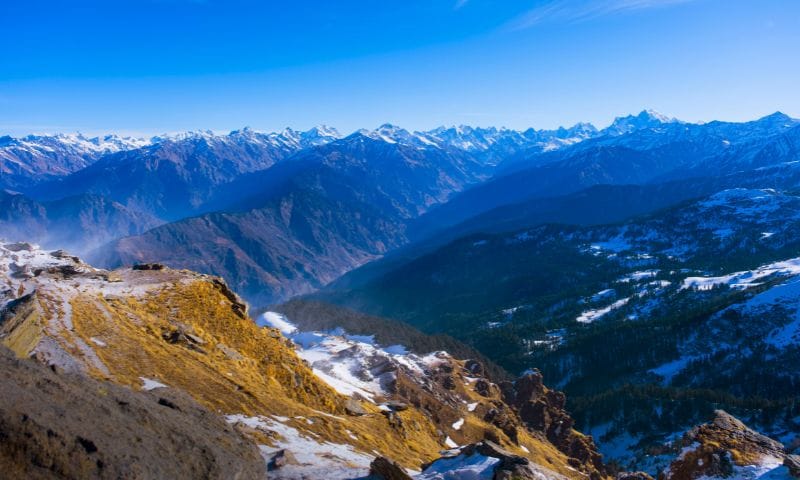
The moment school holidays begin, Mall Road in Nainital turns into a slow-moving parking lot, and Camel’s Back Road in Mussoorie starts to feel like Connaught Place with better weather. This is the tired truth of Uttarakhand’s most famous hill stations during peak season. The state, however, holds far more than these two overworked names. Spread across the Garhwal and Kumaon ranges are quieter towns where the loudest sound you hear is a Himalayan monal, apple orchards still outnumber cafes, and homestays are run by families who have lived on the same slope for three generations.
This guide covers ten less explored hill stations in Uttarakhand that reward travellers willing to look past the obvious. Some are trekking bases, others colonial cantonments, a few sit inside protected sanctuaries. All of them share one thing. They deliver Himalayan quiet without the crowd tax, and they make a strong starting shortlist for a trip that leans towards nature, culture, and honest mountain air.
Popular stations are convenient, but convenience comes at a cost. Overbooked hotels raise prices, restaurants cut corners on quality, and viewpoints get photographed more than they get looked at. Offbeat hill stations in Uttarakhand shift the maths in your favour. Rooms cost less, guides are locals who know every trail, and mornings actually feel like mornings. For anyone planning a repeat visit or a first trip that skips the tourist script, these quieter towns are simply better value.
Set at 1,706 metres in Pauri Garhwal, Lansdowne is a cantonment town run by the Garhwal Rifles since 1887. That military stewardship is why it has stayed compact, clean, and largely free of the concrete sprawl that has spoiled larger hill stations. It sits roughly 250 kilometres from Delhi via Kotdwar, which makes it viable for a long weekend without any airport transfer.
The town centres on Bhulla Tal, a small artificial lake with paddle boats. Tip-N-Top offers a clean view of the snow line at sunrise, the century-old St. Mary’s Church now holds a small regimental museum, and Darwan Singh Sangrahalaya is worth an hour for military history buffs. Evenings are quiet enough to hear wind moving through the pines, and mobile signal is limited by design. Our detailed Lansdowne travel guide covers stay options and short walks in more depth.
At 2,680 metres inside the Kedarnath Wildlife Sanctuary, Chopta sits in a landscape that early trekkers labelled the Mini Switzerland of India. Rhododendrons cover the slopes from March to May, and the meadows stay green well into October. The town itself is small, essentially a cluster of dhabas and stay huts, which is precisely its charm.
The main pull is the 3.5 kilometre trail to Tungnath, the highest Shiva temple in the world at 3,680 metres, followed by a steeper push to Chandrashila summit at 4,090 metres. From the top you see Nanda Devi, Trishul, Kedar Peak, Bandarpunch, and Chaukhamba in one uninterrupted arc. The nearby Deoriatal lake, a 2.5 kilometre walk from Sari village, reflects the Chaukhamba peaks on clear mornings. Our curated Chopta tour package covers the Tungnath trek, meals, and ground transport for anyone who wants the logistics handled.
Munsiyari sits at 2,290 metres in the Pithoragarh district, close to the Tibet and Nepal borders. Its defining visual is the Panchachuli massif, a five-peaked ridge that looms directly above the town and turns bright pink at sunset. The drive from Almora takes nine to ten hours through deep gorges and Bhotia trade villages that historically linked India to Tibet.
The town is the base for serious high-altitude treks to Milam, Ralam, and Namik glaciers, which need proper preparation and a week or more on trail. For visitors who are not trekking, the day walk to Khaliya Top meadow (about 5 kilometres one way) offers full Panchachuli views without technical difficulty. The small Tribal Heritage Museum records the trans-border culture of the Johar Valley. Our Kumaon region blog sets Munsiyari in the wider circuit with Almora and Binsar.
Kanatal is a small village at roughly 2,590 metres on the Chamba to Mussoorie road, about 78 kilometres from Rishikesh. It sits far enough from Mussoorie to shed the crowds but close enough for a comfortable drive, which is the sweet spot most weekend travellers look for.
The village is surrounded by apple orchards and thick deodar forests, and it has grown into one of Uttarakhand’s more comfortable camping bases. Tented camps here run family-friendly bonfires, valley cricket, rappelling, and short guided hikes without asking guests to rough it. The Surkanda Devi temple, roughly 8 kilometres away at 2,750 metres, involves a short 1.5 kilometre climb from Kaddukhal and rewards you with a three-state view on clear days. Kodia Jungle nearby has quiet trails that see almost no other walkers. Kanatal works especially well as a first mountain trip with children or older parents.
Chakrata is a cantonment town at 2,118 metres in the Jaunsar-Bawar region, about 90 kilometres from Dehradun. It houses a Special Frontier Force base, which is why some inner areas remain restricted for foreign nationals. Indian travellers move freely, and the restrictions have actually helped keep the town almost entirely commercial-free.
The star attraction is Tiger Falls, a single 312-foot drop that sits about 20 kilometres from the town centre and needs a short forest walk to reach. Deoban forest, a dense expanse of oak and deodar at 2,900 metres, offers birding and clean views of the Bandarpunch range. The Budher Caves, sometimes called Miracle Caves, are limestone formations that involve a moderate 8 kilometre trek. The surrounding Jaunsari villages, with their distinct traditions and wooden temple architecture, are one of the more culturally rewarding sides of Garhwal.
Binsar sits at 2,420 metres inside the Binsar Wildlife Sanctuary, roughly 33 kilometres from Almora. Since it is a protected forest, construction is banned inside the sanctuary boundary. Stays are limited to a handful of forest rest houses and small heritage homestays, and this alone keeps visitor numbers naturally low.
The showpiece is Zero Point, a short forest walk from the KMVN rest house that opens onto a single unbroken arc of Kedarnath, Chaukhamba, Trishul, Nanda Devi, and Panchachuli. On a clear autumn morning, the view is genuinely difficult to match anywhere in the Kumaon Himalayas. The sanctuary supports leopards, ghoral, and over 200 bird species, and forest walks are best done with a local naturalist. The former Chand dynasty capital ruins and the sacred Bineshwar Mahadev Temple nearby add historical weight to the visit. For ecological detail on the sanctuary, Binsar Wildlife Sanctuary has a useful reference summary.
Mukteshwar sits at 2,286 metres in the Nainital district and has quietly become the Kumaon alternative for travellers priced out of Nainital itself. The town takes its name from the 350-year-old Mukteshwar Dham temple, a small Shiva shrine perched on a cliff edge that overlooks the entire valley. The cliffs beside the temple, known as Chauli Ki Jali, are used for rappelling and rock climbing and offer a clear sightline of the Nanda Devi range on a clean day.
The Indian Veterinary Research Institute (IVRI), set up in 1893, still runs a working campus here, and the colonial-era stone buildings are a scenic bonus. The surrounding villages produce apples, plums, apricots, and peaches, and several orchards let visitors join the harvest between June and September. Mukteshwar’s small size makes it work well as a two or three night base, ideally combined with Bhimtal or Binsar.
Khirsu is a small village at roughly 1,700 metres, about 19 kilometres beyond Pauri town in Garhwal. It stays almost entirely off the mass-tourism map, which is exactly why it belongs on this list. The main draw is unusually simple: a single ridge that opens onto a claimed view of more than 300 Himalayan peaks, including Nanda Devi, Trishul, and Chaukhamba, laid out in a long uninterrupted line.
The village is quiet and surrounded by deodar, oak, and apple orchards. Facilities are limited, mostly a GMVN tourist rest house and a handful of family-run homestays, which is part of the appeal for travellers who want silence and low light pollution rather than cafes and Wi-Fi. Short walks lead to the old Ghandiyal Devta temple and the small Kandoliya forest. Khirsu pairs well with Lansdowne or Auli for a longer Garhwal itinerary.
Kausani sits at 1,890 metres in the Bageshwar district and remains one of the finest Himalayan viewpoints in Kumaon. Mahatma Gandhi stayed here in 1929 while writing his commentary on the Bhagavad Gita, and famously called the town the Switzerland of India in his notes. The Anasakti Ashram he stayed at is still open, modest, and quiet, with a small library and photo archive.
The town’s real signature is the roughly 300 kilometre wide Himalayan panorama it offers, taking in Nanda Devi, Trishul, Nanda Kot, and Panchachuli from a single ridge. Sunrise and sunset are the two windows when the peaks light up in gold and pink. The Kausani tea estate, one of the few working plantations in the Kumaon hills, allows short factory tours. The Rudradhari falls and the Baijnath temple complex, roughly 20 kilometres away, are worth a half day excursion.
Dhanaulti sits at 2,286 metres about 24 kilometres beyond Mussoorie on the road to Chamba. The extra 24 kilometres seems to filter out most weekend traffic, which turns Dhanaulti into the quieter and thicker-forested cousin of Mussoorie. Deodar cover here is dense enough to make the mid-day light feel like late afternoon.
The Eco Park, split into Amber and Dhara sections, is a state forest department project with well-maintained walking trails, a small nursery, and clean picnic areas that work well for families. Surkanda Devi temple at 2,750 metres is a short drive and 1.5 kilometre climb away, and the summit views on a clear day take in both the Yamuna and Bhagirathi valleys. A number of camps in and around Dhanaulti offer zip-lining, valley crossing, and rappelling for teenage groups. It also works as a peaceful base for a day trip into Mussoorie’s busier scenes.
Uttarakhand’s offbeat hill stations follow the same broad seasonal rhythm as their crowded neighbours, with two clear peak windows. March to June brings mild days, clear skies, and rhododendrons across the Garhwal ridges. September to November delivers the sharpest Himalayan views, once the monsoon clouds clear and the air turns crisp. December and January bring snow to higher stations like Chopta, Munsiyari, Chakrata, and Kanatal, which is beautiful but limits road access after fresh falls.
Monsoon (July to mid-September) is best avoided in most of Uttarakhand. Landslides on the Kumaon and Garhwal roads are common, and treks like Chandrashila or Khaliya Top are unsafe on slick trails. Always check road status on the official Uttarakhand Tourism portal before locking dates, especially for higher altitude towns.
The strength of Uttarakhand’s less explored hill stations is that they combine easily. Lansdowne, Khirsu, and Kanatal sit within a natural Garhwal cluster, and Mukteshwar, Binsar, and Kausani form an unhurried Kumaon loop. Munsiyari and Chopta are worth planning around, given the distances involved. Most itineraries work best as seven to ten day trips with two or three bases.
For a route tailored to your dates, group size, and pace, our team can shape a custom itinerary that avoids the tourist crush and puts you in properly local homestays. Reach out through the Memorable India contact page to start the conversation.
Khirsu and Munsiyari are among the most offbeat. Khirsu remains almost entirely off the mainstream trail with limited stays and a ridge view of more than 300 Himalayan peaks. Munsiyari, though better known among trekkers, still sees far fewer visitors than Nainital or Mussoorie thanks to its remote location near the Tibet border.
March to June and September to November are the two clear windows. March to June brings mild days and blooming rhododendrons in Chopta and Munsiyari. September to November delivers the clearest Himalayan views once monsoon clouds have cleared. December and January bring snow to higher stations like Chopta, Chakrata, and Kanatal.
Lansdowne, at around 250 kilometres from Delhi via Kotdwar, is the closest and most accessible offbeat hill station in Uttarakhand. It works well for a weekend trip without an overnight halt. Kanatal and Dhanaulti are the next closest, both under 300 kilometres and reachable in a single day’s drive.
Yes. Lansdowne, Kanatal, Mukteshwar, and Dhanaulti are the most family-friendly. They have moderate altitudes, easy walking trails, camping options with safe supervision, and comfortable stays. Chopta, Munsiyari, and Chakrata are better suited to families with older children who can handle short treks.
Yes, and it is the most efficient way to travel in Uttarakhand. Lansdowne, Khirsu, and Kanatal cluster naturally in Garhwal. Mukteshwar, Binsar, and Kausani form a natural Kumaon loop. Seven to ten days is typically enough to cover three or four destinations without rushing between them.
Most of these hill stations do not require permits for Indian citizens. Chakrata has some restricted zones for foreign nationals due to its cantonment status. High-altitude treks around Munsiyari, such as the Milam Glacier route, require permits from the local forest and district authorities, which local tour operators can arrange in advance.
Best Time to Visit Tadoba National Park, Maharashtra: A Season-by-Season Guide
09 Jul 2026
12 Jyotirlingas of Lord Shiva in India and Their Mythological Importance in Hindu Religion
08 Jul 2026
10 Romantic Retreats in Bhutan: The Perfect Honeymoon Spot
07 Jul 2026
10 Most Popular Festivals in Arunachal Pradesh You Should Plan Your Trip Around
06 Jul 2026
10 Most Beautiful Villages in Uttarakhand You Must Visit
05 Jul 2026


