 +919871148514
 info@memorableindia.com

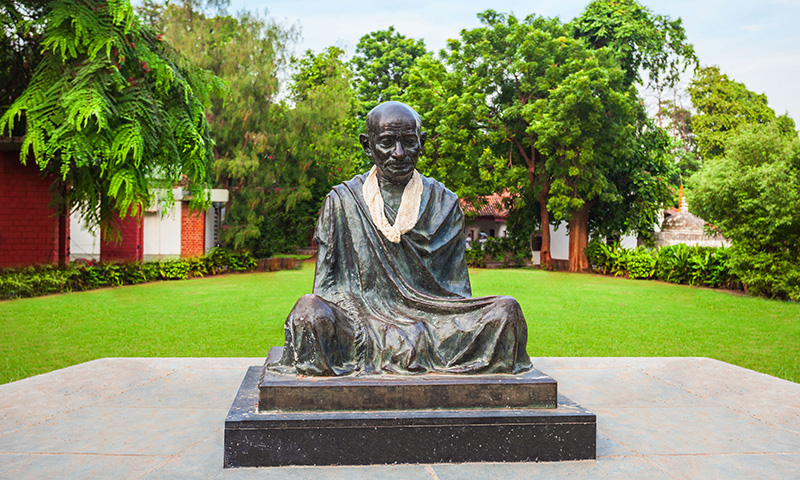
On the quieter western bank of the Sabarmati River sits a cluster of whitewashed cottages, open prayer grounds and shaded gravel pathways that quietly altered the arc of modern Indian history. The Sabarmati Ashram in Ahmedabad, founded by Mahatma Gandhi in 1917, served as the operational base of the Indian freedom movement for more than a decade. Today the site functions as a living museum, drawing travellers, researchers, school groups and spiritual visitors from India and abroad.
If Ahmedabad is on your map, or if you are planning a wider Gujarat circuit, the ashram deserves a dedicated half-day on your itinerary. This guide walks you through everything that matters: the history, the layout, timings, entry details, access, and practical tips to make the visit meaningful rather than rushed.
The ashram lies roughly 7 kilometres from the Ahmedabad city centre, in a residential and institutional neighbourhood known as Sabarmati. Its official address is Gandhi Smarak Sangrahalaya, Ashram Road, Sabarmati, Ahmedabad, Gujarat 380027. The complex covers approximately 36 acres along the river, and the principal cottages, prayer ground and museum are open to visitors every day of the year.
Reaching it is straightforward. Auto-rickshaws, app-based cabs and city buses connect the site to every major hub in Ahmedabad. From Kalupur Railway Station or the Sardar Vallabhbhai Patel International Airport, the drive typically takes 20 to 30 minutes depending on traffic.
Mahatma Gandhi established the ashram on 17 June 1917, soon after his return from South Africa. An earlier version had been set up at Kochrab, a nearby Ahmedabad locality, in May 1915. It was later shifted to the banks of the Sabarmati to allow more land for farming, cattle rearing and the practice of self-reliance that defined Gandhi’s vision of community life.
The ashram became the headquarters for several landmark movements of the Indian freedom struggle. The most historically significant was the Dandi March, launched from this very site on 12 March 1930. Gandhi, along with 78 chosen followers, walked 241 miles over 24 days to the coastal village of Dandi, where he broke the colonial salt law by producing salt from seawater. According to the official Gandhi Ashram archives, Gandhi vowed never to return to the ashram until India achieved independence. He kept that promise for the rest of his life.
The ashram was also central to Gandhi’s experiments with communal living, Khadi production, educational reform, inter-caste harmony and the practice of ahimsa. Much of the social and political thought that shaped post-independence India can be traced back to these grounds.
What makes the ashram’s history unusual is that it was never designed as a monument. It was a working community of about 230 residents at its peak, with its own kitchen, dairy, school, dispensary and spinning sheds. Decisions about diet, dress, sanitation and even the daily timetable were debated openly. Visitors today still walk past the same wells, grinding stones and open courtyards that supported this rhythm of life, which lends the site a texture that reconstructed heritage spaces rarely manage to achieve.
The complex preserves several original structures, each tied to a specific chapter of Gandhi’s life. Walking through it feels less like touring a conventional museum and more like reading a chronological record of the freedom struggle in situ.
This modest cottage was Gandhi’s personal residence from 1918 to 1930. The interiors have been preserved almost exactly as he left them. Visitors can see his writing desk, charkha, wooden sandals and the mat on which he spent much of his working day. For most people, this is the most quietly moving part of the ashram.
Named after Maganlal Gandhi, the Mahatma’s nephew and the ashram’s first manager, this building reflects the administrative backbone of the community. Maganlal is credited with refining the charkha and reviving khadi weaving as a national symbol.
This structure once hosted some of the most prominent visitors of the era, including Rabindranath Tagore, C. F. Andrews and Jawaharlal Nehru. It offers a sense of the networks of thought and reform that converged at Sabarmati during Gandhi’s years here.
Named after Acharya Vinoba Bhave and Mirabehn (Madeleine Slade), these small cottages are reminders of the international and intellectual community Gandhi cultivated around his movement.
The open-air prayer ground is where Gandhi conducted his evening prayers and addressed followers on matters of ethics, politics and self-discipline. Several of his most quoted speeches were delivered here.
Designed by the celebrated Indian architect Charles Correa and inaugurated in 1963, the museum houses an extensive archive of letters, photographs, film reels and personal belongings tied to Gandhi’s life. The galleries are organised thematically, covering his early years, the ashram period, the Dandi March and the final years of the freedom movement.
Planning around official hours helps you cover the complex comfortably without rushing.
A light and sound show is usually held during the peak tourist months of October to March. Timings and ticket details change seasonally, so it is worth checking locally before you plan.
Ahmedabad is well connected by road, rail and air, which makes the ashram easy to slot into almost any Gujarat itinerary.
For travellers planning a wider route, our Gujarat tour packages pair Ahmedabad with Rann of Kutch, Somnath and Dwarka for a well-rounded cultural journey. The internal link is useful if you want itinerary ideas that extend beyond a single-city trip.
Gujarat’s climate largely decides the quality of any visit. The ideal window is October to March, when daytime temperatures stay between 15 and 30 degrees Celsius. The weather is pleasant for walking around the open sections of the ashram and spending time on the riverfront ghats nearby.
Summers from April to June can be harsh, with temperatures crossing 40 degrees Celsius. Monsoons from July to September bring moderate rainfall and a cooler climate, though the ground along the riverbank can turn slippery.
If your travel dates align with 2 October (Gandhi Jayanti) or 30 January (Martyrs’ Day), the ashram hosts special commemorative events that are worth experiencing. These are among the few occasions when the site feels crowded, so plan to arrive early.
The ashram pairs well with other heritage and cultural stops in the city. A single day can comfortably accommodate three or four sites alongside a long lunch at one of Ahmedabad’s famed Gujarati thali restaurants.
Travellers who want deeper cultural immersion often extend their stay to explore the walled city, which is recognised by UNESCO as a World Heritage Site. Our heritage tours of India can be customised to include Ahmedabad’s old quarters alongside Rajasthan and Delhi, which is a sensible pairing if you have a week or more.
A few practical pointers help you plan a smoother visit.
For travellers with elderly family members or young children, the ashram’s flat layout and shaded pathways make it comfortable for all age groups. There are basic restroom facilities, drinking water points and a small bookshop on site that stocks Gandhian literature, biographies and modestly priced souvenirs. The bookshop is a useful stop even for a brief visit, as several titles here are not easily available in regular retail stores.
Beyond its historical weight, the ashram continues to run programmes in rural education, environmental sustainability and self-reliance based on Gandhian principles. Its library and archives are regularly accessed by researchers from India and abroad. In a city rapidly transforming through metro rail, riverfront redevelopment and new business districts, the ashram remains a quiet counterweight that reminds visitors of a philosophy which shaped the twentieth century.
For travellers planning a broader spiritual and heritage circuit across India, exploring Gandhian landmarks offers a thoughtful alternative to the typical tourist trail. Our curated spiritual tours of India often weave Sabarmati Ashram into longer journeys that cover Varanasi, Rishikesh and Bodh Gaya, which gives the trip real narrative depth.
Sabarmati Ashram is more than a monument. It is a working reminder of how a small community on the banks of a river shaped one of the largest non-violent movements in human history. For a weekend in Ahmedabad or a longer Gujarat itinerary, including the ashram adds depth and perspective to the journey.
For travellers who want a well-planned experience with trusted local expertise, our team at Memorable India can design a Gujarat itinerary that balances heritage sites, cultural experiences and comfortable logistics. Reach out through our Ahmedabad tour packages page to begin planning. This internal link is relevant if you want curated options rather than piecing a trip together on your own.
Entry to Sabarmati Ashram is free for all visitors, including Indian and international tourists. There are no separate charges for the museum or the main cottages.
The ashram is open every day of the week from 8:30 AM to 6:30 PM, including public holidays. Early morning or late afternoon is the best time to visit, as the crowds are lighter and the light is better for photography.
A thorough visit takes about two to three hours. This allows enough time to walk through Hriday Kunj, the Gandhi Smarak Sangrahalaya, the prayer ground and the riverfront within the complex.
Yes, personal photography is allowed in most areas. However, flash photography and tripods are not permitted inside the museum galleries, as they can damage the archival exhibits.
The ashram is approximately 9 kilometres from Sardar Vallabhbhai Patel International Airport. The drive takes 20 to 30 minutes depending on traffic.
Yes. It is one of the most historically significant sites in India and a cornerstone of the national freedom movement. The preserved cottages, museum archives and tranquil setting on the river make it a meaningful stop for anyone interested in history, architecture or Gandhian thought.

A Complete Travel Guide to Kuno National Park: Everything You Need to Know Before You Go
22 Oct 2026
A Comprehensive Guide to the Famous Sabarmati Ashram in Ahmedabad
22 Oct 2026
7 Reasons Why One Should Travel by Indian Rail
22 Oct 2026
6 Reasons to Visit Chopta Valley in the Himalayas
21 Oct 2026
5-Step Guide to Plan a Jungle Safari Trip to Corbett National Park
20 Oct 2026


