 +919871148514
 info@memorableindia.com
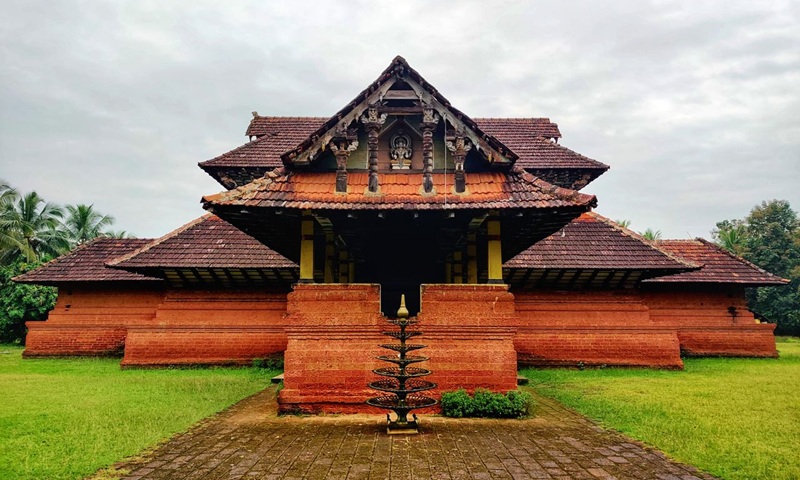
Palakkad rarely makes it to the first draft of a Kerala itinerary, and that is precisely why its temples remain so rewarding. Guarding the only natural break in the Western Ghats, this district has absorbed centuries of movement between Tamil Nadu and the Malabar coast, and its shrines carry that mixed inheritance openly. You will find Tamil style agraharams beside classic Kerala gopurams, Tamil style chariot processions a short walk from theyyam country, and legends that reach back to Parasurama himself. The ancient temples in Palakkad are not museum pieces either. Daily poojas, village velas, and centuries old festival calendars still run on schedule. This guide walks you through eleven shrines worth planning around, along with routes, timings logic, and practical notes, so your Palakkad temple tour feels organised rather than accidental.
Geography explains most of it. The Palakkad Gap, a wide pass in the Western Ghats, made the district the historic trade and migration corridor between the Coimbatore plains and central Kerala. Tamil Brahmin families settled here in large numbers, building agraharams and Shiva temples in a style closer to Thanjavur than to Travancore. At the same time, older Kerala shrines dedicated to Bhagavathy, Vishnu, and Shiva continued their own traditions of vela festivals, mural art, and woodwork. The result is unusual density: within one district you can trace Dravidian granite architecture, sloping Kerala roofs, Jain heritage, and folk ritual arts such as tholpavakoothu shadow puppetry. Few regions in South India compress this much temple history into such short driving distances.
The list below moves roughly from Palakkad town outward toward the Pattambi and Ottapalam belt, which makes clustering your visits easier.
Start where most heritage lovers do. This Shiva temple on the banks of the Kalpathy river dates back to 1425 CE and is often called Dakshina Kashi for its association with Varanasi. The temple anchors Kerala’s first notified heritage village, a working agraharam where brass lamps, kolams, and Carnatic music are part of daily life rather than staged culture. Time your visit for November if you can. The Ratholsavam, the famous chariot festival of Palakkad, sees beautifully decorated temple chariots pulled through the streets by thousands of devotees, with neighbouring agraharam temples joining the procession. The event has run for centuries and remains one of the few festivals of its kind in Kerala, a tradition more common across the border in Tamil Nadu. Even on an ordinary morning, the riverside setting and the streetscape justify an unhurried hour.
Locally known as the Hemambika temple, this shrine a short drive from Palakkad town is famous for an unusual idol: a pair of upraised hands rising from the sanctum. Legend holds that the goddess, seen mid emergence from a pond, withdrew and left only her hands visible. The sanctum faces the water, and the temple tank remains central to its rituals even today. Devotees worship her as a combined form of Saraswathi, Lakshmi, and Durga, which makes the temple popular with students before examinations and families seeking blessings for new beginnings. The setting is quiet, green, and distinctly rural, and pairs naturally with Kalpathy on a single town circuit.
About ten kilometres from Palakkad town, Thiruvalathur is among the oldest temple sites in the district and worth seeking out for its craftsmanship. Two principal deities share the complex, which gives the temple its Randu Moorthy name, and the wooden carvings and stone work here reflect classic Kerala temple artistry of an earlier era. Records and local tradition suggest the site has been in continuous worship for well over a millennium, which places it among the true elders of this list. This is a shrine for slow observers. Come in the early morning, watch the ritual rhythm, and study the woodwork panels rather than rushing through darshan.
Tradition places this temple among the oldest in Kerala, its consecration credited to Parasurama himself in local belief. Dedicated to Varaha, the boar incarnation of Vishnu, the shrine near Kumbidi in Pattambi taluk also carries the well known legend of Perunthachan, the master carpenter said to have designed a temple so perfect that its completion was divinely interrupted. For travellers interested in Kerala temple architecture and origin legends, Panniyur is essential. It sits close to the Bharathapuzha river belt, which remains one of the most atmospheric stretches of the district.
South of Palakkad town, near the Nelliyampathy foothills, Kachamkurissi is a Vishnu temple celebrated for its murals and its association with the old Vengunad chiefdom. The drive itself earns the detour, through paddy flats framed by the Ghats, and the temple rewards visitors who care about painted walls and quiet sanctums over crowds. Combine it with Kollengode’s palace architecture and you have a satisfying half day in the least hurried corner of the district.
This ancient Shiva temple near Lakkidi holds a special place in Kerala’s cultural memory. Kunchan Nambiar, the eighteenth century poet who created Ottamthullal, the satirical dance form still performed across Kerala, was born in this village and shaped his art in the temple’s shadow. Visiting here connects temple heritage with living performance tradition, and the nearby Kunchan Nambiar memorial completes the story. The temple’s setting near the Bharathapuzha adds to its calm, and the annual Shivaratri observances draw devotees from across the Valluvanad belt.
Near Ottapalam, Chinakkathoor is best known for two things: its spectacular annual pooram, where caparisoned elephants, percussion ensembles, and folk art troupes fill the temple grounds, and its long running tradition of tholpavakoothu, the ritual shadow puppetry of Palakkad performed in the temple’s koothumadam during festival season. The pooram usually falls between February and March. Outside festival weeks, the temple offers a quieter look at Bhagavathy worship in the Valluvanad region, an area with its own distinct ritual identity.
One of the two principal Bhagavathy temples of Palakkad town, Manappullikavu enshrines an idol regarded as swayambhu, or self manifested, with the sanctum image installed later. The temple’s vela festival is a fixture of the town’s calendar, drawing large local crowds with elephants, fireworks, and traditional percussion. Its location in Yakkara makes it an easy addition to any town based circuit, and the atmosphere on festival evenings shows how deeply temple life and civic life still overlap in Palakkad.
Few temples in Kerala connect as directly to Tamil literary tradition as this one. The presiding goddess here is worshipped as Kannagi, the heroine of the Silappadhikaram, one of the great epics of classical Tamil literature. That link alone marks Palakkad’s position as a cultural bridge between two states. The temple is also known for a charmingly precise local tradition: evening fireworks in the compound, timed so reliably that residents have long joked about setting their clocks by the sound.
In the Pattambi region, the Kodikkunnu temple is an ancient shrine to Bhadrakali with Shiva worshipped alongside. It draws steady devotion from surrounding villages and rewards travellers who want temples in Palakkad district beyond the obvious names. The rural setting, ritual continuity, and proximity to Panniyur make it a logical stop on a western Palakkad route along the Bharathapuzha, where several old shrines sit within short distances of one another.
The final entry widens the definition of temple heritage. This granite Jain temple in the Jainimedu suburb dates to the fifteenth century and stands as evidence of a once thriving Jain community on this trade corridor. The austere stone structure feels very different from the district’s Hindu shrines, and it carries a literary footnote too: the celebrated Malayalam poet Kumaran Asan wrote his landmark poem Veena Poovu while staying in a Jain house nearby. A visit takes thirty minutes and adds real depth to your reading of Palakkad’s past.
A little routing turns eleven scattered shrines into three comfortable clusters.
Getting there is straightforward. Palakkad Junction is a major railway hub with direct trains from most Indian metros. Coimbatore airport lies roughly 55 kilometres away across the state border, while Kochi airport is about 130 kilometres southwest, which makes Palakkad an easy add on to a longer Kerala circuit. October to March offers the most comfortable weather, and November brings the Ratholsavam at Kalpathy. Temple festival season, broadly January to April, adds poorams and velas across the district, though exact dates shift each year with the Malayalam calendar, so confirm before you lock travel dates. Most travellers weave these shrines into a wider itinerary; our Kerala tour packages can be customised to include a dedicated Palakkad heritage day between Kochi and the northern hill stations.
Palakkad also solves a common itinerary problem. Most Kerala routes run heavy on backwaters, beaches, and hill stations, and light on genuine heritage. Slotting a temple day here between Kochi and Wayanad, or as a detour off the Coimbatore highway, adds cultural weight without adding serious driving hours. Families travelling with elders find the district particularly workable, since distances between shrines are short, terrain is flat, and crowds are thin outside festival weeks. A longer 10 days Kerala itinerary absorbs a Palakkad extension comfortably.
Festivals transform these temples, and a rough calendar helps you decide when to go.
Dates follow the Malayalam calendar and shift each year, so treat this as a planning frame rather than a fixed schedule. Festival weeks also mean full hotels in and around Palakkad town, and rooms are best booked well in advance for the Ratholsavam in particular.
A few ground rules keep visits smooth and respectful.
Travellers who prefer structured spiritual journeys with darshan timings, dress guidance, and rituals arranged in advance can look at our Kerala pilgrimage tour options, which handle exactly these details across the state’s major shrines.
Eleven temples, three easy clusters, and a district that still treats its heritage as daily life rather than display. Palakkad offers something increasingly rare in Indian travel: ancient sites without queues, festivals that belong to their communities, and stories, from Kannagi to Kunchan Nambiar, that connect stone and ritual to living culture. Travellers drawn to this side of Kerala can fold a Palakkad day into a longer route through our 7 day Kerala temple tour, or build a fully customised heritage circuit with the Memorable India team. Either way, go before everyone else figures this district out.
Which is the most famous ancient temple in Palakkad?
The Viswanatha Swamy Temple at Kalpathy is the most famous ancient temple in Palakkad. Built in 1425 CE on the Kalpathy riverbank, it is known as Dakshina Kashi and hosts the Kalpathy Ratholsavam chariot festival every November.
What is the best time to visit Palakkad temples?
October to March is the best time to visit Palakkad temples, with pleasant weather for temple circuits. November brings the Ratholsavam, while the January to April window covers most poorams and vela festivals across the district.
How do I reach the temples across Palakkad?
Palakkad Junction railway station connects the district to most major Indian cities. Coimbatore airport is about 55 kilometres away and Kochi airport about 130 kilometres, and taxis or self drive cars work best for covering temples spread across the district.
Is Palakkad home to the oldest temple in Kerala?
Local tradition holds that the Panniyur Sri Varahamurthy Temple near Kumbidi was the first temple consecrated in Kerala, with its origin credited to Parasurama. Historians treat the claim as legend, but the temple’s antiquity and importance are widely acknowledged.
Can non Hindus visit temples in Palakkad district?
Entry rules vary by temple. Outer courtyards and festival grounds are generally open to everyone, while some sanctums restrict entry to Hindus. Visitors should check with the temple office on arrival and follow dress and footwear norms in all cases.
How many days are enough for a Palakkad temple tour?
Two to three days cover the major ancient temples comfortably. One day suits the Palakkad town cluster, a second covers the Bharathapuzha belt around Pattambi and Ottapalam, and an optional third day adds Kachamkurissi, Kollengode, and Nelliyampathy.
12 Top Tourist Destinations in Jammu and Kashmir for a Memorable 2026 Trip
13 Oct 2026
12 Tips to Remember Before Holidaying in the Northeast Indian States
11 Oct 2026
10 Things to Do on a Family Vacation in Shimla, Himachal Pradesh
09 Oct 2026
10 Days in India: Where to Go and What to See
05 Oct 2026
10 Best Places in North India for Corporate Outings to Recharge and Build Team Spirit
01 Oct 2026


