 +919871148514
 info@memorableindia.com
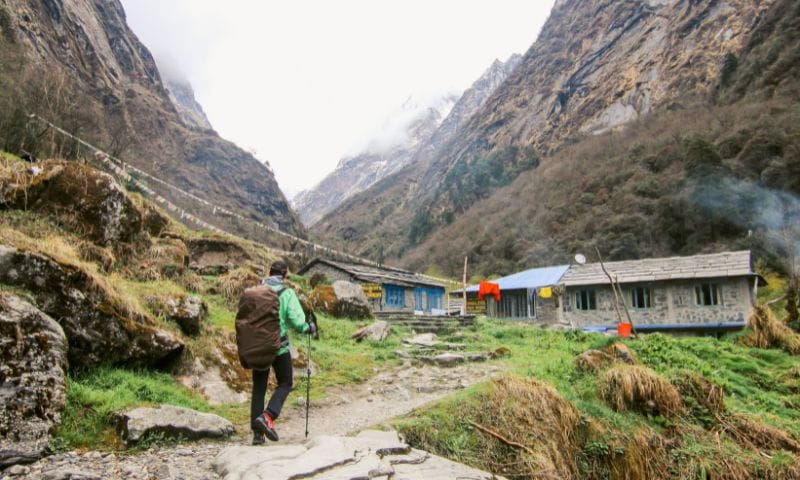
Eight of the world’s fourteen peaks above 8,000 metres stand inside Nepal’s borders. That single fact has shaped the country’s identity among travellers for decades, but it only tells part of the story. The trails that wind through these mountains pass through subtropical forests at 1,000 metres, rhododendron groves at 3,000, glacial moraines at 5,000, and wind-scoured passes above that. No other trekking destination on earth compresses this much ecological and cultural range into routes you can walk on foot.
Nepal’s trekking infrastructure has matured significantly. The teahouse system along popular routes means you can trek for weeks carrying only a daypack, eating dal bhat at family-run lodges each evening. Restricted-area permits keep wilder corridors like Manaslu and Upper Mustang from overcrowding. And the permit system itself, while bureaucratic, is well understood and navigable through any licensed operator.
This guide covers 15 trails across Nepal’s major trekking regions, from four-day hill walks to three-week expeditions, arranged by region to help you match a route to your fitness, schedule, and ambition.
Duration: 12 to 14 days | Difficulty: Challenging | Max Altitude: 5,364 metres (Everest Base Camp) | Best Season: March to May, September to November
The trail from Lukla to Everest Base Camp follows the Dudh Kosi river valley through Sherpa settlements like Namche Bazaar, Tengboche, and Dingboche before reaching the Khumbu Glacier at 5,364 metres. The route passes through Sagarmatha National Park, a UNESCO World Heritage Site, and offers close views of Everest, Lhotse, Nuptse, and Ama Dablam.
Most trekkers add a pre-dawn climb to Kala Patthar (5,545 metres) for the clearest panoramic view of Everest’s summit. Acclimatisation days are built into every itinerary, typically at Namche and Dingboche. A domestic flight to Lukla is required, and weather delays are common.
For background on the national park and its ecosystem, the Sagarmatha National Park guide provides useful context.
Duration: 10 to 12 days | Difficulty: Challenging | Max Altitude: 5,357 metres (Gokyo Ri) | Best Season: March to May, September to November
An alternative to the standard Everest Base Camp route, the Gokyo Lakes trek branches west through the Ngozumpa Glacier valley to a chain of turquoise glacial lakes. The climb to Gokyo Ri at sunrise delivers a panoramic sweep of four 8,000-metre peaks: Everest, Lhotse, Makalu, and Cho Oyu. The trail is quieter than the EBC route, and the lakes themselves are among the highest freshwater systems in the world.
This route can be combined with the EBC trek via Cho La Pass for a longer Three Passes itinerary, though that extension adds significant difficulty and several days.
Duration: 18 to 20 days | Difficulty: Very Challenging | Max Altitude: 5,545 metres (Kala Patthar) | Best Season: March to May, October to November
The most demanding standard route in the Everest region links three high passes: Kongma La (5,535 metres), Cho La (5,420 metres), and Renjo La (5,360 metres). The itinerary typically includes both Everest Base Camp and the Gokyo Lakes, making it the most comprehensive circuit of the Khumbu.
This trek is suited only to trekkers with proven high-altitude experience and strong cardiovascular fitness. The pass crossings involve scrambling over loose rock and, depending on the season, snow. Support from a guide and porter is strongly recommended.
Duration: 14 to 18 days | Difficulty: Challenging | Max Altitude: 5,416 metres (Thorong La Pass) | Best Season: March to May, October to November
The Annapurna Circuit is one of the longest-running trekking classics in the Himalayas. The route circles the Annapurna massif, climbing from subtropical lowlands through temperate forests, past Tibetan-influenced villages like Manang, and over Thorong La Pass at 5,416 metres before descending into the arid Kali Gandaki gorge, one of the deepest valleys on earth.
Road construction has shortened some lower sections, and many trekkers now start from Chame or Dharapani to focus on the high-altitude segments. Adding a side trip to Tilicho Lake (4,919 metres) is a popular extension that adds one or two days but rewards with views of one of the world’s highest lakes.
Duration: 7 to 11 days | Difficulty: Moderate | Max Altitude: 4,130 metres (Annapurna Base Camp) | Best Season: March to May, September to November
The Annapurna Base Camp trail leads into a natural amphitheatre ringed by Annapurna I, Annapurna South, Hiunchuli, and Machapuchare (Fishtail). The route passes through Gurung villages like Ghandruk and Chhomrong, bamboo forests, and alpine meadows before reaching the glacial sanctuary at 4,130 metres.
Compared to the full circuit, this trek offers a shorter commitment with an equally dramatic payoff. It is widely recommended as a first Himalayan trek for those with moderate fitness.
Duration: 4 to 5 days | Difficulty: Easy | Max Altitude: 3,210 metres (Poon Hill) | Best Season: Year-round (best: October to April)
The shortest and most accessible trek on this list, the Ghorepani Poon Hill route delivers a sunrise panorama of Dhaulagiri, Annapurna South, and Machapuchare from a viewpoint at 3,210 metres. The trail passes through Gurung and Magar villages, terraced rice fields, and rhododendron forests that bloom spectacularly in March and April.
Teahouses are spaced every two to three hours, making this ideal for families, older travellers, and anyone with limited trekking time. No prior high-altitude experience is needed.
Duration: 5 to 7 days | Difficulty: Moderate | Max Altitude: 4,500 metres (Mardi Himal Base Camp) | Best Season: March to May, September to November
A newer addition to the Annapurna trekking portfolio, the Mardi Himal trail climbs a forested ridge between the Modi Khola and Mardi Khola valleys before opening onto high-altitude meadows with close views of Machapuchare and Annapurna South. The route sees far fewer trekkers than the ABC trail, giving it a quieter, more personal feel.
The upper sections above the tree line are exposed and navigation can be tricky in fog, so a local guide is advisable.
Duration: 7 to 10 days | Difficulty: Moderate | Max Altitude: 3,870 metres (Kyanjin Gompa) | Best Season: March to May, September to November
The Langtang Valley is the closest major trekking region to Kathmandu, reachable by a six to seven hour road journey to Syabrubesi without any domestic flight. The trail follows the Langtang Khola through bamboo and rhododendron forests to the Tamang village of Kyanjin Gompa, set beneath Langtang Lirung (7,227 metres).
The community was heavily affected by the 2015 earthquake and has since rebuilt with remarkable resilience. Trekking here directly supports local recovery. A local yak cheese factory at Kyanjin Gompa is a distinctive stop.
Duration: 7 to 9 days | Difficulty: Moderate | Max Altitude: 4,380 metres (Gosaikunda Lake) | Best Season: March to May, September to November
Gosaikunda is a cluster of 108 alpine lakes regarded as sacred in both Hindu and Buddhist traditions. The trek passes through Langtang National Park, climbing from Dhunche through dense forest and open ridgelines to the main lake at 4,380 metres. In August, thousands of pilgrims make the journey for the annual Janai Purnima festival.
The trail can be combined with the Langtang Valley trek or extended to Helambu for a longer circuit. Trekkers interested in spiritual dimensions of Himalayan trails may also find the spiritual trekking guide relevant.
Duration: 6 to 8 days | Difficulty: Moderate | Max Altitude: 3,870 metres | Best Season: March to May, September to November
Running parallel to the Langtang Valley route but on a separate ridge, the Tamang Heritage Trail prioritises cultural immersion over altitude. The path connects traditional Tamang villages where Buddhist monasteries, prayer wheels, and stone-carved mani walls are part of daily life rather than tourist attractions.
The trail is well suited to trekkers who value cultural depth alongside mountain scenery. It can be linked with the Langtang Valley trek for a comprehensive exploration of the region.
Duration: 14 to 18 days | Difficulty: Challenging | Max Altitude: 5,106 metres (Larkya La Pass) | Best Season: March to May, September to November
The Manaslu Circuit circles the world’s eighth-highest peak through a restricted area that limits trekker numbers and preserves the route’s wilderness character. The trail passes through Buddhist villages with strong Tibetan cultural ties, terraced farmland, and high-altitude terrain leading to Larkya La at 5,106 metres.
A Restricted Area Permit (RAP) is mandatory, independent trekking is prohibited, and a minimum of two trekkers plus a licensed guide is required. These restrictions keep the trail uncrowded and culturally intact.
Duration: 12 to 14 days | Difficulty: Moderate | Max Altitude: 3,810 metres (Lo Manthang) | Best Season: March to November (best during monsoon: June to August)
Upper Mustang sits in a rain shadow behind the Annapurna and Dhaulagiri ranges, which means it stays dry during the monsoon when most other trails are impassable. The landscape is arid, wind-sculpted, and closer in character to the Tibetan plateau than to the green valleys of central Nepal.
The trek culminates at Lo Manthang, a walled medieval city with Buddhist monasteries, cave paintings, and a living royal lineage. A special permit costing USD 500 for ten days is required. Upper Mustang is one of the few treks in Nepal that works best during the June-to-August monsoon window.
Duration: 10 to 12 days | Difficulty: Challenging | Max Altitude: 5,320 metres (Kang La Pass) | Best Season: March to May, September to November
Branching off the Annapurna Circuit near Koto, the Nar Phu Valley leads into one of Nepal’s least-visited trekking corridors. The valley is home to ethnic Tibetan communities in the villages of Nar and Phu, where flat-roofed stone houses and ancient gompas dot the landscape.
The route can rejoin the Annapurna Circuit over Kang La Pass at 5,320 metres, making it a powerful side extension. A Restricted Area Permit is needed, and a licensed guide is mandatory.
Duration: 18 to 22 days | Difficulty: Challenging | Max Altitude: 5,143 metres (North Base Camp) | Best Season: March to May, October to November
Nepal’s easternmost major trek takes you to the base of the world’s third-highest mountain. The trail passes through the Kanchenjunga Conservation Area, crossing diverse terrain from lowland tropical forests to glacial valleys. Both the north and south base camps can be visited in a single extended itinerary.
Infrastructure is basic, with simple teahouses in lower villages and camping required at higher elevations. This is a true expedition-style trek that rewards commitment with solitude and immense mountain scenery. A Restricted Area Permit is required.
Duration: 5 to 6 days | Difficulty: Easy to Moderate | Max Altitude: 4,065 metres (Pikey Peak) | Best Season: Year-round (best: October to April)
Pikey Peak, located in the Solukhumbu district, offers panoramic views of Everest, Lhotse, Makalu, Kanchenjunga, and Gauri Shankar from a viewpoint at 4,065 metres. The trail passes through Sherpa and Rai villages, rhododendron forests, and Buddhist monasteries. No domestic flight is needed, as the trailhead is accessible by road from Kathmandu.
This is an ideal alternative for trekkers who want Everest region views without the commitment or expense of the full EBC trek.
Autumn (October to November) offers the most stable weather and the clearest mountain views across all regions. Spring (March to May) brings warmer temperatures and rhododendron blooms but slightly hazier skies. Winter treks below 4,000 metres are feasible but cold. The monsoon (June to August) closes most trails except Upper Mustang and Dolpo, which benefit from rain-shadow protection.
All trekkers need a TIMS (Trekkers’ Information Management System) card. National park and conservation area entry permits cost approximately USD 30 each. Restricted areas like Manaslu, Upper Mustang, and Nar Phu require additional permits ranging from USD 75 to USD 500, obtainable only through licensed trekking agencies.
Start cardiovascular training at least four to six weeks before departure. On the trail, follow the golden rule of altitude: climb high, sleep low. Never ascend more than 500 metres per sleeping altitude in a single day above 3,000 metres. Carry Diamox after consulting a doctor, and recognise the early symptoms of Acute Mountain Sickness.
Trekkers also exploring Indian Himalayan options can compare routes in the beginner Himalayan trails guide for cross-border planning.
Many international travellers combine a Nepal trek with an Indian itinerary. The India Nepal tour package offers a structured 15-day option that pairs the Golden Triangle with Kathmandu.
For adventure-focused planning across both countries, the adventure activities guide for Nepal covers non-trekking options like paragliding, rafting, and jungle safaris.
Nepal’s trekking trails reward careful planning. Match your route to your fitness, give yourself buffer days for acclimatisation and weather, and choose the season that suits your target region. The mountains are not going anywhere, but the experience of walking through them is something no photograph or documentary can replicate.
If you are planning a trekking holiday in Nepal or a combined India-Nepal itinerary, Memorable India’s travel specialists can help build a custom trip around your preferred trails, schedule, and budget. Get in touch to start planning.
The Ghorepani Poon Hill trek is the easiest major trail in Nepal. It takes four to five days, reaches a maximum altitude of 3,210 metres, and has well-spaced teahouses with hot meals and basic rooms. No prior high-altitude experience is needed. The Pikey Peak trek is another beginner-friendly option at five to six days.
Costs depend on the route, style, and services chosen. Budget independent treks like Poon Hill or Langtang typically range from USD 30 to USD 60 per day covering permits, teahouse meals, and lodging. Guided treks on standard routes like Annapurna Base Camp or Everest Base Camp generally run USD 80 to USD 150 per day through licensed agencies. Restricted-area treks like Manaslu and Upper Mustang carry additional permit fees.
Guides are not legally required on open routes such as the Annapurna and Everest regions, though they are strongly recommended for safety, navigation, and cultural context. Restricted areas, including Manaslu, Upper Mustang, Nar Phu, and Kanchenjunga, mandate a licensed guide and a minimum group of two trekkers by law.
The Everest Three Passes trek offers the most comprehensive mountain panorama, with views of Everest, Lhotse, Makalu, Cho Oyu, and Ama Dablam from multiple vantage points. For a shorter commitment, the Annapurna Base Camp trek places you inside a natural amphitheatre surrounded by 7,000 and 8,000 metre peaks. Pikey Peak delivers the widest panorama relative to effort.
October and November are considered the best months for trekking across Nepal. Skies are clear, temperatures are moderate at altitude, and trails are dry. March to May is the second-best window, with warmer weather and blooming rhododendrons. Upper Mustang is an exception, being best trekked during the monsoon months of June to August.
Combining Nepal trekking with an India itinerary is a popular choice for international travellers. Kathmandu is well connected to Delhi by direct flights. Structured tour packages that pair India’s Golden Triangle or Varanasi with a Nepal segment are widely available and simplify logistics across both countries.
15 Amazing Temple Fairs in India: A Traveller’s Guide to Faith, Colour and Living Tradition
30 Sep 2026
13 Best Places to Explore in the Youngest State of Telangana
29 Sep 2026
12 Less Explored Destinations in Maharashtra Worth Adding to Your Travel List
28 Sep 2026
11 Must-Visit Museums in India for Wildlife Lovers
27 Sep 2026
11 Best Places in India to Celebrate Christmas
26 Sep 2026


