 +919871148514
 info@memorableindia.com
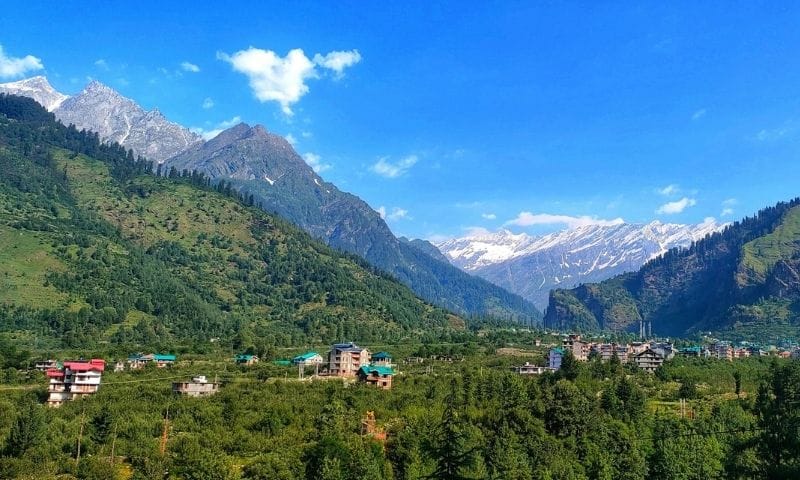
There is a debate that every traveller in India faces each year when visiting Himachal Pradesh: Manali or Spiti Valley? On paper, both destinations are in the same state, connected by the same road, and offer mountain views. In reality, they have little in common.
Manali is lush, easy, and perfect for kids, and it boasts a range of activities to please both first-time hill-station visitors and experienced travellers. Spiti Valley, on the other hand, is a high-altitude cold desert, and requires physical fitness, adaptability to changing circumstances, and a trade-off in terms of comfort and immersive landscapes.
This is not a ranking. Neither destination is superior to the other. It is a matter of finding the right one that suits your travel style, physical comfort, budget, and what you want to remember from your trip. Here is a breakdown of the comparison, based on the things that actually matter when you are planning to begin your journey.
Manali sits at an altitude of approximately 2,050 metres in the Kullu Valley. It is characterised by dense deodar and pine forests, apple orchards, and the Beas River that flows through the town. With its snow-covered peaks that can be visible from almost every vantage point, areas like Solang Valley, Old Manali, and Vashisht offer different landscape views within easy reach.
Spiti Valley is a frozen Himalayan frontier. At an average altitude of over 3,500 metres, with Kaza, the capital town at nearly 3,800 metres, Spiti is a winter paradise. Vegetation is sparse. The mountains are brown and stark. Its rivers wind through steep gorges, and its monasteries cling to remote-looking cliff walls. The mountainscape is more reminiscent of Ladakh or even parts of Tibet than Shimla or Manali.
If you are looking for a green landscape with rivers and a changing season, go for Manali. If you prefer a stark landscape, with a sense of isolation and a lunar-like silence, Spiti will be your match.
This is where the two places differ vastly, and it is a major deciding factor for most travellers.
Manali is easily accessible by road from Delhi (530 km, 12-14 hours by road). Year-round Volvo bus, cab, and self-drive options are available throughout the year. The closest airport is Bhuntar, Kullu (50 km) from Manali, with flights from Delhi and Chandigarh. The nearest railway stations are Chandigarh or Ambala.
The Delhi-Manali route has seen great improvements in recent years, with the four-lane Kiratpur-Nerchowk expressway reducing the travel duration.
Spiti can be reached by two roads. The Manali route (around 200 km from Manali to Kaza) includes the Atal Tunnel and Kunzum Pass, but the road is only open between (roughly) mid-June and mid-October. The other route via Shimla-Kinnaur is more extended (roughly two days drive from Delhi) and open for a longer stretch of the year.
It takes about 10-12 hours to drive from Manali to Kaza, less the distance, due to the rugged terrain, water crossings, and variable weather between Gramphu and Batal. It is best to drive with a high-clearance car (SUV). It is recommended not to travel with hatchbacks on this stretch.
Spiti does not have an airport or railway station. Network connectivity is weak between Manali and Kaza, and UPI or card payments are not supported. Carrying sufficient cash is advisable.
The takeaway: If accessibility is important, Manali easily beats Spiti. If you like to travel for the journey, not for the destination, and are willing to deal with potentially challenging road conditions, then the Manali Spiti drive itself is an adventure.
Manali is open all year round. The peak tourist season is summer (April to June), with favourable weather conditions. Summer (July to September) brings rain and landslides, but also fresh vegetation. The winter months (December to February) are perfect for those who love snowfall, skiing in Solang Valley, and an igloo stay in Sethan.
If you are coming from Manali, the ideal time to visit Spiti is from June to September when Kunzum Pass is open. The months of September and early October are especially good because roads are less slippery (as they have been repaired by the BRO – Border Roads Organisation), there are fewer tourists around, and the hills are golden before they turn white in winter.
Spiti from Shimla, via Kinnaur, is open for a longer period, but even this route becomes hazardous once the snow starts to fall heavily from November. Spiti is best described as being isolated for almost half the year.
Planning tip: Manali is a safe option for fixed travel times, such as long weekends and school holidays. But if you are flexible, then Spiti Valley between June and September is the way to go.
Manali is one of the most versatile hill stations in India, and that is why it is widely chosen by so many different travellers.
Explore pre-planned Manali itineraries with accommodation, transport, and activity options for families, couples, and solo travellers.
There is a reason why Spiti Valley is not meant for everyone, and that makes it perfect for some travellers.
A detailed look at Spiti’s monasteries, trekking trails, and travel logistics to help you plan a well-informed trip.
Manali offers a broader price range. Hostel dorms, mid- and upmarket hotels, and luxury resorts offer a range of accommodation options. Eating and drinking options are also varied and affordable, while transport (autos, shared taxis, bikes for hire) is budget- friendly and readily available.
Spiti offers fewer accommodation choices. There are guesthouses and homestays in Kaza, a few boutique ones. Boutique stays are rare. Eating at dhabas is affordable. The larger expense is transportation: costs for private SUVs from Manali to Kaza are high, but costs for shared taxis are lower.
So a 4-5 day journey from Delhi to Manali can be done on a budget. A Spiti trip of 7 to 9 days is more expensive, given the time and cost of travel, limited accommodation, and transport costs. For either trip, it is best to consult Memorable India to get the best possible deal according to your travel preferences.
A budget-friendly option that covers Manali’s highlights with Volvo transport from Delhi.
Manali sits at a moderate altitude of approximately 2,050 metres. Acclimatisation usually takes place within a day. Medical facilities are available in town, with pharmacies stock the essentials.
Even the highest point accessible to most tourists, such as Rohtang Pass (4,000 metres), covers a day trip and does not require preemptive acclimatisation for most healthy visitors.
Spiti is another matter. Kaza sits at 3,800 metres above sea level, with passes such as Kunzum (4,551 metres) in altitude sickness territory. Acclimatisation is essential here. Visitors coming via the Shimla-Kinnaur route become accustomed to increasing altitude over a period of two or three days. Visitors arriving directly from Manali gain from 2,000 metres to over 4,000 metres in just one day, with a higher risk of Acute Mountain Sickness (AMS).
There are no large hospitals between Manali and Kaza. There is limited medical assistance at army camps and a health centre in Losar, but major medical issues will require transfer to Manali or further.
Health tip: If you are a high-altitude first-time traveller, have any pre-existing respiratory or cardio conditions, or are travelling with small kids, Manali is the better option. If you are travelling in Spiti, consider flying to Shimla for acclimatisation and returning via Manali.
| Factor | Manali | Spiti Valley |
| Altitude | ~2,050 metres | 3,500 to 4,500+ metres |
| Accessibility | Year-round by road, air, rail | From June to October (via Manali) |
| Best For | Couples, families, first-time travellers | Solo travellers, adventure seekers, photography |
| Accommodation | Budget to luxury range | Homestays and guesthouses |
| Adventure Level | Moderate (rafting, paragliding, treks) | Premium (off-road drives, high passes, remote treks) |
| Connectivity | Good mobile and internet | None to limited between towns |
| Medical Facilities | Hospitals and pharmacies available | Basic only; very limited |
| Ideal Duration | 4 to 6 days | 7 to 10 days |
| Budget (per person from Delhi) | Lower; more options available | Higher, limited options, and expensive transport |
Yes, and it is highly recommended by many travellers. A complete circuit is generally undertaken from Shimla (accessing Spiti via the Kinnaur route for acclimatisation), with 3 to 4 days in Spiti Valley and then back via Manali through Kunzum Pass. This circuit takes a 9-12-days from Delhi.
Alternatively, if you have less time, you can spend 3 to 4 days in Manali, enjoy the easy sightseeing, and then make it a longer trip and add a Manali-Kaza-Manali circuit of 4 to 5 days. Note that this can be done only from June to September (when the Manali route is open).
Q: Is Manali or Spiti Valley a better option for a first-time visit to Himachal Pradesh?
A: Manali is the better option for first-time travellers to Himachal Pradesh. It is more accessible, has better infrastructure, a lower altitude, and offers a wide range of activities. Spiti Valley is better suited to a second or third visit to Himachal once you have experienced other mountain journeys and altitude.
Q: What is the best time to visit Spiti Valley from Manali?
A: The ideal time to visit Spiti from Manali is from mid-June to mid-October, when the Kunzum pass is open, and roads are motorable. The ideal month is September, when the roads are dry after repair work following the monsoon, and there are fewer tourists, with autumn colours to suit.
Q: Can families with children travel to Spiti Valley safely?
A: Families with older, healthy kids (12 to 14 years+) can undertake a trip to Spiti. But for those with young children, senior family members, or those with respiratory or cardiovascular problems, Manali is a better option. The health risks in Spiti from altitude sickness should not be taken lightly.
Q: How many days are needed for a Manali and Spiti combined trip?
A: The Manali and Spiti trip would need a minimum of 9-12 days from Delhi. This comprises 2-3 days in Manali, 4-5 days for the Spiti Valley circuit, and travelling days. This trip cannot be rushed as acclimatisation and road conditions require flexibility.
Q: Is Spiti Valley safe for solo female travellers?
A: Spiti Valley is considered one of the safest destinations for solo female travellers in India. The Buddhist villagers are friendly and accommodating. Homestays in Kaza, Kibber, Langza, and other villages are safe and pleasant. However, solo travellers should ensure they have sufficient cash, a basic medical kit, and notify their family or friends of their travel plans, as mobile connectivity is limited.
Q: Do I need a permit to visit Spiti Valley?
A: For Indian citizens, a special permit is not required to visit Spiti Valley. International travellers need an Inner Line Permit (ILP) for some restricted areas, which can be acquired from the District Magistrate’s office in Shimla, Reckong Peo, or Kaza. Please check the most recent permit requirements before you start your trip, as these can change depending on the weather or government orders.
The debate between Manali and Spiti is not about which place is “better”. It is about which suits you better, and your travel personality at this moment.
If you want a trip where comfort, variety, and convenience come together, where you can ski in the morning and sit by the river’s edge in the evening to enjoy coffee, Manali is for you. If you wish to travel to a simple place, stripped of distractions, that tests your physical and mental stamina, but offers you sights and sounds that will resonate with you long after, then Spiti Valley is for you.
And if you cannot decide? Do both. The whole Shimla-Spiti-Manali circuit is one of the best road trips in India, and it offers you both worlds.
At Memorable India, we tailor itineraries for Himachal Pradesh to your speed, taste, and budget. Contact our specialists to create your tailor-made trip.
15 Amazing Temple Fairs in India: A Traveller’s Guide to Faith, Colour and Living Tradition
30 Sep 2026
13 Best Places to Explore in the Youngest State of Telangana
29 Sep 2026
12 Less Explored Destinations in Maharashtra Worth Adding to Your Travel List
28 Sep 2026
11 Must-Visit Museums in India for Wildlife Lovers
27 Sep 2026
11 Best Places in India to Celebrate Christmas
26 Sep 2026


