 +919871148514
 info@memorableindia.com

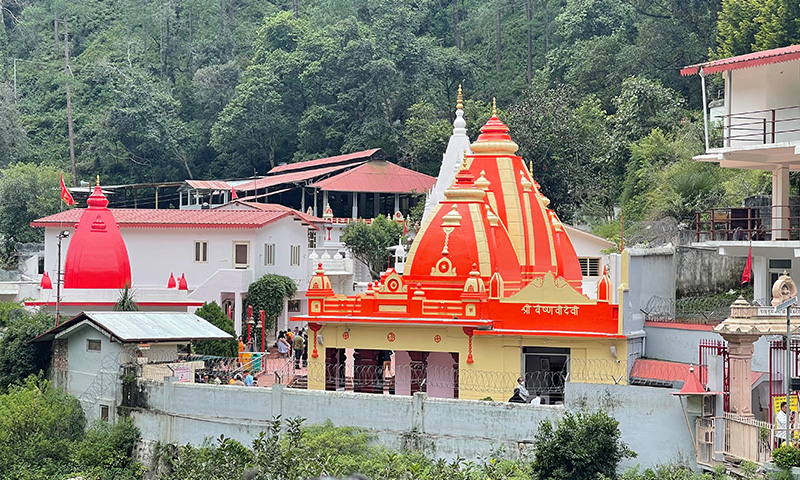
Uttarakhand carries a quiet weight that other hill states do not. Rivers begin here, saints have walked these ridges for centuries, and the stone shrines tucked into the folds of the Garhwal and Kumaon Himalayas have shaped Indian faith for well over a thousand years. For a traveller, this means every valley opens into a story, and every temple sits inside a landscape worth the climb.
This guide lists 15 must visit temples in Uttarakhand that balance scale, access, and spiritual weight. Some sit at the end of a demanding trek, others are a short drive from Haridwar or Rishikesh. Together they cover the Char Dham, the Panch Kedar, the Shakti Peeths, a Sikh pilgrimage above the clouds, and a handful of ancient Shiva complexes most itineraries miss. Each entry includes a short planning note so you can shape a realistic trip rather than a wish list.
The title Devbhoomi, or Land of the Gods, is not marketing. It reflects a geography where three of the four main rivers of northern India begin, where Adi Shankaracharya revived four of his most important seats in the 8th century, and where oral tradition places episodes from the Mahabharata, the Ramayana, and the Puranas in specific valleys. The result is a state with more active places of worship per square kilometre than almost any other in India, and a culture where the priest, the shepherd, and the trekking guide may well be the same person during the yatra season.
For visitors, that density has a practical upside. You rarely need to travel more than a couple of hours in Uttarakhand to find a temple worth the stop. The challenge is choosing well, since some shrines sit at the end of multi-day treks while others take fifteen minutes off the highway. The list below is sequenced loosely by region, starting with the four big dhams and moving outward.
The Chota Char Dham sits at the heart of any serious conversation about religious places in Uttarakhand. Four shrines, open roughly from late April or early May through to Diwali, mark the sources of the Yamuna and Ganga, the Jyotirlinga of Kedarnath, and the Vishnu seat of Badrinath. Opening and closing dates are announced each year by the Uttarakhand government, and recent seasons have crossed well over ten lakh pilgrims within the first few weeks of the yatra, as reported by Prasar Bharati.
Kedarnath stands at roughly 3,583 metres above sea level, on the bank of the Mandakini. It is one of the twelve Jyotirlingas and the only one in Uttarakhand. Reaching the temple means a 16 kilometre trek from Gaurikund, or a helicopter transfer from Guptkashi, Phata, or Sersi. The grey stone shikhara, the Nandi facing the sanctum, and the Himalayan amphitheatre behind the shrine make this one of the most photographed sites in the Garhwal Himalayas.
Badrinath, at 3,133 metres on the Alaknanda, is dedicated to Lord Vishnu as Badri Narayan and is counted among the 108 Divya Desams venerated in Sri Vaishnava tradition, as recorded by the Government of India tourism portal. Unlike Kedarnath, it is motorable right up to the temple gate. Tapt Kund, the hot sulphur spring at the base, is where pilgrims bathe before darshan. The painted facade and the Garhwali Rawal priest tradition make Badrinath distinct from the other three dhams.
Gangotri sits at about 3,100 metres and marks the symbolic source of the Ganga. The small white temple, originally built by the Gorkha general Amar Singh Thapa in the 18th century, faces the Bhagirathi river. The actual glacial source, Gaumukh, is a further 18 kilometre trek away and requires a permit from the forest department. Gangotri is motorable and makes a good anchor for Harsil, Dharali, and the upper Bhagirathi valley.
Yamunotri, at 3,293 metres, honours the goddess Yamuna. The approach involves a six kilometre trek from Janki Chatti, often done on pony or palki for seniors. Suryakund, a thermal spring beside the temple, is used to cook rice in muslin cloth as prasad, which is a ritual unique to this shrine. The temple opens on Akshaya Tritiya each year and closes around Yama Dwitiya after Diwali.
Beyond Kedarnath, the Panch Kedar circuit links four more Shiva shrines, each tied to a part of the mythic bull form that Lord Shiva took to evade the Pandavas. Walking all five is a long undertaking, but even one or two makes a strong addition to a Uttarakhand pilgrimage.
Tungnath, at approximately 3,680 metres, is widely cited as the highest Shiva temple in the world. The 3.5 kilometre walk from Chopta is one of the gentler Himalayan temple treks and is popular even with first-time trekkers. Continue another 1.5 kilometres uphill to Chandrashila for a 360 degree view across Nanda Devi, Trishul, and Chaukhamba.
Madhyamaheshwar sits in a meadow near Gaundar village and takes about two days to reach on foot from Uniana. Rudranath, further north in Chamoli, is the toughest of the Panch Kedar walk, involving ridge crossings through Panar and Pitradhar. Both reward patience with silence that is hard to find at the more famous shrines.
Kalpeshwar is the only Panch Kedar shrine that stays open all year, which makes it a useful off-season option. A short walk from Urgam village in the Alaknanda valley leads to a small cave shrine where the matted hair of Lord Shiva is worshipped.
If Garhwal is where the big yatras happen, Haridwar and Rishikesh are where most travellers begin and end. The following three temples sit within easy reach and work well either as warm-up stops before heading higher or as standalone weekend plans.
Mansa Devi sits on the Bilwa Parvat above Haridwar and is reached either by cable car or a short uphill climb. The temple honours a form of Shakti said to fulfil sincere wishes, and the ridge offers a clean view of the Ganga curving through the city.
Across the river, Chandi Devi caps the Neel Parvat and completes the Haridwar Shakti triangle alongside Mansa Devi and Maya Devi. The ropeway from Chandi Ghat shortens what would otherwise be a steep 3 kilometre climb through forest.
About 32 kilometres from Rishikesh, Neelkanth Mahadev sits at 1,330 metres and marks the spot where Lord Shiva is believed to have consumed the poison from the churning of the ocean. The drive climbs through Rajaji National Park territory, so an early start helps you avoid the midday crowds and the chance of a wildlife crossing. Rishikesh itself offers a strong base, and a
Rishikesh itself offers a strong base, and a yoga and ayurveda tour in Rishikesh pairs well with a half day at Neelkanth for travellers who want wellness and devotion in one trip.
Kumaon gets fewer pilgrim buses than Garhwal, yet it holds some of the oldest and most atmospheric Shiva temples in the state. These are easier to reach outside the yatra season and reward travellers who want depth without crowds.
Jageshwar is a cluster of about 125 stone temples set in a deodar grove near Almora, dated by the Archaeological Survey of India to between the 7th and 14th centuries. The main Jyotirlinga here is distinct from the twelve classical Jyotirlingas and carries its own strong following. The site feels more like a living museum than a single temple and is best visited over an unhurried half day.
Kainchi Dham, the ashram founded by Neem Karoli Baba in the 1960s, has moved from a quiet local site to one of the most visited religious places in Uttarakhand, partly thanks to visits by global tech founders. It opens for darshan every day, with a larger annual bhandara in June. The approach road from Bhowali is narrow, so weekday mornings are the easier window.
Baijnath, on the bank of the Gomti near Bageshwar, dates to the 12th century Katyuri period and is dedicated to Shiva and Parvati in a form marking their wedding. The temple complex sits beside a calm reservoir and makes a natural stop between Kausani and the lesser visited Pindari valley.
The last two entries sit outside the typical Hindu temple trail, and that is exactly why they belong on this list. One is a cave of mythic density, the other a Sikh pilgrimage at the edge of the alpine zone.
Patal Bhuvaneshwar is a limestone cave about 90 kilometres from Pithoragarh, described in the Skanda Purana. A narrow descent through chambers of stalactites opens into a hall where formations are identified with the Hindu trinity. The cave is managed by a hereditary Bhandari family and takes about an hour to walk through. Carry a light layer, since the temperature inside stays cool through the year.
Hemkund Sahib is a Sikh gurudwara at 4,632 metres, set beside a glacial lake and the seven peaks that give it its name. It is the highest gurudwara in India and remains open roughly from June to early October, as scheduling and snow allow. The approach is a 13 kilometre trek from Govindghat with an overnight at Ghangaria, which also serves as the base for the Valley of Flowers. For many travellers, pairing the two in one trip is the most memorable section of a
For many travellers, pairing the two in one trip is the most memorable section of a Uttarakhand tour that is not strictly a Hindu pilgrimage.
Clubbing fifteen temples into one trip is neither practical nor spiritually satisfying. The sensible approach is to pick a circuit that matches your days, fitness, and season.
For yatra-focused planning, our Char Dham Yatra packages cover permits, Kedarnath helicopter bookings, and vetted accommodation across Barkot, Harsil, Guptkashi, and Joshimath, which saves days of logistics for first-time pilgrims.
A trip through the famous temples in Uttarakhand Himalayas is less a tourism exercise and more a slow reset. A walk through the Panch Kedar, a drive across the Char Dham, or an unhurried afternoon at Jageshwar all leave travellers with the same impression: the state has a way of rearranging what you consider urgent. Build the trip you can actually complete, not the one that looks longest on paper, and the temples will do the rest.
If you would like a personalised itinerary across any of these circuits, our team is happy to help. Reach us through the Memorable India contact page and we will build a route around your dates, group size, and comfort level.
The four Char Dham shrines of Kedarnath, Badrinath, Gangotri, and Yamunotri are widely regarded as the most sacred temples in Uttarakhand. Kedarnath is also one of the twelve Jyotirlingas, and Badrinath is counted among the 108 Divya Desams of Vaishnava tradition.
For the high altitude shrines, late April to June and mid September to early November are the most reliable windows. Haridwar, Rishikesh, Jageshwar, and Kainchi Dham remain open through the year, so the Kumaon temples work well even in winter.
A short Haridwar, Rishikesh, and Neelkanth Mahadev circuit takes about three to four days. A full Char Dham Yatra by road takes 11 to 12 days, and a combined Garhwal and Kumaon temple trip is comfortable in two to three weeks.
Among the Panch Kedar shrines, Kalpeshwar is the only one open all year. In the plains and lower hills, Mansa Devi, Chandi Devi, Neelkanth Mahadev, Jageshwar, Kainchi Dham, and Baijnath also remain accessible across all seasons.
Yes, with planning. Badrinath and Gangotri are motorable. Kedarnath and Yamunotri involve a trek, but ponies, palkis, and helicopter options are available. A medical fitness check and acclimatisation at Guptkashi or Barkot are recommended for travellers above 65.
Kedarnath sits at about 3,583 metres, Badrinath at 3,133 metres, Gangotri at 3,100 metres, Yamunotri at 3,293 metres, Tungnath at 3,680 metres, and Hemkund Sahib at 4,632 metres. Elevation planning matters for anyone with heart or respiratory conditions.

15 of the Best Luxury Lodges in India for an Unforgettable Wild Escape
14 Oct 2026
15 Must-See Attractions for Couples in India: A Planner’s Guide for 2026
13 Oct 2026
15 Must Visit Temples & Religious Places in Uttarakhand, Himalayas
12 Oct 2026
10 Most Significant Buddhist Pilgrimage Sites in India: Complete Travel Guide
11 Oct 2026
A First-Time Traveller’s Guide to Car Rental in India
10 Oct 2026


