 +919871148514
 info@memorableindia.com

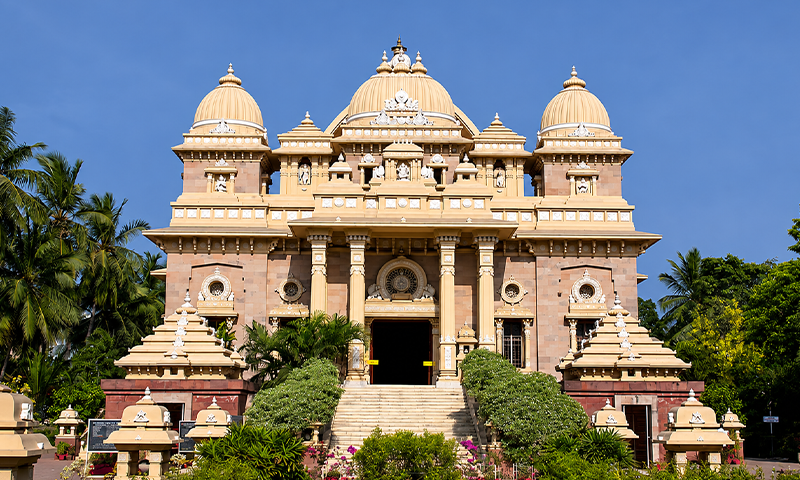
Ask anyone who has spent an evening at Belur Math during arati and they usually describe the same thing: hundreds of people, very little noise. That calm is the common thread across the Ramakrishna Mission ashrams in India. Some sit beside busy rivers, one hides in Himalayan forest, and another stands on a rock in the sea. Each is tied to the lives of Sri Ramakrishna, Sri Sarada Devi or Swami Vivekananda, and each welcomes visitors of every faith.
This guide covers nine places that deserve a spot on your list, what sets each apart, how to reach them, and how to conduct yourself once inside. It is written for first-time visitors, families and senior travellers who want a meaningful trip without the guesswork.
The name covers two closely linked organisations. The Ramakrishna Math is the monastic order, and the Ramakrishna Mission is its service wing, running hospitals, schools and relief work. Swami Vivekananda founded the Mission on 1 May 1897, and both bodies are headquartered at Belur Math, as explained on the official Belur Math website.
Their shared idea is simple: serve people as you would serve God, and respect every faith. You see this in the architecture, which often blends Hindu, Islamic, Buddhist and Christian motifs, and in the open-door policy for visitors of all backgrounds.
One practical point before you go. These centres are working monasteries, not tourist attractions. Visiting hours, photography rules and dress expectations are set by each centre, and they are enforced politely but firmly. Think of yourself as a guest in someone’s home and you will rarely go wrong.
The list moves from Bengal, where the story began, to the Himalayas, Varanasi and the far south.
If you visit only one place on this list, make it Belur Math. Spread over a riverside campus on the west bank of the Hooghly, it is the headquarters of the entire movement and the place where Sri Ramakrishna’s sacred relics are enshrined.
The centrepiece is the Sri Ramakrishna Temple, dedicated on 14 January 1938. Swami Vivekananda wanted a design in which people of any faith would feel at home, which is why the building can resemble a temple, a church or a mosque depending on where you stand. The Belur Math note on the temple’s architecture explains the thinking behind each element.
Within the campus, also see:
How to reach: Belur Math is in Howrah district, a short drive from central Kolkata. It has its own railway station, opened in 2003, with suburban trains from Howrah. Many visitors pair it with Dakshineswar, directly across the river.
Tip: Stay for the evening arati. It is sung, unhurried and open to everyone. Arrive a little early to find a place on the floor.
Strictly speaking, Dakshineswar is not run by the Ramakrishna Mission; it is managed by a separate temple trust. Yet no Ramakrishna pilgrimage makes sense without it. This is where Sri Ramakrishna lived, worshipped and taught for about three decades, and where the young Narendranath, later Swami Vivekananda, came to him with his questions about God.
The temple was built by Rani Rashmoni and consecrated on 31 May 1855, according to Britannica’s history of the Dakshineswar Kali Temple. The presiding deity is Bhavatarini, a form of Kali.
What to see:
Tip: Weekends and festival days bring long queues at the main shrine, so a weekday morning is calmer. Our Kolkata day tours include Dakshineswar with a local guide, which helps if you want the stories behind each building rather than a quick darshan.
Swami Vivekananda was born Narendranath Datta on 12 January 1863 at 3, Gourmohan Mukherjee Street. The house later fell into disrepair, and the Ramakrishna Mission took on its restoration. It reopened as a museum and cultural centre in 2004.
Inside, the rooms recreate family life in nineteenth century Calcutta, including the room where he was born and the family shrine. Displays trace his path from a curious, argumentative student to the monk who addressed the Parliament of the World’s Religions in Chicago in 1893.
Why visit: it brings Vivekananda down to human scale. Students and young travellers often find it more relatable than the larger temples. Photography is generally not permitted inside the museum, and the centre keeps a weekly closing day, so check current timings before you go.
Kamarpukur is a quiet village in Hooghly district where Sri Ramakrishna was born in 1836. The Ramakrishna Math and Mission looks after his family home and a marble temple, built in 1951, at the spot where he was born.
What makes Kamarpukur special is how ordinary it feels. You walk past ponds, paddy fields and small shrines that appear in stories of his childhood, such as Haldar Pukur, the family pond. It feels lived in rather than staged.
The Kamarpukur centre’s official website lists nearby sites and guest house details. The village is a few hours’ drive west of Kolkata, so plan it as an overnight trip combined with Jayrambati.
Around 5 km from Kamarpukur, in Bankura district, Jayrambati is where Sri Sarada Devi, revered as the Holy Mother, was born in 1853. The Matri Mandir, established in 1920, stands on her birthplace and enshrines her relics, as noted by the Jayrambati Matri Mandir.
Her old house, where she lived for most of her life and initiated many devotees, still stands within the compound. For many visitors, especially families and women travellers, Jayrambati is the emotional high point of the Bengal circuit. The mood is gentle and homely, which matches how devotees remember her.
Founded on 19 March 1899 at Swami Vivekananda’s wish, Advaita Ashrama sits in deodar and oak forest in the Kumaon hills. The Champawat district administration places it at 1,940 metres, 22 km from Champawat and 9 km from Lohaghat.
It stands apart among Ramakrishna Math temples because there is no image worship here, not even of Sri Ramakrishna. The ashram is devoted to the study and practice of Advaita Vedanta, the philosophy of non-duality, and has long been a publishing centre for the Order’s journal, Prabuddha Bharata.
Visitors come for:
How to reach: Kathgodam is a common rail approach, followed by a long mountain drive, and Pantnagar is the nearest airport. Monsoon landslides can disrupt hill roads, so keep a buffer day in your plan.
This one is different. It is a hospital first, and that is exactly why it belongs here. It began in 1900, when a few young men in Varanasi started nursing sick and abandoned pilgrims with almost no money. When Swami Vivekananda visited in 1902, he was moved by their work and named it the Ramakrishna Home of Service, as recorded on the centre’s history page.
Today it runs a full hospital along with care for elderly and destitute people, and its campus includes a Shiva temple where visitors can sit quietly. It shows the service side of the movement in a way temples alone cannot. Ask at the office before walking through any wards, and never photograph patients.
Combine it with our Varanasi day tours to cover the ghats and the evening Ganga aarti in the same trip.
The Chennai Math was the first branch of the Ramakrishna Order in South India. Swami Vivekananda spent nine days in Madras in February 1897, staying at the building now called Vivekanandar Illam on Marina Beach Road. The Math was started soon after by his brother disciple, Swami Ramakrishnananda, and later moved to Mylapore.
The present Universal Temple was dedicated on 7 February 2000. Like Belur Math, it combines elements from several traditions, and it has separate shrines for Sri Sarada Devi and Swami Vivekananda on either side of the main sanctum, as described on the Chennai Math website.
Tip: Pair it with Vivekanandar Illam, a short drive away, which houses an exhibition on his life. Together they make an easy half-day plan in Chennai.
This final stop comes with a clarification: the memorial is managed by Vivekananda Kendra, a separate organisation, not the Ramakrishna Mission. It earns its place because it marks the rock, about 500 metres offshore, where Swami Vivekananda meditated in December 1892, an experience that shaped the rest of his work.
The memorial was built in 1970, and Tamil Nadu Tourism notes that the rock is also linked to the legend of Goddess Kanyakumari. Visitors reach it by ferry, and the meditation hall inside expects complete silence. Our Kanyakumari tour package covers the ferry, sunrise point and local temples at an easy pace.
Most travellers combine Swami Vivekananda pilgrimage sites with places linked to Sri Ramakrishna and the Holy Mother. The good news is that they fall into natural clusters:
Why clusters work: moving between these regions can take most of a day each way. Doing one circuit well beats rushing all three, and senior travellers in particular benefit from fewer hotel changes. If you want the logistics handled, our India pilgrimage tour packages can be built around Ramakrishna Mission centres, with private transport and guides who understand temple etiquette.
These rules protect the atmosphere that makes the visit worthwhile. Following them is the simplest way to show respect.
For Kolkata, rural Bengal, Chennai and Kanyakumari, October to March is the most comfortable window, as heat and humidity ease. Mayavati is pleasant from March to June and again in October and November; winters are cold and the monsoon brings landslide risk.
Major celebrations draw large crowds and special worship, including the birth anniversaries of Sri Ramakrishna, Sri Sarada Devi and Swami Vivekananda. Durga Puja at Belur Math is especially well known. Most of these dates follow the lunar calendar, so confirm them each year before booking.
The Ramakrishna Mission ashrams in India are not grand in a showy way. Their appeal lies in clean grounds, simple routines and the sense that everyone is welcome. With only a weekend, start with Belur Math and Dakshineswar. Add Kamarpukur and Jayrambati for the human story behind the movement, and head to Mayavati if silence is what you are after.
Planning a visit? Share your travel dates and the centres you have in mind with our team, and we will shape a calm, well-paced itinerary around them.
Belur Math in Howrah, West Bengal, is the most important. It is the headquarters of the Ramakrishna Math and Ramakrishna Mission and enshrines the relics of Sri Ramakrishna, which makes it the natural starting point for any visit.
You can drive from central Kolkata, take a suburban train from Howrah to Belur Math station, or cross the Hooghly from Dakshineswar by river ferry. Road travel is the most flexible option for families and senior travellers.
Some centres, such as Kamarpukur, offer limited guest accommodation, mainly for devotees. Rooms must be requested in advance directly from the centre and come with house rules. Most travellers stay in nearby hotels instead.
No. Dakshineswar is managed by a separate temple trust. It is closely linked to the movement because Sri Ramakrishna lived and taught there for about thirty years, so most pilgrims visit it alongside Belur Math.
Entry to the main temples is generally free. Some museums, such as the one at Swami Vivekananda’s ancestral house, may charge a small fee. Check the centre’s official website for current details before visiting.
October to March suits most centres in Bengal and South India. For Advaita Ashrama in Mayavati, March to June and October to November are better, as winters are cold and the monsoon brings landslide risk.
Must-Visit Popular Ramakrishna Mission Ashrams and Temples in India
27 Nov 2026
Indian Road Trips: Top 10 Cars You Would Love to Drive on a Road Trip in India
27 Nov 2026
Indian Village Tour: A Walk Through Real India
26 Nov 2026
Indian Women Travellers Who Will Give You Serious Wanderlust
26 Nov 2026
Famous Festivals in Nepal: A Traveller’s Guide to Its Rich Culture and Traditions
25 Nov 2026


