 +919871148514
 info@memorableindia.com
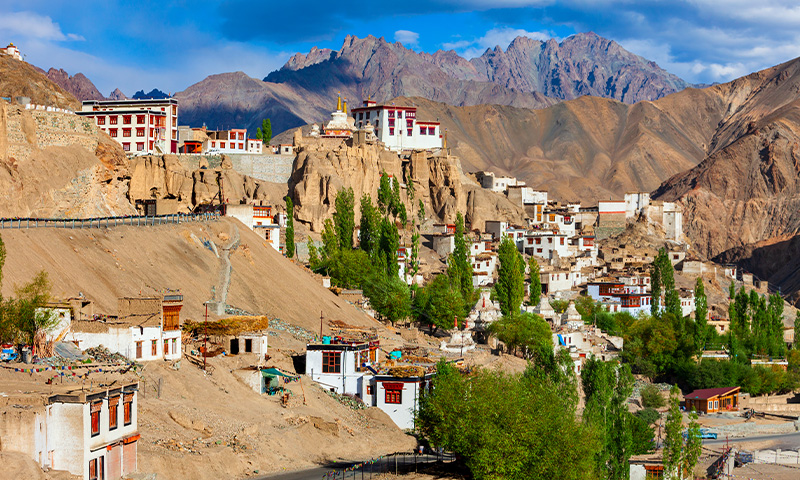
Thirty days in North India sits at the edge of ambition and reward. It gives you enough time to move past the postcard checklist and actually settle into the rhythm of the region: the choreographed chaos of Old Delhi at dusk, the muted colours of a Jaisalmer morning, the cold thin air outside a Ladakhi monastery at 3,500 metres. A well-built one-month itinerary for North India lets you touch four distinct geographies (plains, desert, sacred rivers, high Himalaya) without turning the trip into a blur of transfers.
This guide lays out a route that Memorable India has refined through years of running long-format tours for families, retirees, honeymooners, and solo travellers from Europe, North America, and Australia. The plan below assumes a private car, occasional flights for the long legs, and a comfortable mid-range hotel standard.
Most first-time visitors compress North India into 12 to 15 days and leave with the sense they saw everything and understood almost nothing. A full 30 days changes the equation. You get two clean acclimatisation days in Leh before high-altitude sightseeing, room for slow-travel pauses in Udaipur or Rishikesh instead of racing to the next fort, buffer days for weather in Kashmir and permit processing for Nubra and Pangong, and the flexibility to skip a stop without collapsing the whole plan.
Week 1 covers Delhi, Agra and Jaipur, the Golden Triangle foundation. Week 2 runs the Rajasthan interior loop through Pushkar, Jodhpur, Jaisalmer, and Udaipur. Week 3 moves into Varanasi and the spiritual belt, then Amritsar. Week 4 closes with the Kashmir Valley followed by Ladakh. This sequence is deliberate. It moves you from lowland heat into higher altitudes gradually, which matters for older travellers and anyone flying in from sea level.
Land, sleep off the jet lag, and give the capital three unhurried days rather than the standard rushed 36 hours. Old Delhi rewards a walking tour through the lanes behind Jama Masjid, ideally paired with a rickshaw ride through Chandni Chowk and a paratha stop at Gali Paranthe Wali. New Delhi is a different city entirely: the tomb of Humayun, Lodhi Garden at dusk, and the Qutub Minar complex, all UNESCO-listed. Reserve one afternoon for the National Museum, which is undervalued and rarely crowded. Where to stay: Aerocity for airport proximity, Sunder Nagar for character, Connaught Place for central access. If you land with energy to spare, a Sufi music evening at Nizamuddin Dargah on a Thursday night is one of the capital’s most under-visited experiences.
Take the Gatimaan Express from Hazrat Nizamuddin (about 100 minutes) or drive via the Yamuna Expressway. Two nights in Agra buys you the Taj at both sunrise and sunset. Fatehpur Sikri deserves an afternoon of its own, and the smaller Itmad-ud-Daulah (the Baby Taj) is often skipped and should not be. The Taj Mahal is a UNESCO World Heritage Site inscribed in 1983.
The Pink City is 240 km from Agra by road, roughly five hours with a stop at Abhaneri Stepwell if the timing works. The walled city of Jaipur was inscribed as a UNESCO World Heritage Site in 2019. Amber Fort in the morning, City Palace and Jantar Mantar (also UNESCO) in the afternoon. Book a heritage haveli stay in the old city if you want the architecture to be part of the accommodation. For travellers short on time who want a curated version of these first seven days, the classic Golden Triangle tour forms a ready-made template.
A four-hour drive from Jaipur delivers you to Pushkar, whose ghats and Brahma temple stay quiet outside the November camel fair. One night is enough unless you land during the mela.
The Blue City sits under the walls of Mehrangarh, one of the largest and best-preserved forts in India. The audio tour is genuinely excellent. Spend an evening walking the old town’s indigo lanes and eat mirchi vada at Shahi Samosa.
The Golden Fort of Jaisalmer is one of the few living forts in the world, still home to residents whose families have lived inside its sandstone walls for generations. A desert night at Sam or Khuri sand dunes with a jeep safari and folk performance is the standard closer to this leg. Book operators who camp on private land rather than the crowded main dune area.
The lake city works best as a slow pause. City Palace, Jag Mandir by boat, the Monsoon Palace at sunset, and a walking tour of the old quarter fill two comfortable days. For travellers extending this leg into a deeper heritage circuit, our Rajasthan tour packages cover Bikaner and Mount Abu as add-ons. Fly Udaipur to Varanasi via Delhi on Day 15 morning. There is no direct route.
Three nights in Varanasi is the correct dosage. The Ganga Aarti at Dashashwamedh Ghat is the obvious set piece, but the pre-dawn boat ride, the labyrinth of galis behind Manikarnika, and a half-day trip to Sarnath (where the Buddha delivered his first sermon) are what stay with people. Stay in a heritage haveli on Assi Ghat or in the newer part of town if crowded ghats are not for you.
An overnight train or a short flight to Dehradun and a road transfer gets you into the Himalayan foothills. Haridwar’s evening Ganga Aarti at Har Ki Pauri complements what you have already seen in Varanasi. Rishikesh is the softer counterpart: yoga, a walk across Ram Jhula, cafes along the Ganga, and optional white-water rafting between September and June.
Fly Dehradun to Amritsar (with a connection) or route via Delhi. The Golden Temple is the reason to come, and the community kitchen (langar) is the moment most travellers describe as unexpectedly moving. Add the Wagah border ceremony at sunset and the Partition Museum for context.
This is the ambitious closer, and the sequence matters. Kashmir first, then Ladakh, because that gives you a gentler altitude ramp than flying straight into Leh from the plains.
Fly Amritsar to Srinagar via Delhi. Two nights on a houseboat on Dal Lake, a day trip to Gulmarg for the gondola, and two nights split between Pahalgam and Sonmarg cover the classic circuit. Saffron harvest season in late October and early November is a quiet but rewarding time to visit Pampore. Our Kashmir tour package follows this rhythm and includes shikara rides, Mughal gardens, and the Gulmarg cable car. If you are visiting between April and mid-May, add a detour to the tulip garden in Srinagar, which is Asia’s largest and typically at peak bloom in the first fortnight of April.
Fly Srinagar to Leh (about 45 minutes). The first two days are for acclimatisation and gentle Leh sightseeing only: Shanti Stupa, the local bazaar, Thiksey Monastery in the late afternoon. From Day 28 onward, plan Nubra Valley via Khardung La and Pangong Tso as an overnight, then return to Leh on Day 30. Inner Line Permits for Nubra, Pangong, and Turtuk are issued through the official LAHDC portal and are mandatory for foreign and domestic visitors. Tour operators usually process these on your behalf within a working day. Carry printed copies at all times because network coverage across Ladakh is patchy and checkpoint officials will not accept phone screenshots.
The full route only works cleanly between mid-May and early October, when Ladakh roads and permits are open and Kashmir is at its most accessible. October is arguably the sweetest window: Rajasthan cools down, Varanasi becomes bearable, Kashmir turns golden with chinar leaves, and Ladakh remains open until the passes close in late October or early November. Avoid July and August in Ladakh (landslide risk on the Manali route, though flights remain reliable) and April to June in Rajasthan, where temperatures cross 42 degrees Celsius routinely.
A private, mid-range 30-day version of this itinerary, including domestic flights, three-star to four-star hotels, private car with driver, monument entries, and a licensed guide in key cities, typically ranges from USD 3,200 to USD 4,500 per person for a couple travelling together. Luxury heritage stays and boutique houseboats push it toward USD 6,000 to USD 8,000 per person. Backpackers and solo travellers using trains and guesthouses can cover it on USD 1,800 to USD 2,400, at the cost of some comfort on long legs. Exact quotes vary with season and party size.
Visa: most nationalities are eligible for the Indian e-Visa through the official government portal. A 30-day, 1-year, or 5-year e-Tourist visa fits this trip. Domestic flights: pre-book Delhi to Udaipur, Udaipur to Varanasi, Amritsar to Srinagar, and Srinagar to Leh. These are the four legs where road or rail would eat too many days. Altitude: consult a doctor about Diamox before Ladakh, especially for travellers over 60 or with cardiac history. Currency: withdraw cash in cities. Rural Rajasthan and Ladakh have patchy card acceptance. Insurance: mandatory for the Ladakh segment. Ensure your policy covers altitudes above 3,500 metres.
A trip of this length is not something to piece together from a spreadsheet. Permit timing, altitude sequencing, and shoulder-season weather all interact, and small mistakes on flight order can cost two or three days. Our specialists at Memorable India design customised 30-day North India itineraries with private cars, verified accommodations, and 24/7 on-trip support. Reach out through our Contact Us page with your dates and preferences, and we will draft a proposal within one business day.
Yes, but it is close to the minimum for the full geographic sweep from Delhi to Ladakh. Thirty days lets you cover the Golden Triangle, a Rajasthan loop, the Ganges belt, Amritsar, Kashmir, and Ladakh at a comfortable rather than rushed pace.
Mid-September through mid-October is the strongest single window. Monsoon has ended in the plains, Ladakh is still open, and Kashmir enters its autumn colour phase.
Partially. The Delhi to Agra to Jaipur and Delhi to Varanasi legs are excellent by train. Kashmir and Ladakh are only realistic by flight from the plains within a 30-day window.
No. Licensed guides in Delhi, Agra, Jaipur, Jodhpur, Udaipur, Varanasi, and Amritsar add real value. Kashmir and Ladakh are better served by a knowledgeable driver.
Mid-range travellers should plan USD 3,200 to USD 4,500 per person as a couple, excluding international flights. This includes domestic flights, hotels, transport, monuments, and most meals.
Yes, with standard precautions. Rajasthan, Amritsar, and Kashmir are widely reported as comfortable. Solo female travellers often prefer joining small group segments in Delhi and Varanasi for the first week.
Two clean cuts preserve the shape of the trip. Drop Ladakh entirely if altitude or timing is a concern, or drop the Rajasthan interior (Jodhpur and Jaisalmer) and keep Udaipur as your desert-culture representative. Keeping Kashmir and cutting the Rajasthan interior preserves more of the geographic range.
Yes, and it is not optional for the Ladakh leg. Confirm that your policy explicitly covers activities above 3,500 metres and includes emergency evacuation. Some standard policies exclude high altitude by default even when they mention adventure cover.

9 Best Places to Visit in Lakshadweep, a Top Island Getaway in India
23 Oct 2026
7 Reasons Why One Should Travel by Indian Rail
22 Oct 2026
6 Reasons to Visit Chopta Valley in the Himalayas
21 Oct 2026
5-Step Guide to Plan a Jungle Safari Trip to Corbett National Park
20 Oct 2026
6 Popular Short Treks in Sikkim You Must Explore
19 Oct 2026


