 +919871148514
 info@memorableindia.com
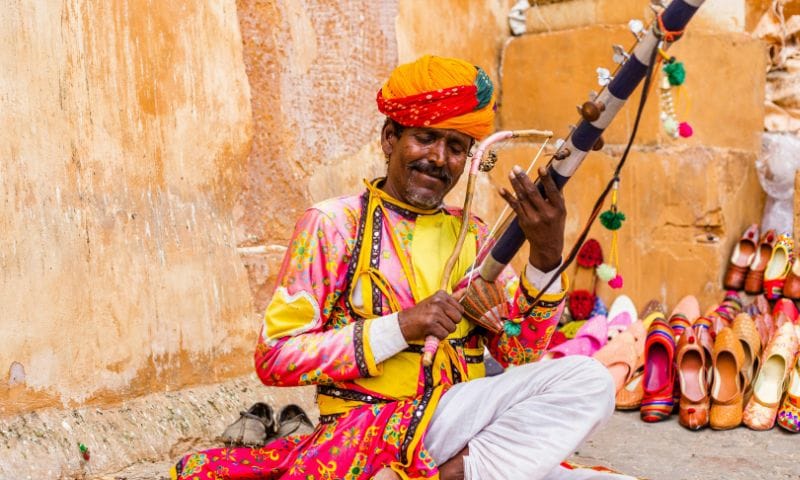
India’s culture does not sit behind the glass. It is not preserved in curated museum halls or limited to festival calendars. It lives in the narrow lanes of Varanasi, where a brass lamp ceremony has been performed at the same ghat every evening for decades. It moves through the hands of a Kathakali dancer in Kochi, whose face paint takes two hours to apply and whose eye movements tell stories from a mythology thousands of years old. It rises with the scent of cardamom in a Kerala kitchen and with the beat of a dhol on the streets of Jaipur during a wedding procession.
For travellers seeking cultural experiences in India that go beyond sightseeing, the country offers something that very few destinations can: living traditions, accessible in real time, across nearly every region. This guide maps out the ones most worth planning around, from sacred rituals and performing arts to culinary traditions, festivals, and craft encounters that connect you directly to the communities keeping them alive.
Every evening at Dashashwamedh Ghat, a group of trained priests performs the Ganga Aarti, a synchronised fire ritual involving large brass lamps, incense, flowers, and Vedic chanting. The ceremony honours the river Ganga and draws hundreds of devotees and travellers to the ghat steps. The choreography is precise, the atmosphere is electric, and the visuals of multiple oil lamps swaying in unison against the dark river create one of the most powerful sensory moments throughout the Indian travel.
Watching from a rowing boat on the Ganga offers a panoramic perspective, while standing on the ghat puts you inside the crowd’s energy. Both are worthwhile. The aarti runs year-round, every evening without exception. For travellers heading to Varanasi, the ghats themselves are the city’s defining feature, and arriving early enough to walk the riverfront before the ceremony adds significant depth to the experience.
Kathakali is Kerala’s classical dance-drama form, and watching a full performance in Fort Kochi is one of the finest introductions to Indian performing arts. The art form uses elaborate face paint (each colour representing a specific character type), towering headdresses, and a vocabulary of hand gestures and eye movements so codified that trained performers can narrate entire mythological epics without speaking a word.
Several cultural centres in Fort Kochi offer evening performances that begin with an open makeup session, allowing visitors to watch performers transform into gods, demons, and heroes before the show itself begins. The Kerala Kathakali Centre is among the best-known venues. A brief introduction before each performance explains the symbolism, making the art form accessible even to first-time viewers. Kathakali pairs naturally with a broader Kerala itinerary that includes backwaters, hill stations, and spice plantations.
In the villages surrounding Jaisalmer and Jodhpur, folk music is not a performance staged for tourists. It is a living tradition passed down through generations of Manganiyar and Langa musicians, communities whose musical heritage predates recorded history. Hearing these musicians play the kamaicha, morchang, and dholak under the open sky of the Thar Desert, often around a fire at a desert camp after a camel safari, is one of the most authentic traditional experiences India offers.
The best encounters happen away from hotel stages. Village visits arranged through responsible tour operators, just like Memorable India, allow travellers to meet musicians in their homes and understand the social context of their art. During the annual Rajasthan International Folk Festival (RIFF) held at Jodhpur’s Mehrangarh Fort each October, these traditions are showcased on a larger stage alongside performers from around the world. Rajasthan tour packages that include Jodhpur and Jaisalmer typically offer the best access to these cultural encounters.
Holi, the festival of colours, is celebrated across India, but nowhere with the intensity and devotion found in Mathura and Vrindavan, the towns in Uttar Pradesh associated with Lord Krishna’s childhood. Celebrations here begin days before the main festival and include flower-petal Holi at temples, the famous Lathmar Holi at nearby Barsana (where women playfully chase men with sticks, re-enacting a legend of Krishna and Radha), and the wild colour wars on the main day, when entire streets erupt in clouds of gulal and coloured water.
For international visitors, Holi in Pushkar or Jaipur offers a slightly more organised experience, with cultural events, royal processions at the City Palace, and elephant parades. The best destinations to celebrate Holi in India vary in character from region to region, and choosing the right location depends on your comfort level with crowds, your interest in religious versus secular celebrations, and how colourful you are willing to get.
Chandni Chowk, one of Asia’s oldest and busiest markets, is also one of the best places in India to taste a city’s history one bite at a time. Paranthe Wali Gali has been serving stuffed flatbreads fried in ghee for generations. Karim’s, tucked behind the Jama Masjid, has offered Mughlai cuisine since 1913. The Old Famous Jalebi Wala near the mosque entrance is a rite of passage for anyone with a sweet tooth. A guided walk through these lanes is the most practical way to navigate the sensory overload, manage portions, and understand the culinary heritage behind each stop.
For travellers arriving in Delhi at the start of a longer Indian journey, this is one of the best ways to calibrate your senses for the country ahead. Delhi’s cultural activities extend well beyond monuments, and a food walk is the fastest route into the city’s living texture.
Rishikesh, set along the upper Ganga in the Himalayan foothills, has been a centre for yoga and spiritual practice for centuries. The town is home to ashrams offering everything from single drop-in classes to month-long residential courses. The daily evening aarti at Triveni Ghat, the suspension bridges of Ram Jhula and Lakshman Jhula, and the surrounding forest trails give the town a contemplative rhythm that distinguishes it from India’s busier cities.
The annual International Yoga Festival, held each March at the Parmarth Niketan Ashram, brings together yoga practitioners and spiritual teachers from around the world. Even outside festival season, Rishikesh remains one of the most accessible places in India to experience wellness culture in its original context rather than a resort-style adaptation.
Jaipur’s reputation as a craft city runs deep. The city’s artisan communities produce block-printed textiles, blue pottery, lac bangles, gemstone jewellery, and leather jootis (traditional footwear), and many of these workshops are open to visitors. Watching a block printer carve a wooden stamp and press it across metres of cotton fabric, or a blue pottery artist hand-paint a single plate over the course of an afternoon, offers a direct connection to Indian heritage travel that no monument visit can replicate.
The Anokhi Museum of Hand Printing in nearby Amber is a standout for textile enthusiasts. Sanganer, just outside Jaipur, is known for its concentration of hand-printing workshops. For travellers on a Golden Triangle itinerary, building in half a day for craft exploration in Jaipur adds a dimension that balances the fort-and-palace circuit.
South India’s Hindu temples operate as living institutions rather than historical sites. The Meenakshi Amman Temple in Madurai, the Brihadeshwara Temple in Thanjavur, and the Padmanabhaswamy Temple in Thiruvananthapuram each host daily rituals where priests perform elaborate puja ceremonies accompanied by Carnatic music, oil lamps, and the scent of camphor and jasmine. For travellers from non-Hindu backgrounds, the scale, sensory intensity, and devotional energy of these ceremonies can be profoundly moving even without a religious connection.
Dress modestly (covered shoulders and knees), remove shoes before entering, and observe rather than photograph during active worship. A South India temple itinerary can cover Tamil Nadu, Kerala, and Karnataka’s major sacred sites in a focused circuit, giving context to each temple’s architectural and spiritual significance.
Village homestays in Rajasthan offer something that heritage hotels and palace stays, however beautiful, cannot: direct participation in daily rural life. In villages near Pushkar, Bundi, and the Shekhawati region, families open their homes to travellers, sharing meals cooked on open hearths, demonstrating traditional crafts, and offering a pace of life that is unrecognisable from the tourist trail. Morning routines include watching livestock being led to graze, helping prepare chai on a wood-fired stove, or sitting with village elders who share local histories passed down orally.
These experiences are typically arranged by Memorable India to ensure fair compensation for host families and genuine cultural exchange rather than performative hospitality. The best Indian cultural tourism happens in these everyday moments, not on a stage.
India’s Mughal heritage left behind some of the most refined architecture in human history. The Taj Mahal in Agra, Humayun’s Tomb in Delhi, the Jama Masjid, the Red Fort, and Fatehpur Sikri are all within easy reach of the Delhi-Agra corridor, and seeing them in sequence reveals a clear evolution of design from the 15th to the 17th century. The symmetry, inlay work, calligraphy, and garden design are best appreciated with a knowledgeable guide who can explain the engineering and artistic decisions behind each structure.
Visiting the Taj Mahal at sunrise remains one of the most visually stunning moments in Indian travel, but the quieter mausoleums and stepwells of Delhi often prove equally rewarding for architecture enthusiasts. India’s must-see architectural heritage sites reward slower, more thoughtful exploration.
Onam, Kerala’s harvest festival, typically falls in August or September and transforms the state for ten days. Flower carpets (pookalam) appear at the entrance of every home, boat races on the backwaters draw enormous crowds, Kathakali performances and Pulikali (tiger dance) processions fill the streets, and families gather for the Onam Sadya, a feast of over twenty dishes served on a banana leaf.
For travellers, Onam offers an immersive window into Keralite identity, community, and cuisine that is difficult to access outside the festival period. The Nehru Trophy Boat Race on Punnamada Lake in Alleppey, featuring traditional snake boats (chundan vallam) powered by dozens of oarsmen, is one of the most spectacular sporting-cultural events in the country.
Cooking classes in India have evolved far beyond hotel kitchen demonstrations. In Jaipur, home cooks invite travellers into their kitchens to prepare Rajasthani dal baati churma. In Kochi, classes focus on Kerala fish curry and appam made with toddy-fermented batter. In Lucknow, the emphasis shifts to slow-cooked Awadhi dishes like galouti kebab and biryani prepared in sealed handis.
The best classes are small, led by home cooks rather than chefs, and situated in domestic kitchens rather than professional ones. They combine the meal preparation with market visits, spice identification, and the cultural context behind each dish. For many travellers, an afternoon spent cooking with a local family becomes one of the most memorable and personal cultural encounters of their entire India trip.
The depth of cultural experiences in India can be overwhelming to plan around. The key is to anchor your trip in two or three regions and build cultural encounters into the gaps between major sightseeing stops. A North India circuit through Delhi, Agra, Jaipur, and Varanasi covers Mughal architecture, Rajasthani crafts, and spiritual rituals. A South India loop through Kochi, Madurai, and Thanjavur pairs classical performing arts with temple culture and culinary traditions.
Working with an experienced travel partner ensures that cultural encounters are authentic, well-timed, and logistically seamless. Memorable India, operating since 2005, builds itineraries around these experiences with deep local connections, matching travellers with the right festivals, artisans, and community hosts for their interests and travel dates.
What are the top cultural experiences in India for first-time visitors?
The Ganga Aarti in Varanasi, a Kathakali performance in Kochi, a food walk through Chandni Chowk in Delhi, and a heritage walk through Jaipur’s craft workshops offer a strong cross-section of Indian cultural tourism. These can be combined into a two-to-three-week itinerary covering North and South India.
When is the best time to experience Indian festivals?
India’s festival calendar runs year-round. Holi falls in March, Onam in August or September, Dussehra and Navratri in October, Diwali in October or November, and the Pushkar Camel Fair in November. Timing your trip around a specific festival adds a layer of cultural immersion that regular sightseeing cannot match.
Are cultural experiences in India suitable for families?
Absolutely. Food walks, artisan workshops, temple visits, and festival celebrations are all family-friendly. Cooking classes can be adapted for children. Homestays in rural Rajasthan are particularly rewarding for families seeking slower, more meaningful interactions.
How can I ensure cultural experiences are authentic and respectful?
When you choose Memorable India as your tour operator, you benefit from thoughtfully curated journeys built on direct relationships with local communities and responsible tourism practices. Avoid staged cultural shows at large hotels, ask respectful questions, listen more than you photograph, dress modestly at religious sites, and follow local customs. A trusted operator like Memorable India ensures ethical engagement, meaningful cultural exchanges, and fair compensation for cultural hosts.
Can I attend religious ceremonies as a non-Hindu visitor?
Most Hindu temples welcome visitors of all backgrounds, as do Sikh gurudwaras and many Sufi shrines. Dress modestly, remove shoes where required, and observe quietly during active worship. Photography rules vary by temple, so always check before raising your camera.
What makes India’s cultural tourism different from other countries?
India’s cultural traditions are not preserved for display. They are practised daily by living communities. A Kathakali performance in Kochi is not a museum recreation; it is the continuation of a centuries-old art form. A temple ceremony in Madurai is not a reenactment; it is a working ritual. This continuity between past and present is what gives traditional experiences in India their unique depth and emotional resonance.
15 Amazing Temple Fairs in India: A Traveller’s Guide to Faith, Colour and Living Tradition
30 Sep 2026
13 Best Places to Explore in the Youngest State of Telangana
29 Sep 2026
12 Less Explored Destinations in Maharashtra Worth Adding to Your Travel List
28 Sep 2026
11 Must-Visit Museums in India for Wildlife Lovers
27 Sep 2026
11 Best Places in India to Celebrate Christmas
26 Sep 2026


