 +919871148514
 info@memorableindia.com
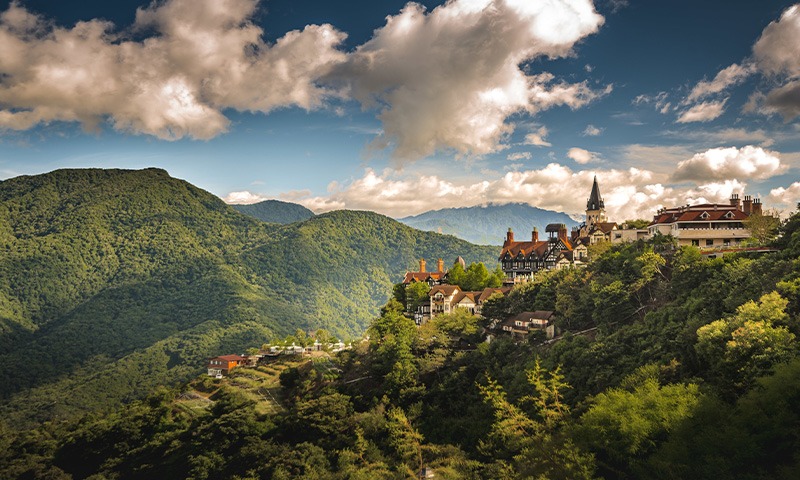
South India rarely gets the top billing when hill stations come up in conversation. Most travellers still picture Shimla, Manali or Darjeeling. That default view leaves out an entire mountain system: the Western Ghats, one of the world’s eight biodiversity hotspots recognised by UNESCO, running along the coasts of Kerala, Karnataka and Tamil Nadu, with the Eastern Ghats adding their own quieter set of highland retreats in Andhra Pradesh and Telangana.
The result is a spread of hill stations that feel completely different from the Himalayan template. Tea gardens instead of apple orchards. Cardamom and coffee estates instead of pine forests. Colonial cantonments sitting beside tribal villages, and shola grasslands that hold species found nowhere else on earth.
This guide covers 30 of the best hill stations in South India, grouped by state, with the kind of practical detail that helps you actually plan a trip: altitude, nearest access, and what the place is genuinely good for. Some are famous, some are quiet, and a few have avoided the mainstream travel calendar entirely. The intent is to help you build a route that suits your pace, budget and travel window rather than default to the first name that appears in a general search.
Kerala’s hill country sits in the High Range and Cardamom Hills, most of it between 900 and 2,000 metres. These are the wettest ranges in the peninsula, which is precisely why the tea, spice and coffee estates look the way they do. Rain and altitude are the two ingredients that define the entire belt, and both are on generous display across the eight destinations below. Well curated South India tour packages usually anchor the Kerala leg around Munnar and one supporting hill town.
The most photographed of all Kerala’s hill towns, Munnar sits at 1,600 metres in the Idukki district. Tata’s rolling tea estates, Eravikulam National Park with its Nilgiri tahr, and Anamudi (South India’s highest peak at 2,695 metres) sit within a short drive. Best from September to March.
A plateau district rather than a single town, Wayanad stretches across bamboo forests, coffee plantations and the Edakkal Caves with their 6,000 year old petroglyphs. Chembra Peak’s heart-shaped lake is the signature trek. Ideal for slow, three to four night stays.
Grasslands, pine forests planted decades ago by the forest department, and paragliding launches make Vagamon feel more like a Scottish highland than a Kerala hill. It sits on the border of Idukki and Kottayam at about 1,100 metres.
The gateway to Periyar Tiger Reserve. Bamboo rafting on Periyar Lake, guided jungle walks with reformed poachers now employed as trackers, and cardamom plantations define the experience. Pairs naturally with Munnar.
About 55 km from Thiruvananthapuram, Ponmudi is the closest hill station for anyone flying into Kerala’s capital. Twenty two hairpin bends lead up to a modest 1,100 metre ridge with tea slopes and a viewpoint that catches the Arabian Sea on clear evenings.
Sitting across the valley from Palakkad, Nelliyampathy is a working plantation belt of coffee, cardamom and orange orchards. Seetharkundu viewpoint drops nearly 1,000 metres into the plains. Far quieter than Munnar in every season.
The Idukki arch dam, one of Asia’s largest, sits at the heart of this district. The reservoir landscape, elephant sightings around Idukki Wildlife Sanctuary, and viewpoints over the Cheruthoni gorge give it a very different flavour from tea-country Munnar.
A small colonial-era retreat about 8 km before Munnar, Devikulam is built around Sita Devi Lake. The pace is deliberately slower, and it works well as a first or last night if you want to sidestep Munnar’s town traffic.
The Nilgiris, Palanis and Anaimalai ranges give Tamil Nadu a mix of British-era hill stations and lesser known ridges. Higher, drier and often cooler than their Kerala neighbours, they see winter lows in single digits.
The Queen of Hill Stations, at 2,240 metres in the Nilgiris. The Nilgiri Mountain Railway, a UNESCO World Heritage Site, still runs steam-hauled services out of Coonoor. Ooty itself is busy, but the surrounding tea country rewards a few days of exploration.
The Palani Hills’ answer to Ooty, and in many ways prettier. Kodai Lake, Coaker’s Walk, Pillar Rocks and the Kurinji Andavar temple form a compact sightseeing circle. The 12-year Neelakurinji bloom, next expected in 2030, draws serious botanical interest.
The smaller sibling of Ooty, 19 km downhill and considerably calmer. Sim’s Park, Dolphin’s Nose viewpoint, and the boutique tea estates around Kotagiri Road make Coonoor the smarter base if you want the Nilgiris without the crowds.
The oldest of the three Nilgiri hill stations, and the quietest. Catherine Falls, Elk Falls and Kodanad viewpoint sit within easy reach. Kotagiri is the working home of the Keystone Foundation, which supports the Toda and Kurumba communities of the range.
In the Shevaroy Hills of Salem district at about 1,500 metres, Yercaud is Tamil Nadu’s most accessible hill station from Bangalore or Chennai. Coffee estates, an emerald lake in the centre of town, and Pagoda Point over the plains define the visit.
A remote tea plantation town at 1,193 metres in the Anaimalai Hills. The drive up crosses Aliyar Reservoir and 40 hairpin bends inside the Anamalai Tiger Reserve. Lion-tailed macaque sightings are almost routine on the approach road at dawn.
A cluster of 14 hamlets on a plateau in Vellore district. Quieter and lower than most South Indian hill stations at 1,100 metres, Yelagiri suits weekend trips from Bangalore or Chennai. Paragliding, Swamimalai Hill trek and a placid lake anchor the itinerary.
The Kolli Malai range in Namakkal district demands a nerve-testing drive up 70 hairpin bends. That effort filters the crowds. Agaya Gangai waterfall, small Shiva temples and jackfruit orchards reward the climb.
Literally the cloud mountains. Meghamalai in Theni district is a genuinely offbeat cardamom and tea belt at 1,500 metres, close to the Kerala border and often used as a quieter alternative to Munnar. Manalar Dam and the surrounding grasslands are the draw.
Karnataka’s Malnad belt runs through Chikmagalur, Shivamogga, Hassan and Kodagu districts, holding the state’s coffee, pepper and cardamom country. Elevations mostly sit between 900 and 1,900 metres.
Coffee estates, Abbey Falls, Raja’s Seat and the Namdroling Tibetan Monastery at Bylakuppe make Coorg the most well-rounded of Karnataka’s hill destinations. Homestays on working plantations are the signature stay. Well covered in our roundup of nature weekend tours in Karnataka.
The birthplace of Indian coffee, cultivated here since Baba Budan planted seven beans in the 17th century. Mullayanagiri, at 1,930 metres, is Karnataka’s highest peak. Kemmangundi and Baba Budangiri form a rewarding two day loop.
A working plantation town in the Hassan district, best known for the abandoned railway trek along the Green Route and the Bisle Ghat viewpoint. Best in the shoulder months of October and February when leeches ease off.
A small horticultural hill station at 1,434 metres in Chikmagalur district. Z Point and Hebbe Falls, reached via a bumpy jeep ride through coffee estates, are the standard visits. Very light on infrastructure by design.
Only 60 km from Bangalore and 1,478 metres up. Nandi is the classic sunrise day-trip: Tipu’s Drop, Amrita Sarovar and the ancient Bhoga Nandeeshwara temple below. Reach the top before 6.30 am on weekends or expect gridlock.
Called the Cherrapunji of the South for good reason, Agumbe records some of the highest rainfall in peninsular India. King cobra research, the Agumbe rainforest sunsets and the Kunchikal Falls make this a monsoon specialist.
A tribal and biosphere reserve on the border of Karnataka and Tamil Nadu at 1,500 metres. Home to the Soliga community, the Ranganathaswamy temple perched on a cliff, and jungle safaris in the surrounding reserve.
Meaning horse-face in Kannada, after the peak’s distinctive shape. The Kudremukh National Park trek is a permit-controlled 22 km round-trip through shola grasslands. Serious walkers only.
The Eastern Ghats produce a quieter category of hill stations. Fewer plantations, more tribal culture, and altitudes usually below 1,300 metres, but the isolation is part of the appeal.
About 115 km from Visakhapatnam, reached by one of India’s most scenic train routes through the Eastern Ghats. Coffee grown by Adivasi cooperatives, the Borra Caves limestone formations, and the Dhimsa dance traditions of the Bagata people define the visit.
At 1,265 metres in Andhra’s Chittoor district, Horsley Hills is a cool weekend option from Bangalore or Tirupati. Mallamma temple, gaur sightings in the surrounding reserve, and the Environmental Park keep the two-day itinerary full.
Marketed as the Kashmir of Andhra Pradesh, this small hamlet in Chintapalli mandal occasionally sees single-digit temperatures in December and January. Coffee, apple and strawberry plantations are being trialled at 1,000 metres.
Roughly 90 km from Hyderabad, this Rangareddy district hill station wraps around the Musi River source. Coffee plantations, the Anantha Padmanabha Swamy temple, and dense forest walks make it Telangana’s most complete highland retreat.
Not a conventional hill station but a river-and-hill combination that deserves inclusion. Reached by boat along the Godavari from Rajahmundry, the Papikondalu range rises steeply on both sides in the Eastern Ghats. Overnight boat stays are the standard way in, and the surrounding Papikonda National Park protects one of the last stretches of undisturbed forest in the region.
Most of the best south india hill stations peak between October and March, when the monsoon has cleared and temperatures settle between 10 and 25 degrees. April to early June works for higher altitudes like Ooty, Kodaikanal and Munnar, which stay pleasantly cool while the plains hit 40 degrees. The southwest monsoon from June to September is a specialist window: heavy rain, sharp mist, and a lush green quality that photographers actively seek out.
A well-planned South India tour typically covers two hill stations in a 7-to-10 day window, leaving room for cultural and coastal contrast rather than an unbroken run of tea estates. Road transfers between hill stations are longer than they appear on the map because of ghat sections; a 150 km drive can easily take 5 hours. Private cabs with an experienced local driver remain the most practical way to move, particularly for families and older travellers. Public transport works between the bigger towns but rarely covers plantation stays or trailheads. For anyone planning their first trip to the region, our roundup of lesser known hill stations in Kerala pairs neatly with this list and covers a handful of destinations that stay quieter even in peak season.
The 30 hill stations in south india covered above sit across five states, four biodiversity zones and roughly 800 km of mountain terrain. No single trip covers them all, and that is the point. The Kerala and Karnataka circuits reward slower, plantation-focused itineraries. The Tamil Nadu Nilgiris still hold on to their colonial train-and-tea character. The Eastern Ghats offer solitude that the Western side lost decades ago. Pick two or three that match your travel style, allow buffer time for ghat drives, and lean on regional operators who know when a viewpoint clouds over or a homestay is worth the extra hour of driving. Curated Kerala tour packages remain the easiest entry point for first-time visitors to the region.
For a custom itinerary that pairs these hill stations with backwaters, wildlife or heritage, contact the Memorable India travel desk with your travel dates and preferences, and our team will build a private, expert-led plan.
Q: Which is the best hill station in South India?
A: Munnar in Kerala is the most popular, thanks to its tea estates, Anamudi peak and Eravikulam National Park. For a quieter alternative with a similar landscape, Wayanad and Coorg are strong choices. Ooty and Kodaikanal remain the top picks in Tamil Nadu.
Q: Which state has the most hill stations in South India?
A: Kerala and Tamil Nadu together hold the largest concentration of hill stations, most of them along the Western Ghats. Karnataka’s Malnad belt adds another significant cluster, while Andhra Pradesh and Telangana contribute a smaller number in the Eastern Ghats.
Q: What is the best time to visit hill stations in South India?
A: October to March is the most comfortable window across the region, with clear skies and cool temperatures. April and May work well for the high-altitude stations like Ooty, Kodaikanal and Munnar, which stay pleasant while the plains overheat.
Q: Which is the coldest hill station in South India?
A: Lambasingi in Andhra Pradesh occasionally records single-digit temperatures in December and January and is often referred to as the Kashmir of Andhra Pradesh. Munnar, Ooty and Kodaikanal also see nights close to 5 degrees in peak winter.
Q: Are South India hill stations suitable for families and seniors?
A: Yes. Munnar, Ooty, Kodaikanal, Coorg and Yercaud all have good road access, quality accommodation and medical facilities within a short drive. Altitudes rarely exceed 2,500 metres, so acclimatisation is not usually a concern.
Q: How many hill stations can I cover in a 10-day South India trip?
A: A comfortable 10-day itinerary typically covers two to three hill stations along with a coastal or cultural leg. A common Kerala circuit pairs Munnar and Thekkady with the backwaters, while a Karnataka route often links Coorg and Chikmagalur with Mysore.
Top 7 South Indian Temples Known for Their Architectural Beauty
16 Oct 2026
What to Expect On Your Dream Alleppey Houseboat Trip
15 Oct 2026
12 Top Tourist Destinations in Jammu and Kashmir for a Memorable 2026 Trip
13 Oct 2026
12 Tips to Remember Before Holidaying in the Northeast Indian States
11 Oct 2026
An Aesthetic Guide for Kerala Tour: Backwaters, Tea Hills and Coastal Light
11 Oct 2026


