 +919871148514
 info@memorableindia.com
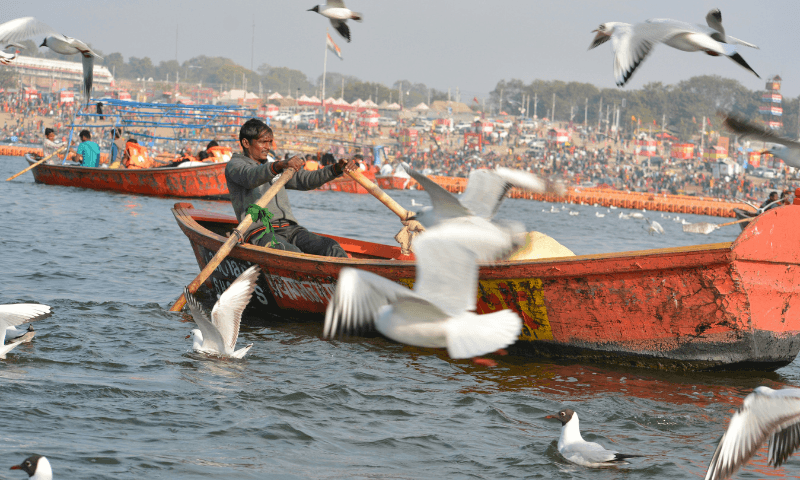
Few events on earth can match the scale and intensity of the Kumbh Mela. Recognised by UNESCO as an Intangible Cultural Heritage of Humanity, this gathering brings together millions of pilgrims, sadhus, scholars, and curious travellers at the banks of India’s most sacred rivers. It is, by any measure, the largest peaceful congregation of human beings anywhere in the world.
But attending the Kumbh Mela, especially for the first time, requires planning that goes well beyond booking a train ticket and showing up. The sheer volume of visitors, the specific astrological windows that determine bathing dates, the variety of rituals unfolding simultaneously, and the logistical realities of navigating a temporary city of tents and ghats can feel overwhelming without preparation.
This guide walks you through the practical side of planning a Kumbh Mela trip, from understanding the different types of Kumbh and their rotating host cities to choosing where to stay, what to carry, and how to make the most of your time at one of India’s most powerful spiritual gatherings. The next Kumbh events are scheduled for 2027 in both Haridwar and Nashik, making this a particularly timely resource for travellers planning ahead.
The Kumbh Mela is not a single event held at one fixed location. It rotates among four sacred cities in India, each associated with a specific river and astrological alignment. The four cities are Prayagraj (at the Triveni Sangam, the confluence of the Ganga, Yamuna, and the mythical Saraswati), Haridwar (on the banks of the Ganga), Nashik (on the banks of the Godavari), and Ujjain (on the banks of the Kshipra).
The timing at each location is governed by the positions of Jupiter, the Sun, and the Moon. When these celestial bodies align in specific configurations tied to each city, the Kumbh is declared for that location.
The event itself has three main forms. The Maha Kumbh Mela takes place every 12 years at each location. The Ardh Kumbh, or half Kumbh, occurs every six years and is hosted only at Prayagraj and Haridwar. The annual Magh Mela is a smaller gathering held at Prayagraj each year.
There is also the rarest of them all: the Maha Kumbh at Prayagraj, which occurs once every 144 years (after twelve full Kumbh cycles). The most recent one took place in January and February 2025, drawing an extraordinary number of visitors.
For a deeper look at the mythological origins and history of the Kumbh Mela, the Memorable India article on The Largest Human Gathering on Earth is a thorough starting point to understand this spiritual journey.
The next major Kumbh event is the Ardh Kumbh Mela in Haridwar, scheduled from January 14 to April 20, 2027. This is a significant gathering in its own right, attracting millions of devotees to the banks of the Ganga. Key Shahi Snan (royal bathing) dates are expected to fall in January, March, and April 2027, coinciding with festivals such as Makar Sankranti, Mauni Amavasya, and Basant Panchami.
The Simhastha Kumbh at Nashik, held when Jupiter enters the Leo zodiac sign, is a longer event running from late 2026 through 2028. The key Amrit Snan (bathing) dates are expected in August and September 2027, with the first royal bath anticipated on August 2, 2027. The Nashik Kumbh is unique because rituals take place at two separate locations: Ramkund in Nashik city and Kushavarta Tirtha at Trimbakeshwar, about 30 km away.
For detailed bathing schedules and specific date breakdowns, the Memorable India guide to the Nashik Kumbh Mela 2027 provides comprehensive coverage.
The central ritual of the Kumbh Mela is the holy bath in the sacred river. Pilgrims believe that bathing during the astrologically designated windows washes away sins and brings the soul closer to moksha, liberation from the cycle of birth and rebirth. The most significant bathing occasions are the Shahi Snan or Amrit Snan days, when the great Akharas (ascetic orders) lead grand processions to the river before the ghats open for the general public. Witnessing a Shahi Snan procession, with Naga Sadhus covered in ash leading the way, is one of the most visually striking spectacles in Indian culture.
Beyond the bathing rituals, the Kumbh Mela functions as a vast open air gathering of spiritual thought. Religious discourses (pravachans), devotional singing (kirtan and bhajan), havan ceremonies, and meditation sessions are held across the Mela grounds throughout the event. Many renowned spiritual leaders and gurus establish camps where visitors can attend talks and participate in guided practices.
The Kumbh is one of the few occasions where all 13 recognised Akharas gather in one place. Each Akhara represents a different lineage of ascetics, and their processions and rituals form the ceremonial backbone of the event. Visitors may encounter various orders of sadhus, from the ash smeared Naga Sadhus to the silent Parivajakas who have taken vows of silence. Respectful observation is welcome, but always ask before photographing individual sadhus.
Each of the four Kumbh locations offers a distinct character, and which one suits you depends on your priorities and logistics.
Prayagraj is the most significant site for the Maha Kumbh, held at the Triveni Sangam. It draws the largest crowds and carries the deepest mythological resonance. The infrastructure is expensive, but the density of visitors can be intense.
Haridwar, set against the foothills of the Himalayas, offers a more accessible entry point. The city is well connected by road and rail, and the Ganga Aarti at Har Ki Pauri adds a powerful spiritual dimension beyond the Kumbh rituals themselves. The Memorable India guide to the Haridwar Kumbh Mela 2027 covers what to expect at this location.
Nashik offers a quieter and more spread out experience across two sites, with the added significance of the Trimbakeshwar Jyotirlinga.
Ujjain, centred on the Mahakaleshwar temple and the Kshipra river, is favoured by those with a particular connection to Shaivite traditions.
For first time visitors, Haridwar is often the most practical choice due to its transport links and manageable geography.
Accommodation during the Kumbh ranges widely, and booking well in advance is essential. Here are the main options.
Government-regulated tent cities are set up specifically for the Mela period. These offer basic to mid range facilities and are located close to the bathing ghats. They fill up quickly on Shahi Snan dates, so early reservation is critical.
Hotels in the host city and surrounding areas are available across budget, mid range, and luxury categories. In Haridwar, for instance, hotels in both the city centre and nearby Rishikesh serve Kumbh visitors. Expect prices to rise significantly during peak bathing dates.
Dharamshalas and ashram stays are a traditional and affordable option, particularly for solo travellers and pilgrims. Many ashrams offer basic accommodation, meals, and the chance to participate in daily spiritual routines. Advance contact is advisable.
Private luxury camps have become increasingly available at recent Kumbh events, offering air conditioned tents, attached bathrooms, and organised excursions to the ghats.
If you are combining the Kumbh with visits to other spiritual destinations, the Memorable India India Pilgrimage Tour offers customisable itineraries that can include Kumbh Mela attendance as part of a broader journey.
Packing smart makes a real difference at an event of this scale. Here is what experienced travellers recommend.
Comfortable, modest clothing is essential. Cotton or light fabric works best for warmer months, while layered clothing is necessary for the January to February window at Prayagraj or Haridwar. A shawl or dupatta is useful for both warmth and temple etiquette.
Waterproof sandals or shoes with good grip are important, particularly near the river ghats where surfaces can be wet and slippery.
A reusable water bottle, high energy snacks, sunscreen, a basic first aid kit, and any personal medications should be in your day bag. Keep a photocopy of your ID and hotel booking confirmation separate from the originals.
A waterproof pouch for your phone and cash is a practical addition, especially on bathing days. Avoid carrying valuables or large amounts of cash to the ghats.
If you tend to be sensitive to crowds or noise, earplugs and a small personal space towel can be surprisingly helpful.
The Kumbh Mela is a remarkably well organised event given its scale, but a few practical precautions go a long way.
Arrive at the bathing ghats early, ideally between 4 AM and 7 AM. Crowds are thinner, the atmosphere is calmer, and the spiritual energy at dawn is especially moving. As the day progresses, the density of visitors increases significantly, particularly on Shahi Snan dates.
Stay with your group. If you are travelling with family, designate a meeting point in case anyone gets separated. Mobile networks can become congested during peak hours, so do not rely solely on phone calls.
Use designated bathing zones and follow the instructions of police and volunteers. Crowd control measures at the Kumbh are extensive, and cooperating with them ensures both your safety and that of other pilgrims.
Women travellers should use dedicated changing areas at the ghats and consider travelling in groups on peak days.
Senior citizens and travellers with mobility concerns should look for accommodations close to major ghats. Shuttle services, battery operated vehicles, and e rickshaws operate within the Mela grounds at most locations.
For a closer look at essential tips and logistics, the Memorable India Kumbh Mela planning guide covers ground-level practicalities in detail.
Haridwar is well connected by rail, with direct trains from Delhi (approximately five to six hours), Lucknow, and other major cities. The nearest airport is Jolly Grant Airport in Dehradun, about 35 km away. By road, Haridwar is accessible via NH 58 from Delhi (approximately 230 km).
Prayagraj Junction is one of India’s busiest railway stations, with direct connections from Delhi, Mumbai, Kolkata, and Varanasi. The city also has a domestic airport with limited but growing connectivity. Road access is available via the Lucknow Allahabad Expressway and NH 19.
Nashik is accessible by rail from Mumbai (approximately three to four hours), Pune, and other cities in Maharashtra. The nearest airport is Nashik Airport (Ozar), which handles limited domestic flights. Mumbai’s Chhatrapati Shivaji Maharaj International Airport is roughly 170 km away. By road, the Mumbai Nashik Expressway makes the drive comfortable.
For travellers who prefer an organised trip with transport, accommodation, and guided access, Memorable India’s 3 Days Haridwar tour package provides a structured base that can be extended to include Kumbh Mela attendance.
A Kumbh trip offers a natural opportunity to explore nearby spiritual and cultural destinations.
From Haridwar, Rishikesh is just 20 km away and is an essential add on for yoga, meditation, and the famous evening aarti at Parmarth Niketan. A day trip or overnight stay in Rishikesh pairs beautifully with the Kumbh experience.
From Prayagraj, Varanasi is approximately 120 km away and offers the Ganga ghats, Kashi Vishwanath Temple, and Sarnath, the site of Buddha’s first sermon.
From Nashik, Trimbakeshwar (30 km) is part of the Kumbh circuit itself, while Shirdi (approximately 90 km) is another major pilgrimage stop.
For travellers interested in broader spiritual itineraries that weave together multiple sacred destinations, the Memorable India blog on Reasons to visit Prayagraj offers context on what the city has to offer beyond the Kumbh itself.
Attending the Kumbh Mela is unlike any other travel experience. It is not a curated tour or a polished attraction. It is raw, vast, deeply human, and spiritually charged in a way that rewards those who come prepared and open minded. The key to making the most of it lies in planning: knowing which Kumbh to attend, booking accommodation early, understanding the bathing calendar, and packing sensibly for the conditions.
With the Haridwar Ardh Kumbh and Nashik Simhastha both scheduled for 2027, now is the time to start planning. Reach out to the Memorable India team if you would like help building an itinerary that includes the Kumbh Mela alongside other destinations on your India travel list.
The Kumbh Mela is the world’s largest religious and spiritual gathering, held at four sacred river sites in India: Prayagraj, Haridwar, Nashik, and Ujjain. It is rooted in Hindu mythology, specifically the legend of the Samudra Manthan (churning of the cosmic ocean), during which drops of the nectar of immortality fell at these four locations. Pilgrims bathe in the sacred rivers during astrologically determined windows, believing the act purifies the soul and brings them closer to spiritual liberation. UNESCO has recognised the Kumbh Mela as an Intangible Cultural Heritage of Humanity.
The next Kumbh Mela events are scheduled for 2027. The Ardh Kumbh Mela in Haridwar is expected to run from January 14 to April 20, 2027. The Simhastha Kumbh Mela in Nashik, which runs for a longer duration, is expected from late 2026 through mid 2028, with the key Amrit Snan dates falling in August and September 2027.
Yes. The Kumbh Mela is attended by visitors from around the world, including families, solo travellers, and international tourists. Government authorities deploy extensive security, medical, and crowd management infrastructure. That said, the scale of the event requires basic precautions, including arriving early at ghats, staying in groups, carrying ID, and avoiding isolated areas after dark. Many tour operators, including Memorable India, offer guided Kumbh packages that handle logistics and safety considerations.
Comfortable, modest clothing is the standard. Cotton or breathable fabrics work well for warmer months, while layered clothing is advisable for the January to March window. A shawl or dupatta is useful for covering your head when entering temple areas or during aarti ceremonies. For the bathing ritual itself, most pilgrims wear simple cotton garments that dry easily.
For Shahi Snan dates, booking three to six months in advance is recommended. Hotels, tent cities, and even ashram accommodation in Kumbh host cities fill up rapidly, and prices rise considerably during peak bathing dates. If you are flexible about visiting on non Shahi Snan days, you will find more availability and better rates, while still experiencing the full atmosphere of the Mela.
Absolutely. The Kumbh Mela’s host cities sit close to several major travel destinations. Haridwar pairs naturally with Rishikesh (20 km) for yoga and river experiences. Prayagraj connects easily to Varanasi (120 km) for a broader spiritual itinerary. Nashik offers Trimbakeshwar as part of the Kumbh circuit itself and is within driving distance of Shirdi. Memorable India can help design multi destination itineraries that include the Kumbh Mela as a focal point.
What’s It Like to Travel in Rajasthan, India? A Grounded Look at the Land of Kings
18 Sep 2026
Where to Stay in 15 Most Popular Indian National Parks
15 Sep 2026
Top Buddhist Pilgrimage Sites in India: A Complete Circuit Guide
10 Sep 2026
Top 6 Tiger Reserves to Visit in India for a Bucket-List Safari
05 Sep 2026
Top 30 Must-Visit Hill Stations in South India
01 Sep 2026


