 +919871148514
 info@memorableindia.com
Every May, as classroom attendance thins and the mercury climbs past 40 degrees across the Indian plains, school coordinators face the same annual question: where should we take the students this year? It is a fair question, because a well-planned school tour during summer vacation in India can do what months of textbook instruction often cannot. It can place a student inside a 16th-century fort, beside a glacial river, or in front of a Bengal tiger in its own territory.
India’s geography lends itself perfectly to this kind of experiential learning. The Himalayan foothills stay cool through June, Rajasthan’s heritage cities offer living history lessons, and the southern hill stations combine ecology with climate science in ways no worksheet can replicate. This guide covers the best destinations for school excursions during the summer break, along with practical advice for coordinators, teachers, and parents involved in the planning process.
The most obvious reason is timing. Indian schools typically break for summer between mid-May and early July, giving groups anywhere from three to six weeks to plan and execute a trip. But there is a less obvious advantage too. Many of India’s most educational destinations, particularly in the Himalayan belt and the Western Ghats, are at their most accessible during summer. Roads to high-altitude areas open up after winter, national parks in certain regions remain operational before the monsoon closure, and hill stations offer pleasant daytime temperatures between 15 and 25 degrees Celsius while the plains struggle with heatwaves.
Summer also aligns with lighter tourist traffic at heritage and cultural sites compared to the October-to-March peak season. That means shorter queues at museums, better access to guided tours, and more room for student groups to move through historical complexes without the usual crowd pressure. For schools looking at summer special tour packages, this window often delivers better value too.
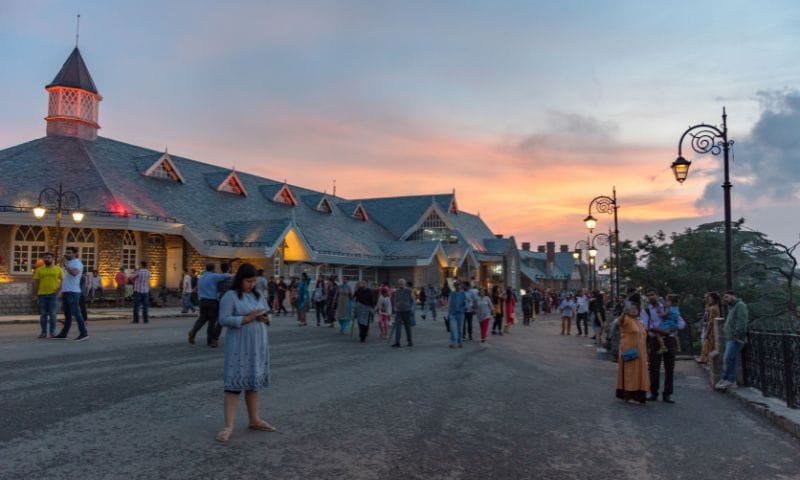
Shimla remains the default school trip destination for a reason, and that reason is not nostalgia. At 2,200 metres, the former British summer capital holds temperatures between 15 and 25 degrees Celsius right through June. Its infrastructure for handling large groups is well-established, with a range of hotels, transport services, and guided tour operators experienced in managing student itineraries.
The educational value here is layered. The Kalka-Shimla toy train, a UNESCO-listed narrow-gauge railway built in 1903 across 102 tunnels and over 800 bridges, is a working demonstration of 19th-century engineering. The Indian Institute of Advanced Study, housed in the former Viceregal Lodge, allows school groups to understand colonial-era governance architecture. The Himachal Pradesh State Museum covers tribal traditions, regional art, and cultural history in organised sections that work well for structured visits. A day trip to Kufri, just 16 kilometres away, adds nature walks and horse riding to round off the itinerary. Schools based in North India will find the Himachal tour package from Delhi particularly convenient, as the road journey takes roughly seven to eight hours.
Manali appeals to schools looking for a mix of geography, ecology, and supervised adventure. The town sits at 2,050 metres and stays cool through summer, with surrounding valleys offering access to glacial terrain, hot springs, and alpine forests. The Rohtang Pass and Atal Tunnel give students a direct look at glacial geography, high-altitude flora, and modern tunnel engineering. Solang Valley, 14 kilometres from the town centre, provides structured adventure activities including river crossing, rope courses, and nature treks, all available in formats designed for supervised school groups.
Beyond the adventure element, Manali has genuine cultural depth. The Hadimba Devi Temple, a 16th-century wooden structure surrounded by cedar forest, introduces students to Himalayan religious architecture and local mythology. The Vashisht hot springs connect to basic geology lessons about geothermal activity. For schools that want to combine history and environment education with physical activity, Manali is one of the most student-friendly destinations India offers. It pairs naturally with Shimla as part of a broader Himachal itinerary, and details on best hill stations in India can help coordinators compare options.
Mussoorie sits at 2,000 metres and is among the closest hill stations to Delhi, reachable in about six hours by road via Dehradun. That proximity makes it a practical choice for schools that have shorter trip windows or are organising excursions for younger students. The town is compact, walkable, and well-equipped for group stays.
Gun Hill, accessible by cable car, provides valley views that serve as a natural geography lesson in topography and weather systems. Kempty Falls, about 15 kilometres from the main town, is a popular halt for student groups. Landour, the quieter upper section of Mussoorie, has colonial-era churches, heritage buildings, and quiet walking trails that offer a slower pace. The nearby Robber’s Cave (Guchhupani), a natural limestone formation with a stream running through it, is a hit with younger students and connects well to earth science topics. Schools planning visits to Uttarakhand hill stations can explore more options in this guide to hill stations near Delhi.
Nainital is one of the most budget-accessible school trip destinations in India, and its compact geography means a group can cover the major highlights in two to three days without exhausting travel between spots. The town is built around Naini Lake, and boating on the lake is often the centrepiece of student itineraries.
The high-altitude zoo houses Himalayan wildlife including Royal Bengal tigers, leopards, and Himalayan black bears, making it relevant for biology and environmental science discussions. Snow View Point, reachable by cable car, provides panoramic Himalayan views. The Eco Cave Garden, designed as a series of interconnected natural rock caves, introduces students to geological formations in an interactive format. Tiffin Top offers a moderate nature walk with views across the Kumaon hills. Schools with younger age groups, particularly classes 4 through 8, will find Nainital manageable and engaging. A Nainital tour package covering two nights and three days suits most school schedules. For more ideas on summer-ready destinations for younger travellers, the guide on kid-friendly summer destinations in India is worth reviewing.
No school trip destination in North India packs more curriculum-aligned content into a single city than Jaipur. The Pink City is dense with UNESCO-listed heritage, royal architecture, living craft traditions, and scientific instruments, and nearly all of it maps directly to history, social science, art, and physics syllabi.
Jantar Mantar, the 18th-century astronomical observatory built by Maharaja Sawai Jai Singh II, is a UNESCO World Heritage Site. Its sundials and measurement instruments are functioning scientific tools that connect to mathematics and astronomy lessons in ways that no textbook diagram can match. Amer Fort, Hawa Mahal, and the City Palace complex together cover Rajput military architecture, water harvesting systems, wind ventilation engineering, and royal governance structures. Block printing workshops in the old city give students hands-on access to one of Rajasthan’s most enduring craft traditions. Jaipur is also a natural starting point for a broader Golden Triangle tour that includes Delhi and Agra, making it viable for schools that want a multi-city heritage excursion. One consideration: Jaipur gets hot in May and June, so early morning sightseeing schedules and air-conditioned transport are essential for summer groups.
For schools in eastern India, Darjeeling is the natural summer excursion choice. At roughly 2,050 metres, the town stays comfortable through the pre-monsoon months and offers a curriculum mix that spans history, ecology, agriculture, and cultural studies.
The Darjeeling Himalayan Railway, another UNESCO-listed heritage train, runs on a narrow gauge track built in the 1880s and is both a transport experience and an engineering case study. A guided visit to one of Darjeeling’s working tea estates, such as the Tukvar Tea Estate planted by the British in 1852, introduces students to plantation agriculture, altitude-based cultivation, and the economics of India’s tea industry. Tiger Hill provides a sunrise viewpoint for Kanchenjunga and the eastern Himalayan range. The Himalayan Mountaineering Institute, founded in 1954 after the first ascent of Everest, adds context about mountaineering history and physical geography. Darjeeling also offers exposure to Tibetan Buddhist culture through its monasteries and the Peace Pagoda, broadening student understanding of India’s religious diversity.
For schools in South India, Ooty provides a comfortable summer base in the Western Ghats. Sitting at 2,240 metres in the Nilgiri Hills, the town maintains cool temperatures year-round and has the infrastructure to handle school groups.
The Government Botanical Garden, established in 1848, covers 55 acres and introduces students to over a thousand plant species, including rare ferns and a fossilised tree trunk. The Nilgiri Mountain Railway, a UNESCO-listed rack railway, runs between Mettupalayam and Ooty through tea estates and eucalyptus forests. Doddabetta Peak, the highest point in the Nilgiris at 2,637 metres, provides views across the Western Ghats and serves as a practical geography reference point. For science students, the nearby Mudumalai National Park adds wildlife education, with resident elephant herds and diverse birdlife. Ooty pairs well with Coorg or Mysore for schools wanting a broader Karnataka-Tamil Nadu circuit.
A Kerala-based school tour can combine hill station ecology with wildlife education in a compact itinerary. Munnar, at 1,600 metres in the Western Ghats, is defined by its tea plantations, misty mountain terrain, and the Eravikulam National Park, home to the endangered Nilgiri tahr. For biology and environmental science students, the park offers direct engagement with conservation practices and high-altitude grassland ecosystems.
Thekkady, about three hours from Munnar, is the gateway to the Periyar Wildlife Sanctuary. A boat cruise on Periyar Lake gives students a chance to observe elephants, sambar deer, and a wide variety of water birds in a controlled, safe setting. The surrounding spice plantations, where cardamom, pepper, and cinnamon grow, connect to agricultural science and economics. Schools looking at a broader southern itinerary can explore Kerala tour packages that combine these stops with backwater experiences and coastal ecology in Alleppey or Kochi.
The right destination depends on three factors: the age group of the students, the curriculum subjects you want to reinforce, and the logistical capacity of the school.
For primary school students (classes 4 to 7), compact destinations with gentle terrain work best. Nainital, Mussoorie, and Ooty fall into this category because the sightseeing is concentrated, walking distances are manageable, and there is enough variety to keep younger students engaged without exhausting them. For senior school students (classes 8 to 12), destinations with deeper academic connections, such as Jaipur for history and science, Darjeeling for geography and agriculture, or Kerala for ecology and environmental studies, deliver more value. Adventure-oriented locations like Manali suit groups that want physical activity combined with learning. Budget also matters. Hill stations in Uttarakhand and Himachal Pradesh tend to offer better value for North India-based schools, while Ooty and Kerala work well for schools in the southern states, reducing long-distance travel costs. Our guide on summer hill station tours in India includes pricing benchmarks that can help with budget planning.
Start planning at least two to three months in advance, especially for popular hill stations where summer bookings fill up quickly. Confirm group accommodation early, as many hotels in places like Shimla and Manali reach capacity by April for the May-June season.
Always verify medical facilities at the destination. Hill stations in the Himalayan belt have altitude considerations, and a basic first-aid kit, along with a medical consent form from each parent, should be standard. Assign a realistic student-to-teacher ratio. A common benchmark is one teacher or supervisor for every 15 students. For adventure-heavy itineraries, ensure the activity operator holds recognised safety certifications from bodies such as the Nehru Institute of Mountaineering or the Adventure Tour Operators Association of India.
Transport planning is critical. Air-conditioned vehicles are non-negotiable for any summer school trip, particularly for destinations in Rajasthan and long road journeys to the hills. Build buffer time into the itinerary for rest stops, particularly when travelling with younger children. Working with an experienced tour operator who understands group logistics can eliminate most of these headaches. You can get in touch with our travel specialists to discuss customised school tour itineraries tailored to your group size and educational objectives.
A school tour during summer vacation in India is not just a break from classrooms. It is an extension of the classroom into the real world, where students can touch the stones of a 300-year-old fort, walk through a working tea estate, or watch a wild elephant from the safety of a boat. The destinations in this guide span geography, history, ecology, and culture, and each one has the infrastructure and educational depth to justify the investment of time and planning. The key is matching the destination to the age group, the learning objectives, and the practical realities of your school’s budget and schedule. India’s diversity means the right school trip destination exists for every group. It is simply a matter of choosing well and planning early.
Q: What are the best places for a school tour during summer vacation in India?
A: The best school trip destinations during summer include Shimla, Manali, Mussoorie, Nainital, Jaipur, Darjeeling, Ooty, and Kerala (Munnar and Thekkady). Each destination offers a mix of educational value, pleasant summer weather, and group-friendly infrastructure suitable for students across different age groups.
Q: Which Indian hill station is best for a school excursion with younger students?
A: Nainital and Mussoorie are ideal for younger students in classes 4 through 7. Both destinations are compact, walkable, and offer engaging attractions like lakes, cable car rides, nature parks, and caves that hold the attention of younger age groups without requiring strenuous physical activity.
Q: How far in advance should a school tour be booked for summer?
A: Schools should begin planning at least two to three months before the intended travel dates. Popular destinations like Shimla, Manali, and Nainital see heavy summer bookings, and group accommodation in these locations often fills up by April for the May and June season.
Q: Is Jaipur suitable for a school trip during summer?
A: Jaipur is one of the most curriculum-rich destinations for school groups, with UNESCO-listed sites like Jantar Mantar, Amer Fort, and the City Palace complex. Summers in Jaipur are hot, so schools should plan sightseeing for early morning hours, use air-conditioned transport, and schedule indoor museum visits during peak heat.
Q: What is the ideal duration for a school tour during summer vacation?
A: A school tour of three to five days works well for most destinations. Hill stations like Nainital or Mussoorie can be covered in two to three days, while multi-city itineraries such as the Delhi-Agra-Jaipur Golden Triangle or a Shimla-Manali circuit require four to five days for a meaningful experience.
Q: What safety measures should schools follow during a summer school tour?
A: Schools should maintain a student-to-teacher ratio of roughly one supervisor per 15 students, carry a group first-aid kit, collect medical consent forms from all parents, use air-conditioned transport, and verify that any adventure activity operators hold certified safety credentials. Choosing destinations with reliable medical facilities nearby is also essential.

20 Best Hill Stations in Uttarakhand for Family Vacation, Corporate Trips, Nature Lovers & Adventure
26 Aug 2026
15 Best National Parks and Wildlife Sanctuaries in North East India
25 Aug 2026
16 Best Romantic Hill Stations in India for Honeymoon Holidays
23 Aug 2026
Top 30 Must-See Forts and Palaces in Rajasthan
21 Aug 2026
Top 30 Krishna Temples in India: A Complete Pilgrim and Traveller Guide
21 Aug 2026


