 +919871148514
 info@memorableindia.com
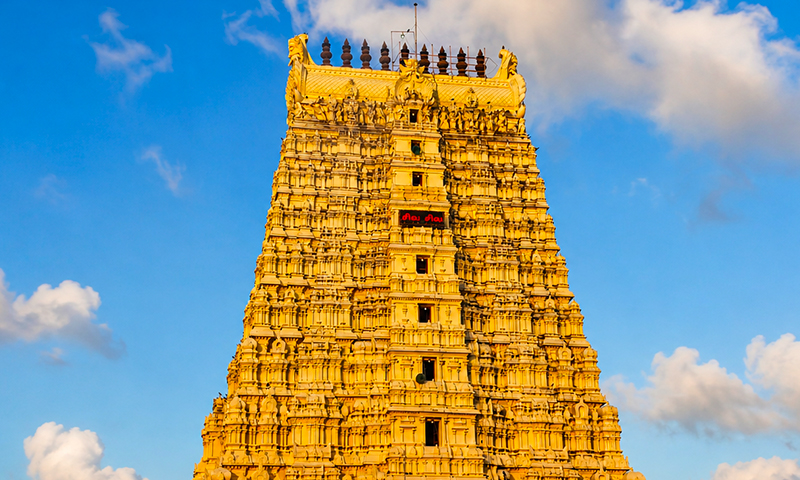
Rameswaram is fondly revered as South Kasi. It has long been a pilgrim destination for spiritual tourists seeking to immerse themselves in its lively history and magnificent temple architecture. It is considered one of the holiest destinations in India by Hindus, alongside Varanasi, and is part of the Char Dham pilgrimage route. However, Rameswaram is a well-kept secret that can be experienced on the lovely beaches, and the unexplored opportunities for quest expeditions deep into the water have given this holy island a magical touch, distinguishing it as a favourite destination for adventure enthusiasts, who have a lot of exciting activities ranging from boating to snorkelling. Travellers can also explore curated experiences through our Rameshwaram tour packages that combine temple visits with coastal exploration.
Tourism infrastructure in Rameswaram is gradually evolving, with newer hotels and improved connectivity making the island more accessible than before. As beach tourism grows alongside pilgrimage, the destination is steadily emerging as a well-rounded coastal getaway.
The travellers arriving at Rameswaram have bundles of options to choose from. One can select from many water sporting options to indulge in like kayaking, canoeing, scuba diving, snorkelling, surfing, windsurfing, kitesurfing, waterskiing, jet skiing and Stand-up paddle boarding.
Rameswaram is one of the best kitesurfing spots in India and it enjoys the privilege of perfect wind conditions for over nine months in a year with a nestle of kite spots, sought after by the pro-riders to explore the beauty of the Gulf of Mannar.
Krusadai Island is a hidden gem less explored by tourists and one of the most preferred islands in the Rameswaram cluster. While the island has been a protected marine area for many years, the forest department has recently opened it to tourists. The region in and around Krusadai island is home to rare species of coral reefs. One can see coral reefs closely as the island has shallow and clear waters. Due to this reason, big ships are restricted from entering this region, and it is a strictly protected marine area.
So Rameswaram is a generous host to a sea of gleaming water, cleaner coastal lines and an emerging home for adventure sports. Rameshwaram is in the limelight of adventure enthusiasts and honeymooners in recent times as a beach destination where you can stay close to the uninterrupted waves.
Rameshwaram is a holy island town located in the Gulf of Mannar, off the southeastern coast of Tamil Nadu. It is a popular pilgrimage destination for Hindus and is known for its famous Ramanathaswamy temple. The town is also known for its beautiful beaches and historical temples. Rameshwaram is acclaimed as one of the Four Char Dham in India: Rameshwaram in the South, Badrinath in the North, Puri in the East and Dwaraka in the West. The pilgrims who plan to visit Varanasi make it a point to visit Rameshwaram before and after their visit to Varanasi, which is believed to complete the pilgrimage.
According to Hindu mythology, Lord Rama visited Rameshwaram to worship Lord Shiva before crossing over to Lanka to rescue his wife Sita from the demon king Ravana. It is believed that Lord Rama himself installed the Shiva Lingam in the Ramanathaswamy Temple, the most prominent temple in Rameshwaram. A very important spiritual destination most frequented by devotees across the country. For many, especially Hindus, the religious significance of Rameshwaram as a whole is paramount. Being one of the twelve Jyotirlingas of India, it also draws devotees on multi-temple Shiva circuits. The best time to visit Rameswaram is from October to March when the weather is pleasant.
The nearest airport to Rameshwaram is Madurai Airport (IXM), located about 180 kilometres away. Another option is Trichy Airport (TRZ), which is about 260 kilometres from Rameshwaram and easily connects to various cities in India including Chennai, Bengaluru, Mumbai, and Delhi. It also serves some international destinations like Dubai, Singapore and Colombo.
Rameshwaram has its railway station (RMM), well-connected to major cities in India by train. The Rameshwaram railway station is located on the island, and there are trains from cities like Chennai, Madurai, Trichy, and Bangalore. With the inauguration of the new Pamban Bridge on 6 April 2025, direct train services to Rameshwaram railway station have fully resumed after being suspended in December 2022 for safety reasons. Trains once again run all the way to the island via the new vertical lift sea bridge.
Rameswaram is well connected by a road network with the neighbouring cities of Tamil Nadu through NH 87 (which connects Manamadurai to Rameswaram) and links with NH 38, NH 32 and NH 44 for onward connectivity to Madurai, Trichy, Chennai and Bengaluru.
The Ramanathaswamy Temple, a majestic Hindu temple devoted to Lord Shiva, is one of India’s most important holy landmarks. The Ramanathaswamy Temple is one of twelve Jyotirlinga shrines in India. Jyotirlingas are revered representations of Lord Shiva, thought to be emitting light. This boosts the temple’s significance among Shaivites (devotees of Shiva), making it a popular pilgrimage destination. The mythology connects Lord Rama to the shrine. Rama is thought to have placed the Shiva Lingam here before embarking on his voyage to Lanka. This legendary association holds great religious significance for Hindus.
The Hall of 1000 Pillars is undoubtedly the most well-known element of the temple complex. While it has over 1200 pillars, the name reflects its great grandeur and outstanding design. These artistically carved pillars form one of the most expansive corridors found in any Indian temple. The temple exemplifies Dravidian architecture at its best. The intricate craftsmanship, sculptures, and towering gopurams (gateway towers) are quite breathtaking. The complex contains 22 theerthams or sacred water sources. These are thought to have healing effects, and pilgrims frequently take a bath as part of their pilgrimage ceremonies. Unlike many temples, the Ramanathaswamy Temple features separate corridors for men and women, which is an unusual feature of its design.
Please note: non-Hindus will not be allowed to enter the inner sanctum of the temple.
Timings: 05:00 AM to 01:00 PM & 03:00 PM to 09:00 PM
Entrance fee: No
Camera fee: Not allowed
Video Camera Fee: Not allowed
Gandamanaparvatham, also known as Rama Patham or Rama Theertham, is a religious site on a hill in Rameshwaram. It is significant for Hindus because of its association with the Ramayana. The main draw here is that Lord Rama’s footprint is engraved on a chakra (discus) at the location. According to legend, Rama visited this location while searching for Sita, kidnapped by the evil king Ravana. Another version holds that Rama encountered Vibhishana, Ravana’s brother who sided with Rama, at Gandamanaparvatham. Vibhishana’s image is located within the temple complex. Situated on a hillside, it provides panoramic views of Rameshwaram Island and is considered the highest point in the area. The serene atmosphere contributes to the spiritual value of the location.
Timings: 07:00 AM to 01:00 PM and 03:00 PM to 06:00 PM
Entrance fee: No
The Panchmukhi Hanuman Temple is around 2 kilometres away from the Ramanathaswamy Temple. This temple is a prominent pilgrimage destination, recognized for its unique Hanuman deity with five faces. The temple’s most noticeable feature is its presiding deity, a huge idol of Lord Hanuman with five faces. These faces depict Hanuman’s five aspects: Kesari (father’s side, monkey god), Hayagriva (horse-headed form), Garuda (divine eagle), Varahi (boar avatar of Vishnu), and Narasimha (lion-headed avatar of Vishnu). Worshipping the five-faced Hanuman is thought to bestow strength, courage, intelligence, and protection from evil.
The Panchmukhi Hanuman Temple, like the other pilgrimage sites in Rameshwaram, is tied to the Ramayana. According to legend, Hanuman exhibited his five faces while looking for Sita in Lanka. The temple complex is also noted for hosting some of the “floating stones” thought to have been used by Lord Rama’s troops to construct the bridge from Lanka. These stones are displayed in the temple and are thought to have the unusual ability to float in water. In addition to the main five-faced Hanuman idol, the temple has smaller idols of Lord Rama, Sita, Lakshmana, and other deities.
Timings: 06:00 AM to 06:30 PM
Entrance fee: No
The Kothandaramaswamy Temple honours the Hindu deity Rama. It is in Rameswaram, approximately 13 kilometres from the main town. The temple is one of the 108 Divya Desam revered by the Vaishnavite community. It is also thought to be over 1,000 years old. It is thought to be the location where Vibhishana, the younger brother of the evil king Ravana, took sanctuary with Lord Rama after persuading Ravana to release Sita. Surprisingly, the temple was the sole edifice to survive the severe hurricane of 1964, which virtually destroyed the entire town of Dhanushkodi. The temple houses the deities of Rama, Lakshmana, Sita, Hanuman, and Vibhishana. The major idol depicts Rama clutching a bow (Kothandam), hence the name Kothandaramaswamy. The temple is surrounded by sea on all sides except for the road that connects the island to the mainland.
Timings: 07:00 AM to 05:00 PM
Entrance fee: No
Dhanushkodi Beach is a stunning beach on the southern edge of Rameswaram Island. The term Dhanushkodi translates to “tip of the bow,” and it is thought that Lord Rama from the epic Ramayana aimed his bow here to instruct his vanara sena (monkey army) to construct a bridge connecting Lanka. The beach is renowned for its pristine beauty. The Bay of Bengal and the Gulf of Mannar meet here, resulting in a distinctive environment. Unfortunately, in 1964, a storm destroyed Dhanushkodi, nearly destroying the entire town. While it is abandoned, the ruins of the old town and the beach are renowned tourist attractions. These ruins are a haunting reminder of the cyclone’s power. You may see the remains of houses, churches, and a railway station.
The Ram Setu viewpoint has beautiful views of Pamban Island and Adam’s Bridge, a line of limestone shoals that some say were erected by Lord Rama’s army. Arichal Munai, the confluence of the Bay of Bengal and the Gulf of Mannar, is a unique geographical feature where the waters of both oceans converge. The contrasting colours of the water are easily evident from here. Dhanushkodi beaches are recognized for their pure beauty and strong surf. The beach has clean white sand and clear blue waves, making it a beautiful sight and a favourite photography location.
Special note: Visitors are allowed to visit Dhanushkodi Beach but it purely depends on the climatic conditions.
Timings: 07:00 AM to 05:00 PM
The Dhanushkodi Lighthouse, which opened in 2022, is a relatively modern structure. It lies 49 meters (53 meters above sea level) on the point of Pamban Island, near the historic Dhanushkodi railway station and church. This lighthouse is the first major permanent building constructed in Dhanushkodi after the severe hurricane in 1964. It serves two functions: to assist ships navigating the Palk Strait and Gulf of Mannar, and as a tourist attraction with panoramic views of the surrounding area from a visitor’s gallery.
The Palk Strait and the Gulf of Mannar border the lighthouse on opposite sides. It has a 3-meter-diameter lantern atop the tower, with a 250mm spinning optic and an LED as the primary source of illumination. The light has a range of 15 nautical miles and is powered by 5KW of solar power. Visitors can climb the lighthouse to a 42-meter-high viewing gallery for a 360-degree view of the surrounding area, which includes the Palk Strait, the Gulf of Mannar, and the ruins of the old town of Dhanushkodi.
Timings: 10:00 AM to 01:00 PM & 02:30 PM to 05:00 PM
Entrance fee: Foreigners – Rs.25 & Indians – Rs.10
Camera Fee: Rs.20
Video Camera Fee: Rs.25
Holiday: Monday
Dr. APJ Abdul Kalam’s home is now a museum honouring his life and accomplishments. It’s located on Mosque Street in Rameswaram, where he was born and raised. In 2011, the house was converted into a museum, which is now maintained by his elder brother. It includes images, prizes, and other mementos that highlight his humble beginnings, early accomplishments, and global fame.
This house contains various interesting items, including a recreation of the Kalam House as it existed during his childhood. Photographs highlight his life path, from his childhood to his days as a scientist and president, his scientific discoveries and rockets, and the accolades and distinctions he got throughout his career, including the Bharat Ratna. The museum is an excellent site to learn about the life and work of one of India’s most popular presidents. It depicts his entire journey, from childhood to becoming a respected scientist and India’s 11th President.
Timings: 09:00 AM to 05:00 PM
Entrance fee: No
Mobile, Camera, Video Camera: Not allowed
The Pamban Bridge is a railway bridge connecting the town of Rameswaram on Pamban Island to Mandapam on mainland India. It was India’s first sea bridge, inaugurated on February 24, 1914, and remained the longest in the country for nearly a century until the Bandra-Worli Sea Link opened in 2010. The 2.06-kilometre bridge connects the Indian mainland and Rameswaram Island. The rail bridge is primarily a conventional bridge supported by concrete piers, but also has a double-leaf bascule section in the middle that can be lifted to allow ships and barges to pass through. It is a cantilever bridge with a Scherzer rolling lift bridge at its centre. The bridge is in a corrosive sea environment, making maintenance a challenge. The site is also cyclone-prone, and the bridge has weathered multiple storms throughout the years.
After more than a century of service, the old Pamban Bridge was closed to rail traffic in December 2022 due to safety concerns. In its place, the New Pamban Bridge, India’s first vertical lift sea bridge, was inaugurated by Prime Minister Narendra Modi on 6 April 2025. Built parallel to the old bridge at a cost of around Rs. 535 crore, the new 2.07-kilometre structure has 100 spans, including a 72.5-metre central navigational span that can be lifted up to 17 metres to allow larger ships to pass. It stands 3 metres higher than the original bridge and uses stainless steel reinforcement and a special polysiloxane coating for durability in the harsh marine environment. The old cantilever bridge is being partly preserved as a heritage marker.
The Dr. APJ Abdul Kalam National Memorial celebrates India’s 11th president, A.P.J. Abdul Kalam, and is in Peikarumbu, Rameswaram. The Defence Research and Development Organisation (DRDO) designed and built the memorial to honour Kalam while also highlighting India’s cultural and ethnic diversity. On July 27, 2017, India’s Prime Minister, Narendra Modi, officially inaugurated it. It represents national unification and combines Mughal and Indian architecture. The main dome, which resembles Rashtrapati Bhavan’s central dome, has a bronze statue of Kalam playing the Veena.
The centre dome connects to four display halls, each measuring around 2500 square feet and representing Kalam’s life. The halls are separated into four sections: children’s square, scientist square, motivation square, and lecture square. The halls house replica rockets and missiles, 900 paintings, including murals and Shekhawati paintings, and a collection of 200 photographs highlighting Kalam’s long association with the DRDO, the Indian Space Research Organisation (ISRO), as well as his involvement in India’s civilian space program and military missile development. The landscaping outside the memorial resembles a Mughal Garden, featuring plants from Bangalore, Andhra Pradesh, and Telangana.
Special Note: Coaches have no access to any of Rameswaram’s tourist attractions or hotels. They usually only operate up to the bus stop. From there, the passengers must rent non-AC local minivans or tempo travellers for their sightseeing and return.
Rameshwaram has a surprising number of water sports activities for the adventurous guest. It offers a variety of leisure activities, including kayaking, jet skiing, stand-up paddleboarding, windsurfing, and snorkelling.
Enjoy the thrill of zipping over the sea on a jet ski. This is an excellent way to get an adrenaline rush while also enjoying Rameswaram’s stunning coastline.
Kayak through the calm seas around Rameshwaram and explore the nearby mangrove forests. One can also kayak to surrounding islands and have a picnic meal.
Snorkelling or scuba diving trips allow you to explore Rameswaram’s underwater world. The coral reefs here are home to a diverse range of colourful fish and marine life.
Windsurfing is a skill-based water sport that lets you enjoy the wind and waves. Stand-up paddleboarding allows you to explore Rameswaram’s shoreline at your own speed while also working your core and legs.
A banana boat cruise is an enjoyable activity for large groups of friends or family. You will be towed behind a boat on a gigantic inflatable banana, which will undoubtedly make you laugh (or scream).
Best season: The optimum time to enjoy water activities in Rameshwaram is between October and May, when the weather is lovely and the seas are calm.
Please note: water sports activities are operated purely based on the climatic conditions.
The temple is located at Thirupullani, approximately 12 kilometres from Ramanathapuram and 57 kilometres from Rameshwaram. Thirupullani Temple is an old Hindu temple dedicated to Athi Jaganath Perumal. Vaishnavites revere 108 Divya Desams, including this one. It is thought that Lord Rama worshipped Lord Vishnu here in the guise of Athi Jagannatha Perumal.
The temple is designed in the Dravidian style, with towering gopurams (gateway towers), elaborate carvings, and expansive rooms. The temple’s five-tiered rajagopuram (gateway tower) faces east. The Adi Jagannatha shrine houses an image of Adi Jagannatha, Bhudevi, and Sri Devi in a seated posture. Adi Jagannathar’s consort, Padmasini, is placed at a separate shrine. There is a shrine to Dharbasayana Ramar in a reclining position. There is a metal image of Krishna from the 13th century Pandya period of the Vijayanagara and Madurai Nayak Kings. The Bodhi Tree (Arasa Maram) within the temple compound is reported to be centuries old and blessed by Lord Vishnu’s presence. The temple is related to the Tamil poet Kambar and the Ramayana. Festivals such as Vaikunta Ekadasi, Krishna Jayanthi, Pongal, Deepavali, and weekends attract a significant number of devotees to the temple.
Timings: 07:00 AM to 12:30 PM and 03:30 PM to 08:30 PM
Entrance fee: No
Please note: non-Hindus will not be allowed to enter the inner sanctum of the temple.
Thiru Uthirakosamangai is a renowned temple for Lord Shiva, believed to have existed before 3000 years ago. The presiding deity Mangalanathar is believed to have preached the meanings of Vedas and other auspicious secrets of Hinduism to His consort Mangalambigai at this holy place. Temple authorities claim that this is the world’s earliest (first) Shiva temple. This temple is particularly known for its Nataraja statue, which is constructed of emerald stone and is coated in sandal paste for 11 months, except for January, when it is cleansed and left as is for Darshana.
Apart from the antiquity of this temple and its specialities, yet another significant aspect of this temple is the idol of Lord Nataraja. Lord Nataraja is the dancing posture of Lord Shiva. The unbelievable fact about this idol is that Lord Nataraja stands as a six-foot-tall statue carved out of a single emerald stone. Dating back to around three thousand years, the source and means for such a precious statue are still a mystery. Lord Nataraja is covered with sandal paste throughout the year as emerald has the scientific property of its molecules getting disturbed when exposed to light and water. Once a year, on the day of Thiruvadhirai Star during the Tamil month Margazhi, Lord Nataraja can be worshipped without the sandal paste. Day-long rituals and anointing with different aromatic materials are carried out on this auspicious day and this special darshan is called Arudhra Dharshan.
Besides the wonderful Lord Nataraja and Lord Mangalanathar, there exists a separate shrine for the Goddess Mangalanayaki. The façade of the temple is with a seven-tiered gateway tower. Near the entrance, there exists a statue of the mythological creature called Yali. It is with the face of a lion with a human’s body. A huge stone ball rolls around inside this yali’s mouth, but no one can take the ball out, which is an engineering mystery.
A common mythology about the temple is that Ravana, the King of Lanka, married Mandodari here. Another mythology links the creation of the Shiva Linga and Nataraja idols to Ravana. A 3000-year-old ilanthai (Indian elm) tree is a notable feature of the temple complex. The temple hosts a variety of festivals throughout the year, the most notable being the Arudra Darshan in the Tamil month of Margazhi-Thai (December or January).
Timings: 06:00 AM to 01:00 PM & 04:00 PM to 08:00 PM
Entrance fee: No
Please note: non-Hindus will not be allowed to enter the inner sanctum of the temple.
Devipattinam is a beautiful coastal village located in Tamil Nadu’s Ramanathapuram district. It is also known as Navapashanam and is a famous pilgrimage destination for those visiting Rameshwaram, which is around 65 kilometres distant. Hindus perform religious rites for their forefathers here. It is well known for its temples, particularly the Navagraha Temple. This temple, devoted to the nine celestial bodies (Navagrahas), is thought to have been built by Lord Rama himself to pacify the sea gods before going to Lanka to save his wife, Sita.
According to mythology, Lord Rama placed nine separate stones here, representing the nine celestial bodies. Worshipping the Navagrahas here is said to please them and prevent any evil effects. The temple is remarkable since the Navagrahas’ idols are located on the seashore and become submerged during high tide. Devipattinam is thought to be the location where Goddess Durga killed the demon Mahishasura. Because the stones are placed inside the sea, around 100 metres from the coastline, the best time to visit is between 05:30 and 08:30 AM. At this time, the sea level and tides are extremely low, so you may easily walk into the sea via a tiny bridge from the coastline to observe the stones at a depth of 2–4 feet from the sea level and worship the Navagrahas. When there is a high tide or the water level increases, the nine stones are submerged in the water. The Hindu Religious and Charitable Endowments Department is responsible for this temple.
The facilities for pilgrims and tourists are not up to the standard, hence it is recommended to visit this place enroute or do only a day excursion. Travellers seeking a broader spiritual circuit can explore our South India spiritual tour ideas for planning inspiration.
| Hotel Names | Category | Website Link |
| Hotel Residency Towers | Deluxe (4*) | https://www.theresidency.com/towers-rameswaram/ |
| Hotel Daiwik | Deluxe (4*) | https://www.daiwikhotels.com/ |
| Hotel Arjunaa | Standard (3*) | https://www.hotelarjunaa.com/ |
| Hotel Star Palace | Standard (3*) | https://www.starpalacehotels.com/ |
| Hotel Fortune | Standard (3*) | https://www.fortunermm.in/ |
| Hotel SS Grand | Economy (2*) | https://www.hotelssgrand.com/ |
| Hotel Vinayaga | Economy (2*) | https://poppyshotels.com/vinayaga-by-poppys-rameswaram |
| Hotel Ashoka | Economy (2*) | https://www.hotelashokarameswaram.com/ |
| Hotel Taika | Economy (2*) | https://hoteltaika.com/ |
| Hotel Rameshwaram Grand | Economy (2*) | https://www.hotelrameswaramgrand.com/ |
| Hotel Justa Sarang | Economy (2*) | https://www.justahotels.com/justa-sarang-rameswaram/ |
As Rameswaram is a pilgrim destination, only pure vegetarian food is available. There are no good local standalone restaurants in Rameswaram, and hence it is better for guests to take their food at the hotels where they stay.
Planning a visit that combines temple darshan, coastal exploration and heritage sightseeing? Explore our curated Rameshwaram Dham tour packages or connect with our team through the Memorable India pilgrimage tours page for a customised itinerary that suits your pace, budget and interests.

A Guide to Exquisite Indian Handicrafts and Where to Buy Them in India
26 Oct 2026
A Journey to Leh and Srinagar: Firsthand Travel Experience
25 Oct 2026
A Guide to Famous Temples in Himachal Pradesh
24 Oct 2026
9 Best Places to Visit in Lakshadweep, a Top Island Getaway in India
23 Oct 2026
7 Reasons Why One Should Travel by Indian Rail
22 Oct 2026


