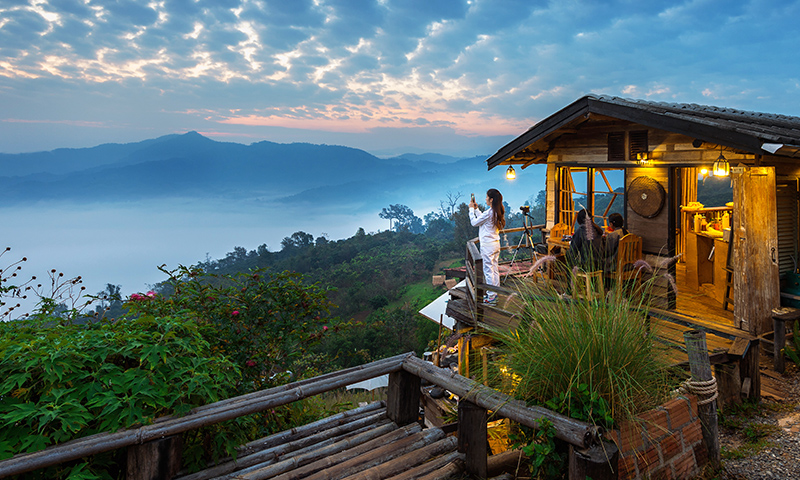
When summer settles in and temperatures across Delhi, Jaipur, and Hyderabad push past 40 degrees, the pull towards cooler air becomes almost instinctive. India’s hill country answers that call with something the plains simply cannot offer: pine-scented mornings, mist rolling through valleys, tea gardens tumbling down slopes, and quiet lakes that mirror snow-capped peaks. From the western Himalayas to the Nilgiris and the Sahyadris, the country holds a remarkably varied collection of high-altitude destinations, each with its own weather pattern, culture, and pace of life.
This guide brings together 30 of the best hill resorts in India for travellers planning a nature-first summer break. The list mixes well-loved classics with quieter alternatives and is organised by region so you can plan around your starting city, budget, and travel style. Practical notes on altitude, ideal months, and nearby experiences are woven in to help shape a realistic itinerary rather than a wish list.
The selection leans on years of ground experience running trips across the Himalayas, Northeast, and southern hill country. Some destinations shine in early April, others peak by mid-June, and a few come into their own only during the monsoon. Reading through this list, look less for the highest-ranked name and more for the destination that matches your travel window, group profile, and appetite for driving or trekking.
Why India’s Hill Country Works So Well in Summer
Most summer hill resorts in India sit between 1,200 and 2,800 metres, where daytime temperatures rarely cross 25 degrees Celsius and nights stay pleasantly cool. Beyond the weather, these destinations pack in short treks, colonial-era architecture, monasteries, tea and coffee estates, boating, wildlife, and a slower rhythm that feels genuinely restorative. Families find them safe and accessible, couples find quiet corners, and solo travellers find a mix of community and solitude. According to the
According to the India Meteorological Department, the pre-monsoon window between March and June sees the highest hill-station footfall of the year, driven largely by school holidays and the sharp temperature gap between plains and highlands.
North India: The Classic Himalayan Circuit
The Indian Himalayas hold the largest concentration of summer hill resorts in the country. Options range from short weekend breaks close to Delhi and Chandigarh to full alpine escapes in Kashmir and Ladakh.
Himachal Pradesh
Shimla. The former summer capital of British India still holds its old-world character, with the Ridge, Mall Road, and Christ Church anchoring most visits. At 2,200 metres, it stays comfortable through May and June, and the UNESCO-listed toy train from Kalka remains a favourite family experience.
Manali. A perennial favourite at 2,050 metres, Manali suits both quiet couples and adventure seekers. Solang Valley for paragliding, Old Manali for cafes, and Hadimba Temple for heritage make up the classic circuit. Snow patches often linger into early summer near Rohtang Pass.
Dharamshala and McLeod Ganj. Home to the Dalai Lama and the Tibetan government-in-exile, this twin-town setup blends Buddhist culture with sweeping Kangra Valley views. Bhagsu Falls, Namgyal Monastery, and the popular Triund trek make it a rewarding four to five day base.
Dalhousie. Colonial bungalows, quiet pine forests, and views of the Pir Panjal range give Dalhousie a slower, more reflective feel. Khajjiar, often called mini Switzerland, sits a short drive away and adds a memorable day trip.
Kasauli. At just under 1,900 metres and a quick drive from Chandigarh, Kasauli works well as a short weekend escape. The cantonment atmosphere, Sunset Point, and forest walks appeal to travellers who prefer calm over crowds.
Uttarakhand
Nainital. Built around the emerald Naini Lake at 2,084 metres, Nainital blends boating, ropeway rides, and Mall Road strolls. Neighbouring Bhimtal, Sattal, and Naukuchiatal add quieter alternatives for those who want to sidestep peak-season rush.
Mussoorie. The Queen of the Hills sits an easy drive from Dehradun and offers panoramic Doon Valley views, Kempty Falls, and the Landour heritage walk. Cloud End and Lal Tibba reward travellers who venture beyond the main Mall stretch.
Auli. At 2,800 metres, Auli is best known for winter skiing, but summer brings meadows in full bloom, uninterrupted Nanda Devi views, and one of the country’s longest cable car rides. It pairs beautifully with a Badrinath extension.
Ranikhet. A quiet cantonment town at 1,869 metres, Ranikhet is defined by oak and pine forests, the Chaubatia orchards, and clear Himalayan views. It rarely gets crowded, which is part of its appeal for families and older travellers.
Lansdowne. Founded in 1887, this Garhwal Rifles cantonment remains largely untouched by commercial tourism. Forest trails, Bhulla Lake, and its surrounding calm make it a preferred weekend option from Delhi and NCR.
Jammu, Kashmir and Ladakh
Gulmarg. Kashmir’s meadow of flowers turns into a green expanse in summer, with the Gulmarg Gondola climbing to nearly 3,979 metres for Pir Panjal views. Golf on one of the world’s highest courses and gentle meadow walks add to its appeal.
Pahalgam. Set along the Lidder River at 2,740 metres, Pahalgam pairs pony rides through Aru and Betaab valleys with quiet riverside walks. It also serves as the base camp for the Amarnath Yatra during July and August.
Sonmarg. The Meadow of Gold lives up to its name in summer, with Thajiwas Glacier a short ride away. Its cooler climate and river-cut valleys make it a natural stop on any Kashmir road trip.
Leh. At 3,500 metres, Leh is technically a high-altitude cold desert rather than a traditional hill resort, but its summer weather, ancient monasteries, Pangong Lake, and Nubra Valley make it one of the most rewarding escapes in India.
Northeast India: Quieter, Greener, More Distinct
The Northeast offers a very different summer experience, with monastery-topped ridges, waterfall country, and a cultural mix that stands apart from the rest of the subcontinent.
Sikkim
Gangtok. Sikkim’s capital sits at 1,650 metres and combines monasteries, cable car rides, and Nathula Pass excursions with a clean, well-organised feel. Tsomgo Lake and Baba Mandir make for popular day trips.
Pelling. West Sikkim’s quiet base for Kanchenjunga views, Pelling offers Pemayangtse Monastery, the Skywalk, and short walks to Khecheopalri Lake. It suits travellers who prefer serenity over busy town centres.
West Bengal, Meghalaya and Arunachal Pradesh
Darjeeling. The queen of hill stations blends colonial charm, tea estates, and the UNESCO-listed Darjeeling Himalayan Railway. Tiger Hill sunrise, Ghum Monastery, and Happy Valley Tea Estate remain fixtures on most itineraries.
Shillong. The Scotland of the East is known for its cafes, indie music scene, and Ward’s Lake. Umiam Lake, Elephant Falls, and the scenic drive to Cherrapunji anchor most visits.
Cherrapunji (Sohra). Sohra records some of the highest rainfall on earth, and even in early summer, cloud-draped landscapes, Nohkalikai Falls, and the living root bridges of Nongriat leave a lasting impression.
Tawang. At 3,048 metres, Tawang holds India’s largest Buddhist monastery, along with Sela Pass, Madhuri Lake, and views deep into the eastern Himalayas. Permits are required, and the drive from Guwahati takes commitment, but the payoff is significant.
South India: Tea, Coffee, and Nilgiri Cool
South India’s hill stations rely on the Western Ghats and the Nilgiri range for their cool weather. Plantations, colonial hangovers, and easy trekking define the experience.
Tamil Nadu
Ooty (Udhagamandalam). The most popular hill station in South India, Ooty draws steady summer footfall for its Nilgiri Mountain Railway, Botanical Gardens, and Doddabetta Peak. The tea estates around Coonoor offer a quieter counterpart.
Kodaikanal. The Princess of Hill Stations offers Kodai Lake, Coaker’s Walk, and Pillar Rocks. At 2,133 metres, it stays cool through peak summer and pairs well with Munnar for a longer South India loop.
Kerala
Munnar. Rolling tea estates, Eravikulam National Park, and the rare Neelakurinji bloom (next expected around 2030) make Munnar a signature Western Ghats destination. Anamudi, South India’s highest peak, sits nearby.
Wayanad. Kerala’s greener, wilder hill district holds the Edakkal Caves, Chembra Peak, and Banasura Sagar Dam. It suits travellers wanting nature and wildlife over commercial infrastructure.
Karnataka
Coorg (Kodagu). Coffee estates, Abbey Falls, Raja’s Seat, and the Namdroling Monastery at Bylakuppe give Coorg a distinctive blend of nature and culture. It is easily reached from Bengaluru or Mangalore.
Chikmagalur. The birthplace of Indian coffee sits below the Baba Budangiri range. Mullayanagiri, Karnataka’s highest peak, and the surrounding estate stays make it a favourite for slow, unhurried breaks.
West India: Weekend Escapes and Desert Relief
For travellers in Mumbai, Pune, and much of Rajasthan, the western hill circuit offers quick, high-value breaks without long transit hours.
Rajasthan and Maharashtra
Mount Abu. Rajasthan’s only hill station, home to the exquisite Dilwara Jain Temples and Nakki Lake. At around 1,220 metres, it offers welcome respite from the Thar summer and pairs well with an Udaipur trip.
Mahabaleshwar. Strawberry farms, Wilson Point, and Venna Lake anchor a classic Western Ghats retreat. The nearby Pratapgad Fort adds a slice of Maratha history to the itinerary.
Lonavala. Between Mumbai and Pune, Lonavala works well as a short weekend break. Bhushi Dam, Tiger’s Leap, and the ancient Karla Caves cover most itineraries. Monsoon arrivals bring the greenery to full life.
Matheran. Asia’s only automobile-free hill station keeps things refreshingly quiet. Panorama Point, Charlotte Lake, and the toy train from Neral make it a memorable low-key escape close to Mumbai.
Practical Planning Tips for a Summer Hill Trip
Book early: Rooms in Shimla, Manali, Ooty, and Mussoorie fill quickly between April and June. Confirm stays at least six to eight weeks ahead.
Match altitude to travellers: For seniors and young children, stations below 2,500 metres are more comfortable. Leh, Auli, and Tawang need at least a day of acclimatisation.
Combine destinations: The Srinagar-Gulmarg-Pahalgam circuit, the Munnar-Thekkady-Alleppey loop, and the Shimla-Manali-Dharamshala trail all reward slower travel with fewer transits.
Pre-monsoon versus monsoon: April to June offers clear skies. July to September brings landslide risk in the Himalayas, but Western Ghats destinations like Munnar and Coorg look their most dramatic.
Pack layers: Even in June, nights above 2,000 metres can dip below 10 degrees Celsius. A warm mid-layer is essential.
Most hill resorts are at their best between mid-March and late June, before the monsoon arrives. Kashmir and Ladakh peak from June to early September, when higher passes open fully. The Western Ghats, including Munnar, Coorg, and Wayanad, remain rewarding through the monsoon for travellers who do not mind rain and fewer crowds. Northeast destinations like Shillong and Cherrapunji stay pleasant year-round but see their heaviest rainfall between June and August.
How to Choose the Right Hill Resort for Your Group
The sheer number of options can feel overwhelming, so a shortlist built around a few honest questions usually works better than a long wishlist. Consider how far you are willing to drive from the nearest airport, since Ladakh, Tawang, and parts of Arunachal require long overland stretches even after flying in. Think about the youngest and oldest members of your group, since altitudes above 3,000 metres can be genuinely tiring for children and seniors. If it is your first hill trip of the season, a lower-elevation classic like Kasauli, Ranikhet, or Kodaikanal often makes for a smoother introduction than a high-altitude circuit.
Budget also plays a defining role. Kashmir, Sikkim, and Himachal offer strong mid-range value with houseboats, homestays, and heritage properties. Kerala and Karnataka lean towards plantation stays and boutique resorts, which sit slightly higher on cost per night but deliver a more immersive experience. Rajasthan’s Mount Abu and Maharashtra’s Lonavala remain the most wallet-friendly options for shorter breaks.
Planning Your Summer Hill Escape
India’s summer hill resorts hold something for every kind of traveller, from families looking for easy access and safe walks to solo travellers chasing high-altitude quiet. The 30 destinations covered here give a working shortlist, but the real difference lies in how a trip is planned: matching altitude to fitness, pacing the route, and giving each place enough time to breathe. If a specific region has caught your interest, reach out through our Contact Us page to shape an itinerary around your dates, group size, and travel style.
Frequently Asked Questions
1. Which are the best hill resorts in India for a summer family holiday?
For families, Shimla, Nainital, Mussoorie, Ooty, and Munnar remain the most reliable choices. They combine cool weather, safe walking areas, straightforward sightseeing, and a strong hotel base suitable for children and older travellers.
2. What is the best time to visit summer hill resorts in India?
Mid-March to late June is the ideal window for most Indian hill stations. Kashmir and Ladakh open up fully from June, while Western Ghats destinations like Munnar and Coorg extend well into the monsoon for travellers who enjoy rain-soaked landscapes.
3. Which hill station in India is coolest in May and June?
Auli, Leh, Tawang, and Gulmarg stay coolest during peak summer thanks to their higher elevations. Daytime temperatures rarely cross 20 degrees Celsius, and nights remain distinctly chilly, which is why they attract heat-weary travellers from across the plains.
4. Are hill resorts in India suitable for senior citizens?
Yes. Stations below 2,500 metres such as Kasauli, Ranikhet, Ooty, Coorg, and Mount Abu are ideal for senior travellers. They offer easy terrain, moderate climate, and well-developed medical facilities nearby, which matters for longer stays.
5. Which South Indian hill stations are best for a summer getaway?
Ooty, Kodaikanal, Munnar, Wayanad, Coorg, and Chikmagalur top the list. Each blends tea or coffee estates, moderate climate, and short trails suitable for most fitness levels, and all are well connected to major southern cities.
6. How many days are ideal for a summer hill station trip in India?
A minimum of four to five nights works well for a single destination, while a ten to fourteen day window suits multi-station circuits like Kashmir, Himachal, or a combined Kerala and Tamil Nadu loop covering Munnar, Thekkady, and Kodaikanal.
 +919871148514
 info@memorableindia.com