 +919871148514
 info@memorableindia.com
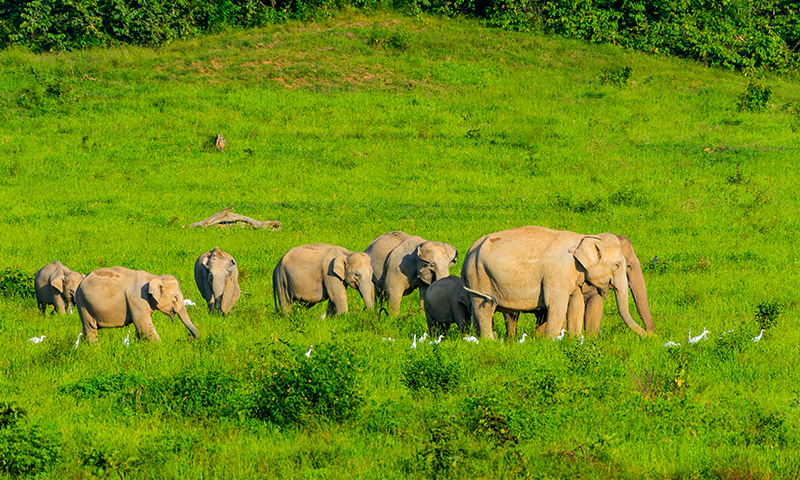
Kerala’s forests carry a quiet reputation. While tiger tourism gravitates to Central India and desert wildlife to Rajasthan, the Western Ghats stretch that runs down the state’s eastern spine holds one of the densest concentrations of protected wildlife habitat in the country. Six national parks and eighteen sanctuaries share a landscape of shola grasslands, evergreen rainforest, mangroves, and montane pastures, and each protects a slightly different slice of the same UNESCO-listed biodiversity hotspot. For travellers planning a Kerala trip that goes beyond backwaters and beaches, this guide covers the fifteen most rewarding wildlife sanctuaries and national parks to consider, with practical notes on what each one is known for and when to visit.
The Western Ghats along Kerala’s eastern belt were inscribed as a UNESCO World Heritage Site in 2012, recognised for exceptionally high species endemism. This is home to the Nilgiri tahr, the lion-tailed macaque, the Malabar giant squirrel, and the Nilgiri langur, alongside populations of Bengal tiger, Indian gaur, and the Asian elephant. What sets Kerala apart is not just the species count but the accessibility of its parks. Most reserves sit within a two to four hour drive of a major town like Kochi, Thiruvananthapuram, or Kozhikode, making it possible to weave wildlife stops into a broader Kerala itinerary without significant detours.
Kerala’s only Project Tiger reserve and the state’s most visited protected area, Periyar spans roughly 925 square kilometres of the Cardamom Hills in Idukki district. Its centrepiece is the artificial Periyar Lake, created by the 1895 Mullaperiyar Dam, which draws elephants, sambar, gaur, and wild boar to its banks and makes the boat safari the signature experience here. As per the reserve’s official portal, Periyar was rated the best managed tiger reserve in the country in the 2022 Management Effectiveness Assessment. Beyond boating, options include guided nature walks, bamboo rafting, border hiking, and the multi-day Tiger Trail trek led by reformed poachers.
Established in 1978, Eravikulam is the last stronghold of the Nilgiri tahr, an endangered mountain goat found only in the high grasslands of the southern Western Ghats. Spread across Idukki district around Anamudi, South India’s highest peak at 2,695 metres, the park is best known for its rolling shola meadows and the once-in-twelve-years bloom of the Neelakurinji flower, which last carpeted the slopes in 2018. Access is limited to a designated tourism zone at Rajamalai near Munnar, and the park closes to visitors during the tahr calving season from early February to end of March.
One of the last undisturbed tropical evergreen rainforests in India, Silent Valley protects a core area of 89.52 square kilometres in the Nilgiri Hills, ringed by an additional 148 square kilometres of buffer zone. The park was formally notified in 1984 after a landmark citizen movement stopped a hydroelectric project on the Kunthipuzha River, and it now forms the core of the Nilgiri Biosphere Reserve. The Kerala Forest Department operates jeep safaris from Mukkali gate, and the park is a critical habitat for the lion-tailed macaque, the Nilgiri langur, and over 200 recorded bird species.
The second largest sanctuary in Kerala at 344 square kilometres, Wayanad forms part of the Nilgiri Biosphere Reserve and connects with Bandipur and Nagarhole in Karnataka and Mudumalai in Tamil Nadu, creating one of the most important elephant corridors in southern India. The sanctuary is divided into four ranges, with Muthanga and Tholpetty operating jeep safaris. Gaur, spotted deer, sloth bear, wild dogs, and elephant herds are commonly sighted. For readers planning a broader visit, our detailed guide to Wayanad covers the wider region’s trekking trails, waterfalls, and tribal heritage in depth.
Tucked between the Anaimalai Hills and Nelliampathy ranges in Palakkad district, Parambikulam is one of the least commercialised tiger reserves in South India. It covers 643 square kilometres of protected forest and is administered through a well-regarded community ecotourism model that involves the Kadar and Malasar tribal communities as guides. The reserve is home to healthy populations of tiger, leopard, gaur, and the largest teak tree in Asia, known locally as Kannimara. Vehicle numbers are strictly capped, which means bookings must be made well in advance through the official ecotourism office.
Sitting in the rain shadow of the Western Ghats on the Kerala-Tamil Nadu border, Chinnar has an atypical dry deciduous and thorn scrub ecosystem that supports species you will not see in the state’s rainforests. It is the only protected area in Kerala where the grizzled giant squirrel is found in sizeable numbers, and it also hosts India’s only rehabilitation centre for the star tortoise. The 90 square kilometre sanctuary lies along the Munnar to Udumalpet road, and its trekking routes to Thoovanam waterfalls and the tribal hamlet of Alampetty are among the more rewarding half-day walks in the region.
Roughly 30 kilometres from Thiruvananthapuram, Neyyar covers 128 square kilometres of the Agasthyamala Biosphere Reserve. The Neyyar Dam and reservoir form its scenic core, and the sanctuary is best known for its lion safari park, crocodile rehabilitation centre, and short boat rides that open into the forest. Elephants, sloth bears, sambar, and Nilgiri tahr inhabit the interior forests. Its proximity to the state capital makes it a popular day trip for travellers using Kovalam or Trivandrum as a base.
Named after the Peppara Dam on the Karamana River, this 75 square kilometre sanctuary in Thiruvananthapuram district was notified in 1983 and forms part of the Agasthyamala Biosphere Reserve. The terrain rises from 100 metres to 1,717 metres, and the mix of tropical evergreen forest and rare myristica swamp supports elephants, sambar, leopards, and a striking diversity of amphibians and reptiles. Peppara sees far fewer visitors than Neyyar despite being only a short drive further inland, which makes it a good pick for travellers who want quiet forest walks.
Named after the Shendurney tree that grows here, this 172 square kilometre sanctuary in Kollam district sits on the southern edge of the Western Ghats. The Parappar Dam reservoir cuts through it, and boat rides across the lake open onto surrounding evergreen forest. Shendurney is part of the Agasthyamala Biosphere Reserve and is known for populations of Nilgiri langur, lion-tailed macaque, elephant, and the Travancore tortoise. The Rockwood ecotourism camp offers guided trekking and one of the more immersive overnight stays in southern Kerala.
Wrapped around the massive Idukki Arch Dam reservoir, this 105 square kilometre sanctuary covers hills that slope down to the water on all sides. Elephants, gaur, jungle cats, and the giant grizzled squirrel are the main draws. Boat cruises across the reservoir are the standard way to experience the park, and the surrounding landscape of cardamom, coffee, and rubber plantations gives the area a gentler edge than the wilder reserves further north. It combines naturally with a Munnar or Thekkady stay.
Kerala’s northernmost wildlife sanctuary, Aralam spreads across 55 square kilometres in Kannur district at the base of the Brahmagiri hills. It is one of the best places in the state for butterfly watching, with the annual Aralam Butterfly Survey documenting hundreds of species. Elephant, sambar, wild boar, Malabar giant squirrel, and Indian bison inhabit the moist deciduous and evergreen forests. The sanctuary’s trekking programmes led by the Kerala Forest Department are affordable and well organised.
At 125 square kilometres, this sanctuary in Thrissur district was among the earliest to be notified in Kerala, back in 1958. It surrounds the Peechi and Vazhani reservoirs and includes the Chimmini basin. Botanists rate it highly for its orchid diversity, with more than a hundred documented species, and the forest also shelters elephants, gaur, leopards, and the Malabar giant squirrel. The Kerala Forest Research Institute’s nearby field campus makes it a popular educational stop for students of forestry and wildlife science.
Named the first bird sanctuary in Kerala and often called the Salim Ali Bird Sanctuary after the ornithologist who surveyed the area, Thattekad covers just 25 square kilometres near Kothamangalam in Ernakulam district. Its position on the northern bank of the Periyar River creates a mosaic of habitats that support over 320 recorded bird species according to the Kerala Tourism Department. Malabar grey hornbill, Ceylon frogmouth, Sri Lanka bay owl, and the crimson-throated barbet are among the specialties. Early morning visits with a resident guide are essential.
Set on the eastern shore of Vembanad Lake in Kottayam district, Kumarakom is a 14-acre patchwork of mangrove and marshland that draws large numbers of migratory birds between November and February. Siberian stork, egrets, herons, teal, and the Indian darter are commonly seen, and the sanctuary is one of the easiest to visit as part of a Kerala backwaters itinerary. Guided canoe rides through the narrow channels give a closer view of the roosting sites than the walking paths allow.
One of Kerala’s smaller but ecologically vital national parks, Anamudi Shola covers just 7.5 square kilometres in Idukki district near Munnar. It protects three tracts of shola forest and grassland that together form one of the last intact examples of this high-altitude ecosystem in the state. The park connects the larger Eravikulam National Park with Mathikettan Shola and Pambadum Shola, creating a continuous protected corridor for species like the Nilgiri tahr, Nilgiri marten, and the elusive Nilgiri wood pigeon. Access is restricted, and permits must be obtained through the Munnar Wildlife Division.
The most reliable window for wildlife travel across Kerala runs from October to March, when the retreating monsoon leaves forests lush and daytime temperatures stay comfortable. April and May bring higher heat but also concentrate animals around waterholes, which improves sighting probability in reserves like Wayanad and Parambikulam. Monsoon months from June to September see many parks partly closed or with restricted access due to safety concerns, though this is peak season for birding at Thattekad and butterfly activity at Aralam. Eravikulam remains closed to visitors during the Nilgiri tahr calving season from February through March, so plan accordingly.
Kerala’s wildlife sanctuaries and national parks reward travellers who plan carefully and choose the right reserve for the right season. Whether the goal is a boat safari at Periyar, a birding morning at Thattekad, or a quiet trek through Chinnar’s dry forest, a well-structured itinerary makes the difference between a rushed stop and a genuine wildlife experience. Our team has been designing custom Kerala trips since 2005, and our Kerala tour packages can be tailored to include wildlife stops alongside backwaters, hill stations, and cultural experiences. For families travelling with children or seniors, our Kerala family packages balance sanctuary visits with easier-paced days. To start planning your trip, get in touch with our travel specialists and we will build an itinerary around your dates, interests, and preferred pace.
Kerala has 6 national parks and 18 wildlife sanctuaries as notified by the Kerala Forest and Wildlife Department, along with several bird sanctuaries and conservation reserves. Together, they cover approximately 24 percent of the state’s land area, one of the highest proportions of any Indian state.
Periyar Tiger Reserve in Thekkady is generally the most recommended for first-timers because it offers a well-organised boat safari on the Periyar Lake, multiple guided walking programmes, and reliable elephant and gaur sightings. Its location on the standard Kerala tourist circuit also makes it easy to combine with Munnar and the Alleppey backwaters.
Tigers are present in Periyar Tiger Reserve, Parambikulam Tiger Reserve, and Wayanad Wildlife Sanctuary. However, sightings are rare compared to Central Indian parks like Bandhavgarh or Kanha because the dense evergreen forest cover in Kerala offers strong concealment. Travellers primarily hoping for tiger sightings should plan additional stops in Central India.
Yes, most sanctuaries are family-friendly. Periyar’s boat safari, Kumarakom Bird Sanctuary, and Thattekad Bird Sanctuary are particularly well-suited to families with young children because they involve minimal walking and offer clear wildlife viewing opportunities. Seniors and multi-generational groups often find these reserves easier than jeep safaris in drier parks.
November to February offers the most comfortable weather with lower humidity and moderate temperatures. March to May brings higher animal activity around waterholes but hotter days. Avoid the peak monsoon months of June to August for most reserves as many trails and safaris are suspended.
Yes, all national parks and wildlife sanctuaries in Kerala require entry permits, which are issued at the park gate or through official online portals. Safari and boat ride tickets are separate and often need to be booked in advance, particularly for Periyar, Parambikulam, and Silent Valley during peak season.
The Kerala Backwaters: 11 Things To Know Before You Visit
23 Sep 2026
Udaipur Itinerary: How to Spend 3 Days in Udaipur
22 Sep 2026
The Best Places to See in Varanasi, India
22 Sep 2026
11 Ancient Temples in Palakkad That Deserve to Be Seen
22 Sep 2026
Best Places to Visit in Tamil Nadu, India: A Traveller’s Guide for 2026
21 Sep 2026


