 +919871148514
 info@memorableindia.com
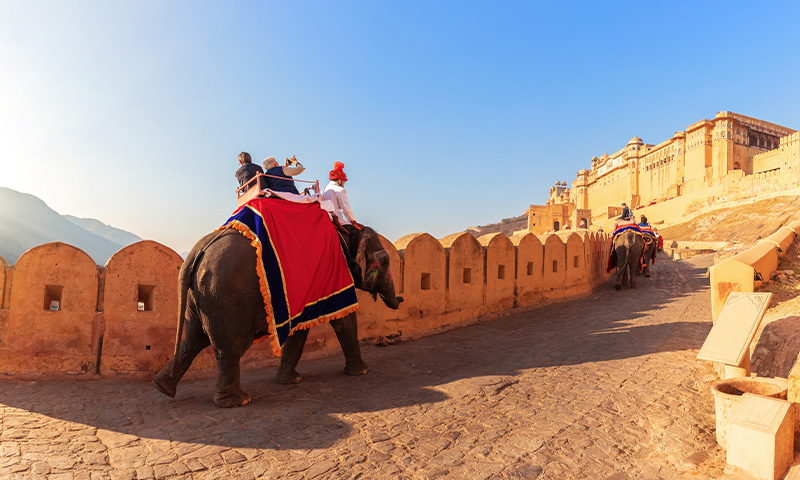
Three weeks is the sweet spot for Rajasthan. Two weeks feels rushed once you start counting fort visits, long desert drives and the odd afternoon lost to a bazaar. A month is generous but hard to negotiate around work. Twenty one days gives you room to cover the classic Mughal and Rajput circuit, dip into two wildlife parks and still keep an afternoon free in Udaipur to do nothing at all.
This three week plan is built for travellers who want more than a highlights reel. It follows a logical clockwise loop from Delhi, minimises backtracking, and mixes the marquee cities with quieter stops like Mandawa, Ranakpur and Bundi. Distances, transport notes and stay recommendations are included so you can adapt the plan to your pace.
Rajasthan is roughly the size of Germany, and its major destinations sit five to seven hours apart by road. A ten day trip forces you into a Jaipur, Jodhpur, Udaipur triangle with little breathing room. A 21 days Rajasthan tour lets you add Jaisalmer in the west, Ranthambore or Sariska for tigers, and a Shekhawati detour for the painted havelis that rarely make shorter itineraries.
It also lets you slow down. Rajasthan rewards travellers who linger. A second morning in Jodhpur means a proper walk through the blue lanes below Mehrangarh Fort. An extra evening in Udaipur means catching a folk performance at Bagore Ki Haveli without checking your watch.
October to March is the reliable window. Days are warm and dry, nights in the desert are cool enough for a jacket, and every fort, palace and safari operator is open. December and January bring the coldest desert nights, sometimes dropping to five degrees, so pack accordingly. April and May are punishing in the west, with Jaisalmer and Bikaner regularly crossing 45 degrees.
The monsoon months of July to September have a quieter charm, especially around Udaipur and Mount Abu, though desert regions stay hot. For a month by month breakdown, see the best time to visit Rajasthan guide on our blog.
The first week eases you in, then sends you west into the Thar. Fly into Delhi and take a day to reset before the road journey begins.
Two nights in Delhi covers arrival day plus one full sightseeing day. Focus on Old Delhi in the morning, Jama Masjid and a rickshaw ride through Chandni Chowk, then the Qutub Minar complex and Humayun’s Tomb in the afternoon. Save Lodhi Garden and a Khan Market lunch for a slower second morning if jet lag is heavy.
Drive into the Shekhawati region for a night in Mandawa. This cluster of small towns is famous for painted havelis built by nineteenth century merchant families. Nawalgarh, Fatehpur and Mandawa itself have the finest examples. It is a gentle warm up for the Rajput architecture ahead and stays refreshingly free of tour bus crowds.
From Mandawa, drive four hours west to Bikaner. Junagarh Fort is the headline attraction, one of the few Rajasthani forts built on flat ground rather than a hill. The Karni Mata temple at Deshnok, about 30 km south, is famous for its resident rats considered sacred. Bikaner also produces some of the best mithai in India, so budget time for the sweet shops around Kote Gate.
The road from Bikaner to Jaisalmer runs 330 km through open desert. Once there, base yourself outside the Golden Fort to keep pressure off the living monument, then visit on foot. The Patwon Ki Haveli complex and Gadisar Lake fill an easy first day. Reserve the second afternoon for an overnight camel or jeep safari into the Sam or Khuri dunes, returning to the city the next morning.
The second week shifts from desert to the Aravalli foothills, and the pace slows noticeably.
The 285 km drive from Jaisalmer to Jodhpur takes about five and a half hours. Mehrangarh Fort deserves a slow morning; the audio guide is one of the best in India. Spend the second day wandering the blue quarter around Navchokiya, visiting Jaswant Thada, and taking sunset chai on a rooftop with a view of the fort lit up in gold.
Break the journey to Udaipur with two exceptional stops. The Ranakpur Jain Temple, carved from over 1,400 uniquely designed marble pillars, is arguably the most beautiful Jain temple in India. Continue to Kumbhalgarh Fort, whose perimeter wall stretches over 36 kilometres, second in length only to the Great Wall of China. Overnight in a heritage resort near Kumbhalgarh.
Udaipur is where most travellers wish they had booked an extra night. Three is a fair minimum. City Palace, Jagdish Temple and a boat ride on Lake Pichola cover the essentials. Save time for the crafts village of Shilpgram, an evening Gangaur dance performance at Bagore Ki Haveli, and a slow dinner at one of the lakeside rooftops facing the Taj Lake Palace.
The final week turns north east and closes the loop back to Delhi, layering in wildlife and the pilgrimage town of Pushkar.
The largest fort in India by area, Chittorgarh occupies a 180 metre hill and holds seven centuries of Mewar history. The Vijay Stambha tower, Rana Kumbha Palace and the twin Jain temples are the highlights. Overnight in Chittorgarh or push on to Bundi if you prefer.
Bundi is the sort of small Rajput town that quietly overshadows better known destinations. Its palace murals, the Raniji Ki Baori stepwell and the labyrinthine old blue city make it a favourite among repeat visitors to Rajasthan. For more suggestions in this vein, our guide to offbeat places in Rajasthan covers ten similar stops.
Pushkar wraps around a sacred lake and one of the few Brahma temples in the world. It is small enough to explore in an afternoon on foot. If your trip falls in November, the Pushkar Camel Fair transforms the town into a photographer’s dream, but expect steep hotel rates and heavy crowds. Continue to Jaipur the next morning, a 145 km drive.
The Pink City needs two full days. Day one covers Amber Fort in the morning, Jal Mahal on the drive back, and Hawa Mahal, City Palace and Jantar Mantar in the afternoon. Day two is for the bazaars of Johari, Bapu and Tripolia, a block printing workshop in Sanganer or Bagru, and a Rajasthani thali dinner at Chokhi Dhani if you want the folk village experience.
Drive to Sawai Madhopur for a late afternoon safari at Ranthambore, one of India’s best known tiger reserves. A second morning safari improves your odds considerably. Ranthambore Fort within the park is a UNESCO listed site as part of the Hill Forts of Rajasthan, a serial inscription confirmed by UNESCO in 2013.
The Ranthambore to Delhi drive takes seven hours, so most travellers prefer the morning train from Sawai Madhopur to Delhi, which takes around five and a half hours. Arrive in time for a farewell dinner in the capital before your flight home.
Distances in Rajasthan are long, roads vary in quality and public transport is uneven. Most 21 days Rajasthan tour plans use a private car with driver, which stays cheaper than expected for the flexibility it provides. Trains work well on a few segments (Delhi to Jaipur, Sawai Madhopur to Delhi, Jodhpur to Jaisalmer overnight), and short internal flights on Air India connect Jaipur, Jodhpur and Udaipur if you want to compress the itinerary.
If you prefer a fully arranged plan with vehicle, driver and pre booked heritage stays, our team can adapt a package such as our 15 day route into a 21 day version. See our
curated 15 Days Rajasthan Historical Tour as a starting template that we can extend to three weeks.
ATMs are common in every city on this route. UPI is widely accepted in restaurants and shops but tourists rarely have Indian bank access, so keep some cash. Dress modestly at temples and cover shoulders and knees at Jain and Hindu sites. Photography is restricted inside several fort museums, so check signage.
Solo female travel through this circuit is well established, though standard urban caution applies after dark. Bottled or filtered water is the norm; refill stations exist at better hotels. Tipping guides, drivers and hotel staff is expected and appreciated.
A well built 21 day plan through Rajasthan feels neither hurried nor padded. The order matters more than the destinations, since covering ground clockwise from Delhi keeps drives short and avoids the doubling back that quietly eats a full day of most itineraries.
For a personalised version of this Rajasthan itinerary, adjusted for your travel dates, pace and interests, get in touch with our travel specialists. We handle the vehicle, driver, stays and permits so you can spend your three weeks looking at the landscape rather than the map.
Yes. Twenty one days is enough to cover Jaipur, Jodhpur, Jaisalmer, Udaipur and Bikaner along with wildlife at Ranthambore and detours to Shekhawati, Ranakpur, Kumbhalgarh, Bundi and Pushkar. It leaves buffer time for slower mornings and travel delays without feeling stretched.
November and February are ideal. Days are pleasant, nights are cool but not cold, and every safari and heritage property is running full service. October and March are also reliable but slightly warmer in the western desert.
A comfortable mid range trip with private car, three star and heritage hotels and daily breakfast typically works out to a significant range depending on season and stay category. Luxury heritage itineraries cost considerably more, while backpacker plans on buses and trains can be arranged for a fraction. Contact our team for a costed quote.
A private car with driver is the standard choice for a 21 day plan because several key stretches (Bikaner to Jaisalmer, Ranakpur, Kumbhalgarh, Bundi) are poorly served by trains. Use trains for Delhi to Jaipur and Sawai Madhopur to Delhi if you want to break the driving up.
Yes. The circuit described here is well travelled and served by a mature tourism industry. Families with children do well in Udaipur, Jaipur and Ranthambore in particular. Solo travellers, including women, report positive experiences on this route, with standard caution advised after dark and in isolated areas.
Yes, and many travellers do. Agra sits between Ranthambore and Delhi and adds one to two nights. If time is tight, replace the Ranthambore extension with a Jaipur to Agra to Delhi close, keeping your total trip at 21 days.
Udaipur Itinerary: How to Spend 3 Days in Udaipur
22 Sep 2026
The Best Places to See in Varanasi, India
22 Sep 2026
What’s It Like to Travel in Rajasthan, India? A Grounded Look at the Land of Kings
18 Sep 2026
Where to Stay in 15 Most Popular Indian National Parks
15 Sep 2026
Rajasthan Itinerary: How to Spend 3 Weeks
14 Sep 2026


