 +919871148514
 info@memorableindia.com
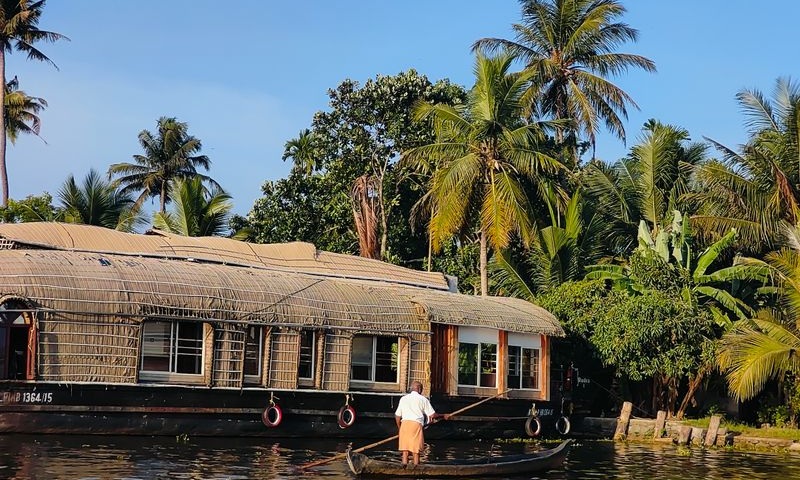
Kerala rewards travellers who plan their own routes. The state runs on frequent trains, a functional KSRTC bus network, ferries, and app-based cabs, which means you do not need a fixed package to move through it. What you do need is a clear sense of the geography, an honest read on the seasons, and a rough idea of where the interesting stops lie between the obvious ones. This guide is written for the independent traveller putting a Kerala trip together from scratch, be it a first visit or a return one built around a specific region.
Kerala is a long, narrow strip roughly 600 kilometres from Kasaragod in the north to Thiruvananthapuram in the south. The Arabian Sea forms the western edge, and the Western Ghats rise sharply to the east. The state is best thought of in three horizontal bands: the coastal belt with beaches and port cities, the midland with backwaters and paddy country, and the highland with tea, spice, and wildlife reserves. Any sensible itinerary picks one or two bands rather than sprinting between all three.
The state has four practical airports: Thiruvananthapuram, Kochi, Kozhikode, and Kannur. Kochi is the most connected and the natural entry point for the classic Munnar, Thekkady, Alleppey circuit. Thiruvananthapuram works better if your focus is Kovalam, Varkala, or the southern beaches. Kozhikode and Kannur suit travellers headed to Wayanad and the Malabar coast.
Fort Kochi, Mattancherry, and Ernakulam together make one of the most walkable heritage areas in South India. The Chinese fishing nets, Paradesi Synagogue, and Dutch Palace can be covered on foot or by ferry across three days. The state-run ferry between Fort Kochi, Vypin, and Ernakulam costs a few rupees and is the local commute, not a tourist ride. If you are landing here, give the city two full nights before moving inland.
Munnar sits at roughly 1,600 metres in the Idukki district and is Kerala’s most visited hill station. Beyond the tea estates, the useful stops are Eravikulam National Park for the Nilgiri Tahr, Mattupetty Dam, Anamudi (South India’s highest peak, permit-based), and the Kannan Devan Tea Museum for context on the region’s plantation history. Independent travellers usually stay two nights and use auto-rickshaws or hired cars for day trips. Book Eravikulam entry slots online in advance during peak months, as walk-in tickets sell out early.
Thekkady is centred on the Periyar Tiger Reserve, which sits inside a cardamom, pepper, and coffee belt. The boat ride on Periyar Lake is the standard activity, but the guided nature walks and bamboo rafting sessions run by the Kerala Forest Department are more rewarding for anyone who wants to actually observe wildlife instead of counting silhouettes. Book these directly at the reserve’s ecotourism desk on arrival.
The Kerala backwaters are a network of lagoons, canals, and lakes running parallel to the coast, with Vembanad Lake as the largest node. Alleppey (Alappuzha) is the main houseboat departure hub. Kumarakom, across the lake, is quieter and better suited to resort stays. A useful distinction: houseboats are moored by 6 PM under inland waterway rules, so the “cruise” is really a slow morning drift plus a stationary sunset. If you want continuous movement on water, take a shikara (small canoe) into the narrow Kuttanad canals instead, where paddy fields lie below water level and village life continues on the banks.
Wayanad, tucked into the northern Western Ghats, is a slower, greener alternative to Munnar. Edakkal Caves with their prehistoric petroglyphs, Chembra Peak, Soochipara Falls, and the Wayanad Wildlife Sanctuary form the core. It works particularly well as an add-on from Kozhikode or Mysuru rather than from Kochi.
Varkala’s laterite cliffs and Papanasam beach draw a slower, longer-stay crowd, particularly between November and February. Kovalam is closer to Thiruvananthapuram, more developed, and better for travellers who want beach with easy access to city amenities. For quieter options, Marari beach near Alleppey and Bekal in the north remain relatively uncrowded.
October to March is the peak season across most of Kerala, with dry weather, cool mornings in the hills, and comfortable coastal temperatures. December and early January are the busiest weeks, when hotel rates in Munnar and Alleppey can double.
The southwest monsoon arrives in early June and continues into September. Contrary to what is often written, monsoon is a genuinely good time for Ayurveda retreats, waterfall trails, and low-traffic backwater cruises, provided you accept intermittent rain. The northeast monsoon in October and November brings shorter bursts of rain but is otherwise fine for travel. April and May are hot and humid at sea level, though the hills stay pleasant.
Trains are the most reliable long-distance option. The Thiruvananthapuram, Ernakulam, Kozhikode, and Kannur corridors run frequently, and second AC or chair car bookings via the official IRCTC portal are straightforward. For a full network view of routes and schedules, consult the Indian Railways enquiry system.
KSRTC buses cover interior routes trains do not reach, particularly to Munnar, Thekkady, and Wayanad. The state also runs a decent Volvo and Scania inter-city fleet on major routes.
Within cities, app cabs work well in Kochi and Thiruvananthapuram. In hill and backwater areas, hire a car with a driver for the day. Rates are transparent when booked through a hotel or a local operator rather than negotiated on the street.
Renting a self-drive car is possible but not always practical, given tight ghat sections and unfamiliar road conventions. Two-wheeler rentals work well in Varkala, Fort Kochi, and Wayanad for short local runs.
Independent travellers in Kerala have unusually good choices at every budget:
For travellers who want a curated first pass across the standard circuit before designing a longer independent trip, our Kerala tour packages page compares durations, regions, and accommodation tiers side by side.
Kerala food changes noticeably every 100 kilometres. In Kochi, seek out karimeen pollichathu (pearl spot wrapped in banana leaf and pan-roasted) and Malabar biryani, which uses short-grain kaima rice and has a distinctly different character from its Hyderabadi cousin. Fort Kochi has a strong cafe scene alongside traditional meals, and a handful of family-run restaurants around Princess Street still cook in the Anglo-Indian and Jewish traditions the neighbourhood inherited from centuries of trade. In Alleppey and Kumarakom, the toddy shops (kallu shaap) serve genuinely local fare, duck curry, kappa (tapioca), fish moilee, at prices lower than any tourist restaurant. Ask a local guide or hotel to point you to a respectable one, since quality varies sharply between the roadside version and the ones tucked into village lanes.
The Sadya, a traditional feast served on a banana leaf with rice and 15 to 20 accompaniments, is worth timing your trip to catch during Onam (August to September) or on any Sunday at heritage restaurants. In the hills, the influence shifts. Munnar and Wayanad lean into estate-style breakfasts with appam, stew, and puttu with kadala curry.
Vegetarians travel easily across the state. Coastal fish and shellfish are freshest in the mornings and worth a specific effort to try where they are caught rather than in hill destinations where they arrive frozen.
Language: Malayalam is the local language, but English is widely spoken across the tourism circuit and in most urban areas.
Money: ATMs are plentiful in towns, sparse on hill routes. Carry some cash for KSRTC buses, ferry tickets, and toddy shops. UPI works almost everywhere.
Connectivity: 4G coverage is reliable across the state. Airtel and Jio work best in interior Wayanad and Idukki districts.
Permits: Most tourist zones need no permits. Eravikulam National Park uses a timed online booking system. Anamudi trek permits are issued sparingly and require advance application.
Responsible travel: Kerala pioneered responsible tourism in India, and the Kerala Tourism department’s Responsible Tourism Mission offers village experiences that channel revenue directly to local families. Choosing these alongside your standard sightseeing meaningfully changes what your visit leaves behind. The Western Ghats along Kerala’s eastern edge are a UNESCO World Heritage site recognised for exceptional biodiversity, and protected areas within them have visitor rules worth reading before you arrive.
Seven days, first-time visitor: Kochi (2 nights), Munnar (2), Thekkady (1), Alleppey with an overnight houseboat (1), back to Kochi.
Ten days, slower pace: Kochi (2), Munnar (2), Thekkady (2), Kumarakom (2), Marari beach (1), Kochi departure. This adds beach downtime and swaps the Alleppey houseboat crowd for the quieter Kumarakom side of Vembanad Lake. For a ready-made version of this backwater-heavy plan, our Kerala backwater tour itinerary is a useful reference point.
Fourteen days, north to south: Kannur or Kozhikode (2), Wayanad (3), Kochi (2), Munnar (2), Thekkady (2), Alleppey (1), Varkala (2). This is the most complete cross-section of Kerala and needs advance rail bookings for the north-south transfers.
Independent Kerala planning works best in this order: fix your entry and exit airports first, then lock houseboat dates (they sell out earliest in December and January), then rail tickets between regions, then hotels, then internal transfers. Leave activities like plantation tours and cooking classes to arrange on arrival, where you get better prices and better guides than online aggregators offer.
For anyone assembling a longer or more customised route, or travelling with elderly parents or children where logistics need to be handled, our team is happy to help design a private itinerary. Families in particular tend to benefit from pre-arranged transfers, connecting rooms, and dietary planning that a self-built trip can leave out, and our Kerala family packages page outlines how these are structured. Reach out through the Memorable India contact page with your dates and interests, and we will map out options across regions and budgets.
Seven days covers the classic Kochi, Munnar, Thekkady, Alleppey loop at a reasonable pace. Ten days lets you add beach time or swap in Wayanad. Fourteen days is needed for a genuine north-to-south crossing without rushing.
Kerala has among India’s highest literacy rates and lowest reported crime rates against tourists. Solo travel, including for women, is generally straightforward across the main circuit. Standard precautions apply for late-night travel in remote areas.
November, February, and early March offer the best balance of dry weather, comfortable temperatures, and manageable crowds. December is spectacular but the most expensive.
Yes. Trains, KSRTC buses, and app cabs cover most of the tourist circuit reliably. A package makes sense when travelling with young children, older parents, or on a tight schedule where lost time is expensive.
One night on a well-chosen deluxe or premium houseboat is worth it for the experience. Multiple nights are rarely necessary. Book directly with rated operators rather than through beach-side agents.
The road journey is 130 kilometres and takes roughly four hours by car or shared taxi via Adimali. KSRTC buses run the route daily. There is no direct rail link to Munnar itself.
The Kerala Backwaters: 11 Things To Know Before You Visit
23 Sep 2026
Udaipur Itinerary: How to Spend 3 Days in Udaipur
22 Sep 2026
The Best Places to See in Varanasi, India
22 Sep 2026
11 Ancient Temples in Palakkad That Deserve to Be Seen
22 Sep 2026
Best Places to Visit in Tamil Nadu, India: A Traveller’s Guide for 2026
21 Sep 2026


