 +919871148514
 info@memorableindia.com
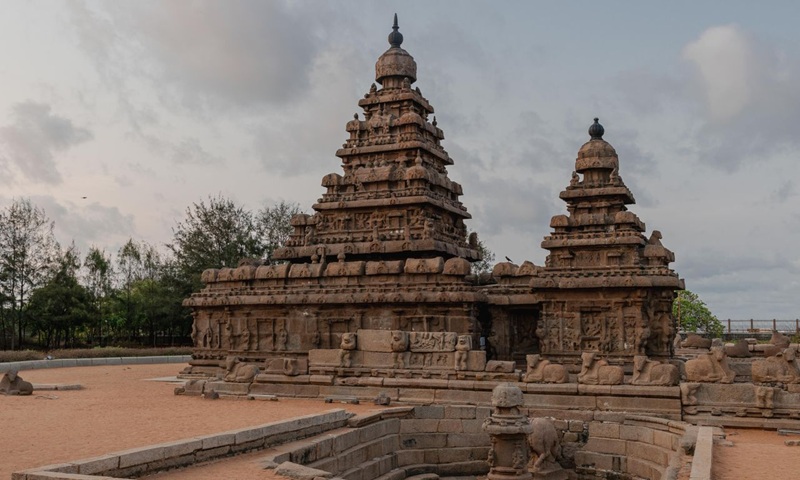
Tamil Nadu rewards travellers who arrive with a little patience and an open mind. The state stitches together thousand-year-old temple towns, Nilgiri tea country, French-quarter cafes, sacred island shrines and a coastline that runs almost the entire eastern edge of the peninsula. No two districts feel alike, and that variety is exactly why South India’s largest tourism hub keeps drawing repeat visitors. This guide walks through the best places to visit in Tamil Nadu, grouped so you can plan a realistic route rather than a scattered wish list. From a first family holiday to a temple circuit with parents or a slow honeymoon in the hills, the destinations below cover the range and the reasoning behind picking them.
The state is the most visited in the country by domestic tourists, and the reason is spread rather than concentration. A single week can pair a UNESCO-listed shore temple with a Chola-era bronze gallery, a Meenakshi darshan and a toy-train ride through eucalyptus forests. Distances are manageable when you cluster smartly, roads are among the better maintained in South India, and English is widely understood at hotels and heritage sites. For an eight-day sampler, our 8 Days Tamil Nadu Tour Package covers the classic Chennai to Madurai circuit with private transport and licensed guides at each temple town.
Most Tamil Nadu itineraries begin in Chennai, and the capital is worth two full days before you head deeper into the state. Marina Beach at dawn, Kapaleeshwarar Temple in Mylapore, and the Government Museum with its Chola bronze gallery are the three anchors. San Thome Basilica, built over the tomb of St. Thomas the Apostle, is one of only three churches in the world with this claim. Add a filter coffee at a Mylapore mess and a Kanchipuram-silk browse at T. Nagar, and you have a city that eases you into South India rather than overwhelming you.
An hour and a half south of Chennai on the East Coast Road, Mahabalipuram (also called Mamallapuram) is a small coastal town with an outsized share of history. The Group of Monuments here is a UNESCO World Heritage Site and covers the Shore Temple, the Pancha Rathas, Krishna’s Butterball and the Arjuna’s Penance bas-relief. Pallava-era sculptors carved most of these in the seventh and eighth centuries, and standing in front of the Descent of the Ganges panel you get a sense of scale that photographs never quite convey. Our detailed Mamallapuram heritage guide breaks down each monument for readers planning a slower half-day visit.
Two hours west of Chennai sits one of India’s seven sacred cities. Kanchipuram is defined by five great temples, the Ekambareswarar, Kailasanathar, Varadaraja Perumal, Kamakshi Amman and Vaikunta Perumal, each an example of pure Dravidian architecture with almost no Vijayanagara overlay. The town is also the home of hand-loomed Kanchipuram silk sarees, and a visit to a working weaver’s cooperative is easy to arrange. Pair Kanchipuram with Mahabalipuram as a single-day loop from Chennai if you are short on time.
The Brihadeeswarar Temple in Thanjavur is easily among the top tourist attractions in Tamil Nadu and one of the finest surviving examples of Chola architecture. Built by Rajaraja Chola I around 1010 CE and still an active place of worship, its 66-metre vimana was the tallest of its era. The Thanjavur Palace complex, the Saraswathi Mahal Library with its palm-leaf manuscripts, and the Art Gallery of Chola bronzes round out a full day. If you have space for one more day, Kumbakonam and Darasuram (Airavatesvara Temple) sit within an hour and complete the Great Living Chola Temples inscription.
Madurai is the cultural heart of Tamil Nadu and, for many visitors, the single most memorable stop on the trip. The Meenakshi Amman Temple, with its fourteen soaring gopurams and thousand-pillar hall, is a working shrine that sees an estimated fifteen thousand visitors on a normal day and many times that on festival evenings. Time your visit for the nightly palliyarai procession, when Sundareswarar is carried ceremonially to Meenakshi’s chamber. Outside the temple complex, the Thirumalai Nayakkar Palace and a walking tour of the flower and jasmine markets round out a full 24 hours. The city runs on temple time and jasmine, in that order. Travellers planning their darshan in detail can look at our 8 days Meenakshi Temple tour package which chains Madurai with Chennai, Kanchipuram, Mahabalipuram, Pondicherry, Thanjavur and Trichy.
One of the Char Dham and one of the twelve Jyotirlingas, Rameshwaram sits on Pamban Island and is reached by the striking Pamban rail bridge. The Ramanathaswamy Temple is famous for its 1,212-metre-long corridors, said to be the longest of any temple in India, and for the sequence of 22 sacred wells (theerthams) within the complex where pilgrims take a ritual bath before darshan. Beyond the temple, the ghost town of Dhanushkodi at the southern tip of the island is a haunting stretch of dune and ruin, cleared by the 1964 cyclone and now reachable by road right to Arichal Munai, the last point of India. For families combining spiritual travel with coastal quiet, our Rameshwaram tour package handles darshan queue coordination, hotel bookings and the Dhanushkodi transfer.
The southernmost tip of the Indian mainland is one of the few places on earth where you can watch the sun rise and set over the same horizon, thanks to the confluence of the Arabian Sea, the Bay of Bengal and the Indian Ocean. The Vivekananda Rock Memorial, reached by ferry, and the 133-foot Thiruvalluvar Statue right beside it are the two must visit places in Tamil Nadu’s deep south. The Bhagavathy Amman temple by the shore, a walk to Sunset Point, and a plate of appam with fish curry at a beachside stall make for a satisfying day and a half. Kanyakumari pairs naturally with Rameshwaram or with a Kerala crossover into Trivandrum.
Ooty, or Udhagamandalam, sits at 2,240 metres in the Nilgiri Hills and still carries its colonial-era hill-station character. The Nilgiri Mountain Railway from Mettupalayam to Ooty is a UNESCO-listed line and one of the most scenic rides in the country, climbing through 208 curves, 16 tunnels and 250 bridges. The Botanical Gardens, Ooty Lake, Doddabetta Peak (the highest in the Nilgiris) and a tea-factory tour make for a comfortable three-day itinerary. Coonoor, half an hour down the ghat road, is quieter and better for anyone travelling with elderly parents.
Less commercial than Ooty and, for many travellers, more atmospheric, Kodaikanal is built around a star-shaped lake in the Palani Hills at 2,133 metres. Coaker’s Walk gives you a one-kilometre stretch of some of the finest valley views in South India, and Pillar Rocks, Bryant Park and the Kodaikanal Solar Observatory (one of the oldest in Asia) fill out a two-day plan. For a longer read on the town’s pace and best walks, our Kodaikanal travel notes cover the essentials from a repeat visitor’s perspective.
Between Madurai and Trichy lies the Chettinad region, a cluster of 74 villages once home to the Nattukottai Chettiar merchant community. The mansions of Karaikudi and Kanadukathan, with their Burmese teak pillars, Belgian mirrors and Athangudi hand-made tiles, are quietly among the top tourist attractions in Tamil Nadu for travellers who prefer heritage over crowds. Chettinad food, with its dry-roasted spice profile and heirloom recipes, deserves a full evening at a mansion-turned-heritage-hotel. Two nights is enough to slow down here.
Beyond the headline destinations, Tamil Nadu holds several smaller stops worth building in if you have the days. Coonoor is Ooty’s quieter twin, with tea estates that stretch to the horizon and a lower price point. Yercaud in the Shevaroy Hills sits closer to Bangalore and Salem, and works well as a long weekend from either. Hogenakkal Falls on the Kaveri, sometimes called the Niagara of India, offers coracle rides and a rugged gorge landscape that few first-time visitors expect to see this far south. None need a dedicated trip, but any can extend a broader itinerary by a few days.
Tamil Nadu’s weather splits along geography. The plains and coast (Chennai, Madurai, Rameshwaram, Thanjavur) are best from November to March, when temperatures sit between 20 and 30 degrees Celsius and the northeast monsoon has cleared. The hill stations (Ooty, Kodaikanal, Coonoor, Yercaud) are pleasant almost year-round but shine from April to June and again from September to November. If you are combining plains and hills, October to March is the safest window. Avoid the coast in November if you can, since the northeast monsoon can disrupt Rameshwaram and Kanyakumari transfers.
If you would like a fully customised itinerary with private transport, hand-picked hotels and licensed guides at each temple town, our team can put together a plan around your dates and pace. Reach out through the Memorable India Contact Us page with your travel window and group size, and we will revert with two or three route options within 24 working hours.
The best places to visit in Tamil Nadu are not a checklist so much as a set of contrasts. A morning at a thousand-year-old temple and an afternoon on a toy train through tea country belong to the same trip. Build your route around the two or three themes that matter most to you, cluster destinations geographically, and give each stop the time it actually deserves. Done well, Tamil Nadu is one of those rare Indian journeys that stays with you far past the last flight home.
For a first Tamil Nadu trip, the best combination is Chennai, Mahabalipuram, Madurai, Rameshwaram and Ooty. This pairing covers the state’s heritage, coastal and hill-station character within eight to ten days and works for families, couples and seniors alike.
Seven to eight days cover the core temple circuit (Chennai, Mahabalipuram, Kanchipuram, Thanjavur, Madurai). Add three more days if you want to include Rameshwaram and Kanyakumari, and another two days if you plan to add Ooty or Kodaikanal. A comfortable Tamil Nadu tour rarely runs shorter than a week.
November to March is the ideal window for family travel across the state. The weather is dry, temperatures are moderate, and school holidays align well with the December-January peak. For hill stations alone, April to June is also excellent and matches the Indian summer break.
Tamil Nadu is regarded as one of the safer states in India for solo and women travellers, particularly in Chennai, Madurai, Pondicherry, Ooty and Kodaikanal. Standard precautions around late-night travel apply, but public transport, temple towns and hill stations are generally comfortable to navigate on your own.
Tamil Nadu is best known for its living temple traditions and Dravidian architecture, its Nilgiri hill stations, filter coffee and Chettinad cuisine, classical Bharatanatyam and Carnatic music, and its long southern coastline running from Chennai to Kanyakumari.
Kodaikanal and Ooty top the list for honeymooners looking at hill-station quiet, while Pondicherry, though in the neighbouring union territory, is often paired with Mahabalipuram for couples wanting a coastal French-quarter mix. Chettinad heritage mansions work beautifully for a slower, culture-led honeymoon.
The Kerala Backwaters: 11 Things To Know Before You Visit
23 Sep 2026
Udaipur Itinerary: How to Spend 3 Days in Udaipur
22 Sep 2026
The Best Places to See in Varanasi, India
22 Sep 2026
11 Ancient Temples in Palakkad That Deserve to Be Seen
22 Sep 2026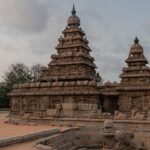
Best Places to Visit in Tamil Nadu, India: A Traveller’s Guide for 2026
21 Sep 2026


