 +919871148514
 info@memorableindia.com

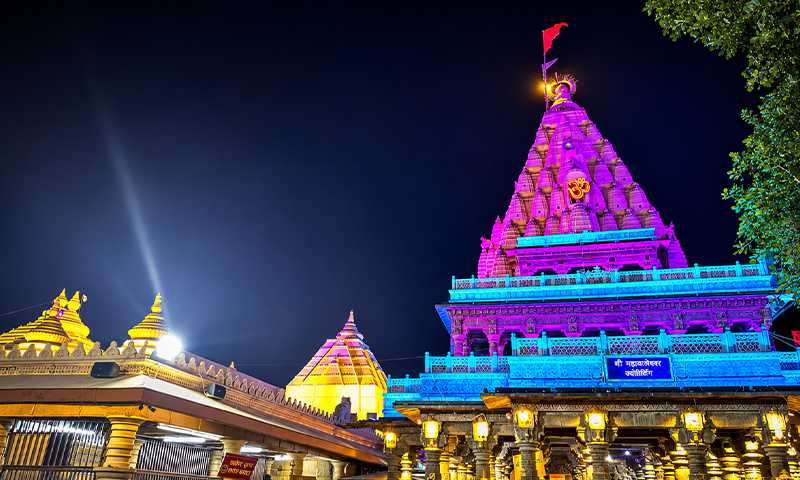
Ask a devotee in the Malwa region where Lord Shiva is most present, and you will usually hear two names: Ujjain and Omkareshwar. These two towns hold the state’s share of the twelve jyotirlingas, the most sacred Shiva shrines in Hindu tradition. Yet the story does not stop there. Madhya Pradesh also has an unfinished 11th century temple with one of India’s largest lingas, a Khajuraho shrine where worship has never paused, an eight-faced linga beside a river, and hilltop caves that pilgrims climb with tridents in hand.
This guide covers the most popular Shiva temples in Madhya Pradesh, explains what makes each one special, and shows how to plan a route that suits families, senior travellers and first-time pilgrims. You will also find clear advice on the Bhasma Aarti, travel seasons and temple etiquette, so your trip feels calm rather than rushed.
Quick answer: Madhya Pradesh has two of the twelve jyotirlingas: Mahakaleshwar Jyotirlinga in Ujjain and Omkareshwar Jyotirlinga on Mandhata Island in Khandwa district. Other well-loved Shiva temples include Bhojeshwar at Bhojpur, Kandariya Mahadeva and Matangeshwar at Khajuraho, Pashupatinath at Mandsaur, and the cave shrines of Pachmarhi.
In Shaivite belief, a jyotirlinga marks a spot where Shiva appeared as an endless column of light. The Shiva Purana names twelve such shrines across India, from Somnath in Gujarat to Rameswaram in Tamil Nadu. A regular Shiva temple houses a linga that priests install and consecrate. A jyotirlinga, by contrast, is believed to be swayambhu, or self-manifested.
Think of it this way: every jyotirlinga is a Shiva temple, but very few Shiva temples are jyotirlingas. That is why many families spread a twelve-shrine pilgrimage over several years, and why the two jyotirlingas in Madhya Pradesh sit high on almost every spiritual travel list for central India.
Ujjain sits on the banks of the Shipra River, roughly 55 km from Indore, and has been a centre of learning and worship for well over two thousand years. At its heart stands Mahakaleshwar, where Shiva is worshipped as Mahakal, the Lord of Time.
What sets this shrine apart is the direction its linga faces. As the Incredible India portal explains, Mahakaleshwar is the only south facing jyotirlinga, known as dakshinamukhi. In Hindu belief, the south is linked with death, so a south-facing Shiva stands for mastery over mortality itself.
The temple rises in three levels. The main sanctum with the linga lies below ground level, a shrine to Omkareshwar occupies the middle floor, and the top level holds the Nagchandreshwar shrine, which opens to devotees only on Nag Panchami each year.
The pre-dawn Bhasma Aarti is the ritual most visitors come for. Priests offer sacred ash to the linga while chants fill the hall, usually starting around 4 AM. Places are limited, so Bhasma Aarti booking should be done in advance through the temple’s official system, ideally several weeks ahead during festivals and the month of Shravan.
Not managed to get a Bhasma Aarti slot? General darshan runs through most of the day, and the evening aarti is a moving experience in its own right. Weekday mornings after the first rush usually see shorter queues than weekends.
The temple surroundings changed noticeably after the first phase of the Shri Mahakal Lok corridor was dedicated to the nation in October 2022. The wide promenade, lined with murals and sculptures drawn from Shiva legends, has made the approach easier for seniors and families with young children.
Plan at least one full day in Ujjain. Within a short drive you can also visit:
About 80 km south of Indore, the Narmada River splits around a hilly island called Mandhata. Seen from above, the island resembles the sacred syllable Om, which gives the town and its temple their name: Omkareshwar, the Lord of Omkara.
This shrine feels very different from Ujjain. Where Mahakaleshwar is urban and busy, Omkareshwar is a river town. Pilgrims cross by footbridge or boat, ghats line the water, and temple bells mix with the sound of the Narmada below.
Tradition also links the town to Adi Shankaracharya, who is believed to have met his guru Govindapada here. In September 2023, the state unveiled the 108-foot Statue of Oneness on Mandhata hill, showing the philosopher as a 12-year-old. It has quickly become a second reason to visit, especially for travellers curious about Indian philosophy.
Across the river stands the Mamleshwar temple, also called Amareshwar. Many devotees believe a visit to Omkareshwar feels complete only after darshan at both shrines, so keep time for the pair.
If your knees allow it, walk the parikrama path around the island. It passes small temples, old gateways and quiet viewpoints over the river, and takes a few hours at an easy pace. Senior travellers can choose a boat ride instead for a gentler view of the ghats. One practical note: the main sanctum is compact, so queues move slowly on Mondays and festival days. Early mornings are calmest.
The jyotirlingas draw the biggest crowds, but several of the state’s most memorable Shiva shrines are less known. Each one adds history, art or landscape to a temple trail.
Around 28 km from Bhopal, on a low hill above the Betwa River, Bhojeshwar is a temple frozen mid-construction. It was commissioned in the 11th century by Raja Bhoj of the Paramara dynasty and was never completed. Inside, a single polished linga about 7.5 feet tall rises from a massive stepped platform, making it one of the largest in India.
The unfinished state is part of the appeal. Look for the original architectural plans carved into nearby rock surfaces, which show how much bigger the complex was meant to be. The temple now features on UNESCO’s tentative list as a fine example of Paramara temple building, and it pairs neatly with a day in Bhopal.
Most people know Khajuraho for its carvings, but the town is also an important Shiva site. The Khajuraho Group of Monuments, built under the Chandela dynasty between roughly 950 and 1050, includes Kandariya Mahadeva, the largest and most richly sculpted temple in the complex. Its rising spires are designed to echo the peaks of Mount Kailash, Shiva’s mythical home.
Right beside the Western Group, the plainer Matangeshwar temple tells a different story. It is the only Hindu temple at Khajuraho still in active worship, and its linga stands about 2.5 metres tall. Around Mahashivratri, locals celebrate the wedding of Shiva and Parvati here with music and processions. To pair heritage with devotion, our Khajuraho tour packages combine the temples with nearby nature stops such as Panna National Park.
In northwestern Madhya Pradesh, close to the Rajasthan border, Mandsaur is home to a rare eight-faced Shiva linga dated to the 5th or 6th century. The faces show different aspects of Shiva, carved in two tiers. The temple stands on the Shivna River, and during the monsoon the water rises to the base of the linga, a moment devotees see as nature performing its own jalabhishek. Mandsaur works as a long day trip from Ujjain or as a stop on a road journey toward Rajasthan.
High in the Satpura Range, the hill station of Pachmarhi has a cluster of Shiva shrines tied to the legend of Shiva hiding from the demon Bhasmasur. Jatashankar is a natural cave where water trickles over rock formations worshipped as lingas. Chauragarh sits on a hilltop at about 1,330 metres, reached by a climb of roughly 1,300 steps. During the Mahashivratri fair, devotees carry tridents of every size up the hill as offerings of thanks. Pachmarhi suits travellers who want forest walks and temple visits in the same trip.
Indore is the most practical base. It has the nearest major airport, a wide range of hotels and quick road links to both shrines, so a temple tour from Indore can be shaped around your pace and fitness.
The drive from Ujjain to Omkareshwar takes around four hours by road, so covering both jyotirlingas in a single day is possible but tiring, especially for older travellers. Here is how we usually suggest structuring the trip:
Our 8 days Madhya Pradesh spiritual tour follows the longer route, linking Bhopal, Indore, Ujjain, Mandu and Omkareshwar in one loop. For other durations and hotel categories, browse our full range of Madhya Pradesh tour packages and choose a starting point that suits you.
Indore’s airport has regular flights from Delhi, Mumbai and other major cities. Ujjain also has its own railway station with direct trains from many parts of India. For Bhojpur, fly or take the train into Bhopal, while Khajuraho has a small airport and a railway station of its own. Pachmarhi is best reached by road from Pipariya, the nearest railhead. Road travel between these towns is comfortable in a private car, which also lets you stop for meals and short rests along the way.
Why choose a planned itinerary? Temple towns fill up quickly. A local team handles darshan timing, parking, boat crossings and early starts, so you spend your energy on prayer rather than logistics.
October to March is the most comfortable period. Days are pleasant and early-morning queues are easier to manage. April to June turns very hot across the Malwa plateau, which makes long waits in line tiring.
The monsoon brings its own appeal. The Narmada runs full at Omkareshwar, and the month of Shravan (July to August) is considered especially sacred for Shiva worship. Expect very large crowds on Shravan Mondays and during Mahashivratri. If a calm darshan is your priority, avoid festival weeks. If you want to see the temples at their liveliest, plan around them and book stays early.
From the pre-dawn ash ritual at Mahakal to the river breeze on Mandhata Island, the Shiva temples in Madhya Pradesh offer more variety than most pilgrims expect. Two jyotirlingas anchor the journey, while Bhojpur, Khajuraho, Mandsaur and Pachmarhi add art, history and landscape at a gentler pace.
Still researching? Save this guide and shortlist the temples that match your interests and fitness. Ready to travel? Talk to our travel experts for a customised itinerary with darshan planning, comfortable stays and a local guide who knows each temple well.
Madhya Pradesh has two of the twelve jyotirlingas: Mahakaleshwar in Ujjain and Omkareshwar on Mandhata Island in Khandwa district. Many devotees also visit the Mamleshwar temple across the Narmada as part of the Omkareshwar pilgrimage.
Mahakaleshwar in Ujjain is the only jyotirlinga that faces south. This form is called dakshinamukhi and represents Shiva as the master of time and death.
Yes, but it is a long day. The two towns are about four hours apart by road, plus queue time at each temple. Two days, with a night in Ujjain or Indore, makes for a far more comfortable trip.
Book through the temple’s official booking system well in advance, especially for festival dates. Carry the photo ID used while booking, follow the traditional dress code, and reach the temple at least an hour before the aarti begins.
October to March offers the most pleasant weather. Shravan and Mahashivratri are spiritually special but very crowded, so book stays early if you plan to travel then.
Look at Bhojeshwar Temple near Bhopal, Kandariya Mahadeva and Matangeshwar at Khajuraho, the eight-faced Pashupatinath in Mandsaur, and the Chauragarh and Jatashankar shrines in Pachmarhi.
Popular Shiva Temples and Jyotirlingas in Madhya Pradesh: A Practical Pilgrim Guide
28 Nov 2026
Must-Visit Popular Ramakrishna Mission Ashrams and Temples in India
27 Nov 2026
Indian Road Trips: Top 10 Cars You Would Love to Drive on a Road Trip in India
27 Nov 2026
Indian Village Tour: A Walk Through Real India
26 Nov 2026
Indian Women Travellers Who Will Give You Serious Wanderlust
26 Nov 2026


