 +919871148514
 info@memorableindia.com
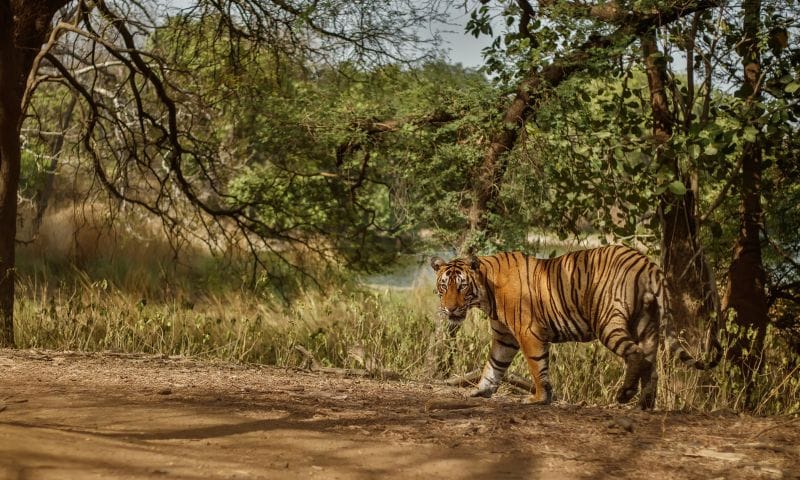
The Bengal tiger owns the spotlight in Indian wildlife tourism. Ranthambore, Bandhavgarh, Jim Corbett, and Kanha are names that come up in nearly every safari conversation, and rightly so. But the fixation on tigers has left a much wider, more varied wilderness almost entirely overlooked by mainstream travellers. India shelters the world’s only wild Asiatic lion population, the largest concentration of Indian one-horned rhinoceroses anywhere on earth, free-roaming leopards that share hillsides with pastoral communities, river dolphins navigating tidal mangroves, and migratory birds that cross continents to winter on its lagoons.
For anyone seeking wildlife safaris in India beyond tiger reserves, the country delivers experiences that are often less crowded, more visually diverse, and in some cases more reliably rewarding. This guide maps out the best of those alternatives, from the floodplains of Assam to the salt deserts of Gujarat, with practical planning insights for each.
Tiger reserves dominate India’s wildlife tourism infrastructure, but they also carry predictable constraints. Premium safari zones at popular parks can see heavy vehicle traffic during peak season. Permits are competitive, particularly between November and February. And the nature of tiger behaviour means long stretches of silent forest driving between sightings, rewarding when a tiger appears but testing when it does not.
Non-tiger safaris offer a different dynamic. Rhinos graze openly on floodplain grasslands. Lions rest in dry scrubland where visibility is naturally high. Leopards perch on granite boulders at dawn, backlit against the sky. Boat safaris through mangrove channels replace jeep rumble with the quiet of tidal water. The variety of landscapes, species, and safari formats across India’s non-tiger parks is, in many ways, wider than what the tiger circuit alone can provide. India’s top national parks for safari now increasingly reflect this diversity.
Kaziranga sits along the southern bank of the Brahmaputra River in central Assam, roughly 250 kilometres from Guwahati. It holds UNESCO World Heritage status and is home to the largest population of Indian one-horned rhinoceroses in the world. The landscape here is unlike any other Indian park: vast stretches of tall elephant grass, seasonal wetlands, and patches of semi-evergreen forest that flood during the monsoon and turn golden during the dry winter months.
Jeep safaris operate across four main ranges. The Central Range (Kohora) and Western Range (Bagori) are the most visited for rhino sightings, which are frequent and often remarkably close. Unlike tiger tracking, where hours can pass in anticipation, rhinos at Kaziranga feed in open grassland and are visible from a considerable distance. Wild water buffalo, Asian elephants, swamp deer, and an impressive roster of bird species share the terrain. The park is open from November to April. Kaziranga’s living forest also draws birdwatchers who come specifically for species like the Bengal florican and Pallas’s fish eagle.
Planning tip: Fly into Guwahati and arrange a road transfer of approximately five hours, or take the shorter route from Jorhat Airport, roughly two hours away. Pre-book safari permits well in advance for the December to February peak window.
Gir is the sole place on earth where Asiatic lions can be observed in the wild, making it one of the most significant wildlife destinations in India. Situated in Gujarat’s Junagadh district, the park encompasses dry deciduous forest, grasslands, and rocky hillsides that support a recovering lion population alongside leopards, striped hyenas, sambar, and marsh crocodiles.
The Asiatic lion is slightly smaller than its African cousin and forms smaller pride groups, often seen resting in the shade of teak trees or near waterholes during the dry months. The Devalia Safari Park, a fenced interpretation zone within the sanctuary, offers near-guaranteed sightings for visitors short on time. The wider park, accessed by open-top jeep, provides a more open-ended exploration. The park operates from mid-October to mid-June, with December to March being the most productive window. Gujarat’s wildlife tour packages typically revolve around Gir, often combined with Ahmedabad and the cultural heritage of the Saurashtra coast.
Planning tip: Rajkot Airport (around 160 km) is the nearest air connection. Devalia remains closed on Wednesdays. Safari permits should be booked through the Gujarat Forest Department portal in advance.
While Rajasthan’s wildlife reputation rests heavily on Ranthambore’s tigers, the Jawai region in Pali district has carved out an entirely different identity. The granite hills of the southern Aravalli range here shelter a free-roaming leopard population, and the sighting success rate is remarkably high compared to more forested leopard habitats across the country. What makes Jawai distinctive is the coexistence between leopards and the Rabari pastoral communities who have shared this landscape for generations without conflict.
Jeep-based safaris run at dawn and dusk, navigating terrain where leopards rest on exposed rock faces, often visible through binoculars before the vehicle has even stopped. The Jawai Dam and surrounding wetlands attract flamingos and several stork species during winter, adding a birding layer to the experience. For travellers building a broader Rajasthan itinerary, Jawai sits comfortably between Udaipur (about 150 km) and Jodhpur (around 160 km), making it a natural mid-route stop.
Planning tip: Jawai has no formal park entry system. Safaris are arranged through local camps and lodges with experienced trackers. The season runs from October to March. Accommodation ranges from tented camps to boutique properties.
The Sundarbans, straddling the India-Bangladesh border in the Ganges delta, is the world’s largest mangrove forest and a UNESCO World Heritage Site. The reserve is home to a population of Bengal tigers uniquely adapted to this waterlogged, tidal ecosystem, but the Sundarbans experience is fundamentally different from any land-based safari. Here, all wildlife viewing happens from boats navigating narrow tidal creeks flanked by dense mangrove walls.
Tiger sightings are incidental rather than the primary draw. The core appeal lies in the ecosystem itself: saltwater crocodiles basking on mudflats, spotted deer grazing on river islands, water monitors slipping into channels, and an outstanding variety of wading birds and raptors. Drifting through mangrove corridors where the only sounds are bird calls and lapping water creates an immersive quality no other Indian park replicates. The reserve is accessible from September to May, with November to February being the most comfortable months. East India wildlife tours can pair the Sundarbans with Kolkata heritage sightseeing and a visit to the Darjeeling or Sikkim hills.
Planning tip: Access is from Kolkata, with a road transfer to Godkhali or Sonakhali followed by a boat ride into the reserve. Overnight boat stays are the most immersive option. Government-registered operators are mandatory.
Periyar, in Kerala’s Idukki district near Thekkady, centres around an artificial lake created by the Mullaperiyar Dam. The reservoir has become the park’s natural stage: elephants, gaur (Indian bison), sambar, and wild boar descend to the water’s edge daily, particularly during the dry months. Watching a herd of elephants wade into the reservoir at dusk, framed by the Western Ghats and dense tropical forest, ranks among South India’s most visually striking wildlife moments.
Periyar also runs bamboo rafting programmes and guided forest walks led by trained local guides, many of them former poachers now employed in conservation. These programmes take visitors deeper into the forest than standard vehicle routes allow. A Kerala backwater and wildlife itinerary typically positions Thekkady between the hill station of Munnar and the backwaters of Alleppey, making Periyar a natural mid-trip experience.
Planning tip: Thekkady is around four hours by road from Kochi. Morning boat safaris on Periyar Lake offer the best animal sighting conditions. Book early during the November to March peak.
The Little Rann of Kutch in northern Gujarat hosts the Indian wild ass (khur), a subspecies found nowhere else in the world. The landscape is unlike anything else in Indian wildlife tourism: a vast, flat expanse of white salt desert punctuated by scrubby vegetation islands called bets where the wild asses congregate. A dawn jeep safari across the Rann, with herds running across the salt crust and flamingos lifting off from shallow pools, offers some of India’s most visually striking wildlife photography.
The Indian Wild Ass Sanctuary also supports nilgai, desert foxes, Indian wolves, and a significant population of migratory waterbirds. For travellers interested in unique wildlife experiences in India that feel more like a Namibian salt pan expedition than a traditional jungle safari, the Rann delivers.
Planning tip: Dasada is the nearest base town, accessible from Ahmedabad (approximately 100 km). The best months are November to February. Full-moon nights on the Rann are especially photogenic.
Chilika, on Odisha’s coast, is Asia’s largest brackish water lagoon and one of the Indian subcontinent’s most important wetland ecosystems. Each winter, it hosts migratory birds from Siberia, Central Asia, and the Caspian region. Flamingos, white-bellied sea eagles, ospreys, painted storks, and bar-headed geese are regular visitors, while Irrawaddy dolphins inhabit the lake’s deeper channels year-round.
Boat safaris from Mangalajodi, once a poaching hotspot now transformed through community-led conservation, offer exceptional birding and photography opportunities. The lakeside village has become a model for how local communities can transition from extraction to eco-tourism. Odisha’s wildlife packages pair Chilika with the state’s temple heritage at Puri, Konark, and Bhubaneswar.
Planning tip: Chilika is roughly 100 km from Bhubaneswar. November to February is peak birdwatching season. Early morning boat departures catch the best light and bird activity.
Satpura earns a place on this list not for the absence of tigers but for something no other major Indian park offers: walking safaris and canoe safaris within a protected tiger habitat. The park sits in the Satpura Range of Madhya Pradesh, and its deeply gorged terrain of sandstone cliffs, teak forests, and river valleys feels genuinely remote.
Walking through a forest where leopards, sloth bears, and wild dogs are present sharpens every sense in ways a vehicle never can. Canoe safaris on the Denwa River bring close encounters with mugger crocodiles, otters, and kingfishers. Satpura remains one of India’s least crowded national parks, and that solitude is integral to its appeal for serious wildlife travellers. The park connects naturally to a broader central India wildlife circuit, including Panna and Pench.
Planning tip: Satpura is approximately 200 km from Bhopal. The Madhai gate is the main entry point. Walking safaris must be pre-arranged with the park administration and are conducted alongside armed forest guards.
Building an Indian wildlife safari guide around non-tiger destinations requires a slightly different approach than the standard tiger circuit. A few principles help:
Cluster by region. Gir and the Little Rann of Kutch sit within easy reach in a Gujarat circuit. Kaziranga pairs with Manas and Nameri in Assam. Periyar fits into any broader Kerala itinerary. Satpura connects to central India’s other parks.
Book permits early. While these parks are generally less congested than flagship tiger reserves, popular ranges at Kaziranga and Gir do fill up between December and February.
Work with specialists. At destinations like Jawai and the Sundarbans, sightings depend on local tracker knowledge and boat operator expertise rather than park infrastructure alone. Memorable India, with over two decades of experience organising wildlife tours from its New Delhi base, designs custom itineraries that combine multiple parks, arrange naturalist support, and handle all permit logistics. Their wildlife India tours page is a good starting point for understanding what multi-park circuits look like in practice.
What are the best wildlife safaris in India that do not focus on tigers?
Kaziranga in Assam (one-horned rhinos), Gir in Gujarat (Asiatic lions), Jawai in Rajasthan (leopards), the Sundarbans in West Bengal (mangrove boat safaris), Periyar in Kerala (elephants), and Chilika Lake in Odisha (birdwatching) are among the most rewarding wildlife safaris in India beyond tiger reserves. Each offers a distinct species, landscape, and safari format.
When is the best time for non-tiger wildlife safaris in India?
Most parks operate between October and May. Kaziranga and Gir are best visited from November to March. Jawai runs from October to March. Chilika Lake birdwatching peaks from November to February. The Sundarbans are accessible from September to May, with winter being the most comfortable window.
Are these safaris suitable for families with children?
Kaziranga, Gir, Periyar, and Chilika are family-friendly with comfortable accommodation and safari formats suitable for children above five. The Sundarbans boat safari works well for older children. Satpura’s walking safaris suit active families with teenagers. Jawai’s jeep safaris are generally comfortable for all ages.
How do I combine multiple non-tiger wildlife parks in one trip?
Regional clustering is the most efficient approach. Gujarat allows Gir and the Little Rann of Kutch in a single circuit. Assam supports Kaziranga alongside Manas and Pobitora. Madhya Pradesh connects Satpura with Panna and Pench. A specialist operator like Memorable India can link these into a seamless itinerary with internal transfers and naturalist support.
Do non-tiger parks require advance safari bookings?
Yes. All Indian national parks require visitors to enter with registered guides, and safaris operate in authorised vehicles. Popular zones at Kaziranga and Gir fill up during peak season. At destinations like Jawai, safaris are arranged through local lodges rather than a central booking portal.
What makes Indian non-tiger safaris different from African safari experiences?
Indian safaris typically use smaller vehicles in denser vegetation with a stronger emphasis on single-species tracking. The cultural dimension is also richer: many Indian parks sit within inhabited landscapes, meaning wildlife viewing is often intertwined with local community encounters, temple ruins, and pastoral traditions. The combination of nature and culture within a single safari day is distinctly Indian.
15 Amazing Temple Fairs in India: A Traveller’s Guide to Faith, Colour and Living Tradition
30 Sep 2026
13 Best Places to Explore in the Youngest State of Telangana
29 Sep 2026
12 Less Explored Destinations in Maharashtra Worth Adding to Your Travel List
28 Sep 2026
11 Must-Visit Museums in India for Wildlife Lovers
27 Sep 2026
11 Best Places in India to Celebrate Christmas
26 Sep 2026


