 +919871148514
 info@memorableindia.com
Rajasthan tends to arrive in fragments before you ever land. A photograph of Hawa Mahal at first light, a friend’s story about camping in the Thar, a passing mention of a cousin’s wedding at a hilltop palace. Then you get there, and the state does something no brochure quite prepares you for. It layers all those fragments on top of each other, all day, every day, until you stop trying to organise them and start letting the place unfold. For anyone considering travel in Rajasthan, the honest answer is that it is bigger, louder, slower, and more varied than most first visits assume. This guide walks through what daily travel actually looks and feels like across the state, so you can plan with realistic expectations and enjoy it on its own terms.
Most international arrivals begin in Delhi and drive or fly into Jaipur. That first road out of the capital sets the tone. Highways widen, roadside dhabas replace petrol stations as landmarks, and by the time you cross into Rajasthan the signage shifts to yellow and ochre. Women in bright ghagras walk along the shoulder carrying brass pots. Camels pull carts loaded with fodder. Trucks are painted with peacocks and warnings to blow the horn. Nothing about this is arranged for tourists; it is simply how the state moves.
What surprises first-time travellers is how organic the layering feels. Rajasthan is not a preserved museum of tradition. It is a working desert culture where centuries-old habits happen alongside 5G towers, ride-hailing apps, and reels being filmed inside forts. Both are true. Both are visible on the same street. The traveller’s job is to stop expecting the state to behave like a set piece and start noticing how everyday life carries the pageantry without meaning to.
Every Rajasthan itinerary is really a rotation through a small handful of cities, and each one has a distinct character. Understanding how they differ helps you decide where to spend more time and where a single night is enough.
Jaipur is the entry point for most travellers and the busiest city in the state. Amber Fort, City Palace, Hawa Mahal, and Jantar Mantar sit within short drives of each other, and the old city bazaars around Johari Bazaar are among the best places in India for block-printed textiles, silver, and semi-precious stones. The traffic is heavy, the shopping is serious, and two full days is usually the minimum. Add a third if you plan to visit Nahargarh at sunset or take a day trip to Abhaneri and Chand Baori.
Jodhpur is quieter, denser, and dominated by Mehrangarh Fort, which rises out of the rock like it grew there. The old city below is a maze of indigo-washed houses that photograph well in almost any light, and the fort’s audio tour is one of the best produced in India. Sunset from the ramparts is one of those moments travellers remember years later. The Hill Forts of Rajasthan, including Mehrangarh, form a UNESCO-recognised group that reflects the state’s Rajput military architecture across six sites.
Udaipur is Rajasthan at its most romantic. Lake Pichola, the City Palace, and the ghats around Jagdish Temple create a setting that feels almost cinematic. Boat rides at golden hour are worth the tourist premium they carry. Udaipur is also the easiest city for slow travel; two or three nights here rarely feels excessive, and the surrounding Aravalli countryside opens up more if you keep an extra day for Kumbhalgarh or Ranakpur.
Jaisalmer sits deep in the Thar and feels different from everywhere else. The living fort still houses thousands of residents, camel safaris head into the Sam dunes at sunset, and the night sky, once you are a few kilometres from town, is genuinely extraordinary. This is the westernmost stop on most Rajasthan circuits and worth every hour of the drive. Desert camps range from basic tents to elaborate luxury setups; choosing well matters more here than in any other Rajasthan city.
The Rajasthan travel experience is defined less by the monuments than by everything happening between them. Mornings usually start early. Sightseeing happens before eleven to stay ahead of the heat. Lunches are long, often at heritage hotels or rooftop cafes overlooking the fort you visited that morning. Afternoons slow down; some travellers rest, others browse bazaars or take a cooking class. Evenings pick up again for folk music, puppet shows, or dinner at a haveli.
Distances between cities are longer than they look on a map. Jaipur to Jodhpur is a full driving day at around six hours, Jodhpur to Jaisalmer runs another five to six, and Udaipur to Jodhpur is roughly the same. Trains work well between some pairs, particularly the overnight Delhi to Jodhpur and Delhi to Udaipur services, but road trips remain the most flexible way to see the state because they let you stop for stepwells, roadside temples, and villages that no timetable accounts for. Domestic flights connect Jaipur, Jodhpur, and Udaipur for travellers on shorter windows.
Rajasthani food is heavier and spicier than most north Indian cuisine, built for a desert climate where fresh vegetables were historically scarce. Dal baati churma is the classic thali centrepiece; gatte ki sabzi, ker sangri, and laal maas are worth ordering at least once each. Vegetarian travellers are exceptionally well served here; almost every menu carries a strong meat-free section, and Jain-friendly preparations are widely available on request.
Hospitality is a genuine cultural value across the state, and heritage hotels take it seriously. Many are still run by descendants of the original ruling families, and the service style leans warm rather than corporate. Live folk music, Kalbelia dance performances, and puppet shows are common at these properties, and they are usually more polished than the roadside versions. Even the smaller havelis in Bundi or Shekhawati tend to have a family member who will sit down for a conversation about the town if you ask.
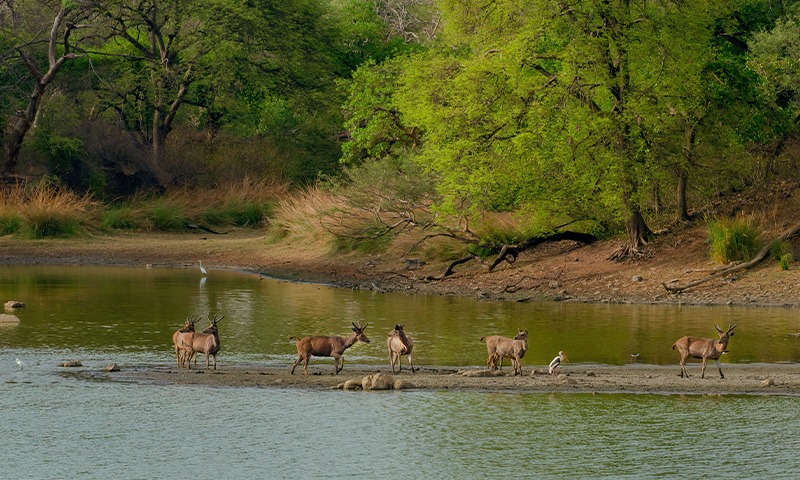
People imagine Rajasthan as one long desert, but the terrain changes considerably across the state. The Aravalli hills run diagonally through the middle, giving Udaipur its lakes and greenery. Mount Abu is a small hill station with pine forests and the marble Jain temple complexes at Dilwara. The Shekhawati region north of Jaipur is flat farmland dotted with painted havelis. Ranthambore National Park, one of India’s more reliable tiger reserves, sits in the eastern part of the state. Jawai, in the south, has become known for its leopards that coexist with local shepherd communities.
For travellers who want more than palaces and forts, a well-planned circuit can include one of these natural zones without adding significant travel time. The offbeat places in Rajasthan guide on Memorable India covers several of these lesser-visited pockets in useful detail, from Bundi’s stepwells to the Shekhawati fresco towns.
Some things routinely surprise first-time visitors, so it helps to have them in advance rather than mid-trip.
The state government’s official Rajasthan Tourism portal carries updated information on entry fees, festival dates, and heritage site timings that is worth checking about a week before travel, because timings for smaller monuments shift more often than the mainstream sites suggest.
The best time to visit Rajasthan falls between October and March, when daytime temperatures stay comfortable and evenings turn genuinely cool. December and January nights can drop into single digits in Jaisalmer and Mount Abu, so a warm layer is essential. April through June is intensely hot, with desert temperatures routinely crossing 45 degrees Celsius, and most itineraries during this window are shortened or shifted to hill stations. The monsoon, from July to September, is short in Rajasthan and can be genuinely beautiful around Udaipur and the Aravallis. It is also the least crowded window, and heritage hotels often drop rates by a meaningful margin.
Rajasthan is generous to travellers who arrive curious rather than rushed. Anyone chasing a checklist of eight cities in ten days will end each evening exhausted and remember very little. Anyone giving each city two or three nights, wandering the bazaars without an agenda, sitting through a folk music evening, and trying at least one thali they would not normally order tends to leave with the trip lodged in memory.
Families do well here because everything from camel rides to elephant paintings to fort exploration keeps children engaged for longer than expected. Couples find the heritage hotels and lake settings genuinely romantic without needing the trip to be styled that way. Solo travellers, including women, report Rajasthan as one of the more approachable Indian states, particularly in the main cities where guides, drivers, and hotel staff are used to independent visitors. Seniors are well served if the itinerary is paced sensibly with rest days built in between the longer drives.
The most common planning mistake on a first Rajasthan trip is trying to see everything. The state has enough material for a lifetime of return visits, and covering four cities well beats skimming eight. A workable first-timer route is Jaipur (three nights), Jodhpur (two nights), Jaisalmer (two nights with one in the desert), and Udaipur (three nights), with a Delhi entry and either a Delhi or Mumbai exit depending on onward flights. Ranthambore fits neatly between Jaipur and the western circuit for wildlife interest, and travellers on a slightly longer window often add two nights there for a pair of morning safaris. Pushkar makes a good half-day stop on the road between Jaipur and Jodhpur. Bundi and Shekhawati reward travellers on a second or third visit, once the marquee cities are covered and you know the rhythm of the state.
For a structured route with driver, guides, and heritage accommodation already sorted, the classic Rajasthan tour package on Memorable India covers the mainline circuit with the pacing most first-time visitors need. Customisation is standard; almost every element can be flexed based on travel dates, group size, and preferred hotel category.
Travelling in Rajasthan is not a single experience; it is a collection of moods that shift as you move across the state. A morning in a Jaipur bazaar feels nothing like a night in the Jaisalmer desert, and both feel nothing like an afternoon on a boat in Udaipur. What holds it together is the state’s own confidence in itself. Rajasthan is not performing for visitors. It is living its own life, and travellers are welcome to walk alongside for a while. For anyone planning a first visit, the honest advice is to give it more days than you think you need, choose fewer cities rather than more, and let the pace of the place decide the pace of the trip. If you would like an itinerary built around a specific interest, travel window, or group size, Contact us and our team will draft a route that fits.
[BODY_END]
Q1. Is Rajasthan safe for first-time international travellers?
Yes. Rajasthan is one of the more tourist-friendly Indian states, with well-established infrastructure across Jaipur, Jodhpur, Udaipur, and Jaisalmer. Standard urban travel precautions apply. Solo female travellers routinely report positive experiences, particularly when working with pre-booked guides and drivers.
Q2. How many days are enough for a first Rajasthan trip?
Ten to twelve days covers the main circuit of Jaipur, Jodhpur, Jaisalmer, and Udaipur at a comfortable pace. Shorter trips of six to seven days work if you focus on two or three cities rather than trying to see everything on one visit.
Q3. Is Rajasthan expensive to travel in?
It ranges widely. Budget travellers can manage on modest daily costs using guesthouses and public transport. Mid-range trips with a private driver and four-star hotels sit at reasonable value. Heritage palace hotels and luxury desert tents in the Thar are premium priced and worth budgeting for separately.
Q4. What is the best way to travel between Rajasthan cities?
A private car with driver remains the most flexible option and is standard on most tour packages. Overnight trains work well for Delhi to Jodhpur and Delhi to Udaipur. Domestic flights connect Jaipur, Jodhpur, and Udaipur for travellers on tighter schedules.
Q5. Can vegetarians eat well in Rajasthan?
Very well. Rajasthani cuisine has one of the strongest vegetarian traditions in India, shaped by Jain and Marwari influences. Almost every restaurant carries an extensive vegetarian menu, and Jain-friendly preparations are widely available on request across heritage hotels and standalone restaurants.
Q6. Do I need to book heritage hotels in advance?
Yes, particularly between October and March. Well-known heritage properties in Jaipur, Udaipur, and Jodhpur often sell out six to eight weeks before peak-season dates. Booking early also gives access to better room categories and courtyard-facing rooms that go first.
Top 7 South Indian Temples Known for Their Architectural Beauty
16 Oct 2026
What to Expect On Your Dream Alleppey Houseboat Trip
15 Oct 2026
12 Top Tourist Destinations in Jammu and Kashmir for a Memorable 2026 Trip
13 Oct 2026
12 Tips to Remember Before Holidaying in the Northeast Indian States
11 Oct 2026
An Aesthetic Guide for Kerala Tour: Backwaters, Tea Hills and Coastal Light
11 Oct 2026


