 +919871148514
 info@memorableindia.com
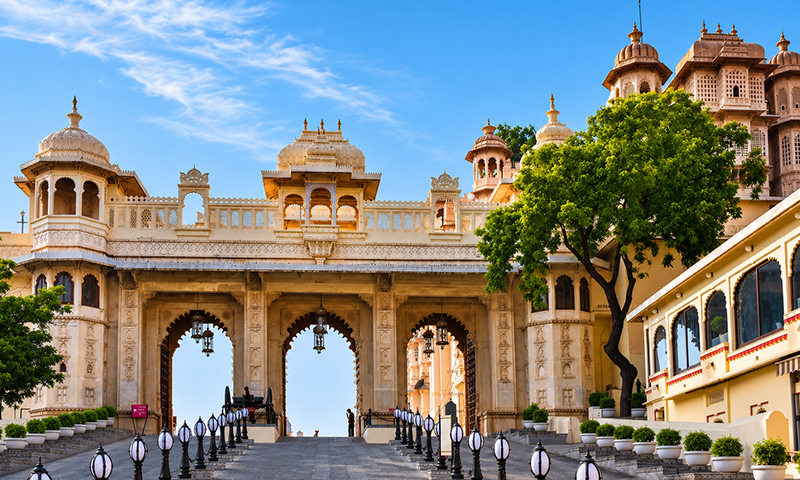
Rajasthan carries its royal past not as a museum piece but as living architecture. Sandstone ramparts still line highways, palace corridors still house descendants of ruling families, and desert citadels still shelter working temples and homes within their walls. For visitors trying to make sense of it all, the sheer number of monuments can feel overwhelming, which is why a shortlist matters more than a full inventory. Nearly every district in the state holds at least one fort of some standing, and several cities are effectively organised around their citadel.
This guide covers thirty forts and palaces in Rajasthan worth planning a trip around, arranged by region so you can slot them into a realistic itinerary. Six of these carry UNESCO World Heritage recognition as part of the Hill Forts of Rajasthan inscription of 2013, and the rest are chosen for their scale, artistry, or the specific story they tell about Rajput and Mughal India. Where useful, you will find notes on entry, timing, and how to fit each site into a wider circuit of Rajasthan forts to visit.
Set on a ridge above Maota Lake, Amer (or Amber) Fort is Jaipur’s headline monument and a UNESCO World Heritage Site. Built largely by Raja Man Singh I from the 1590s and extended by successive Kachwaha rulers, its Diwan-i-Aam, Sheesh Mahal, and Sukh Niwas show Rajput and Mughal design working in the same breath. Arrive by 8 am to walk up the cobbled ramp before the coach groups reach the Ganesh Pol.
A working royal residence and museum share the same complex here. Mubarak Mahal, Chandra Mahal, and Pritam Niwas Chowk hold textiles, weapons, and manuscripts from the Kachwaha dynasty, with parts of Chandra Mahal still occupied by the royal family.
The 1799 Palace of Winds is a five-storey sandstone screen of 953 latticed windows, built so royal women could watch street processions unseen. The best photograph is taken from the Wind View Cafe opposite, not the ground below.
Perched on the Aravalli ridge, Nahargarh offers the finest overhead view of Jaipur. The Madhavendra Bhawan inside is a nine-apartment palace built for the maharaja’s queens, each suite mirrored in design so no consort could claim primacy.
Connected to Amer by underground passages, Jaigarh is the muscular twin. It houses Jaivana, once the world’s largest wheeled cannon, along with the workshops where much of Rajasthan’s ordnance was cast.
The five-storey water palace sits mid-lake in Man Sagar with four floors submerged. It is best seen from the bund rather than entered, and glows at sunset when Nahargarh’s hills reflect on the water.
Once the Jaipur royal residence, Rambagh is now a Taj heritage hotel. Non-guests can visit for high tea in the Rajput Room or a walk through its 47 acres of Ram Niwas gardens.
Rising 122 metres above Jodhpur’s blue lanes, Mehrangarh is among India’s largest working forts. The museum inside, run by the Mehrangarh Museum Trust, is widely considered one of the finest private collections in the country. For a fuller city walk-through, see our guide to the Blue City.
Built between 1928 and 1943 in Indo-Deco style, this 347-room palace still houses the Jodhpur royal family, part of a Taj hotel, and a public museum with vintage cars and royal memorabilia.
Roughly 85 kilometres from Jodhpur, this 400-year-old red sandstone fort now runs as a heritage hotel. It offers a taste of rural Marwar, folk performances, and jeep safaris without the crowds of the main circuit.
Nicknamed Sonar Quila, the Golden Fort is one of the few living forts in the world, with roughly a quarter of Jaisalmer’s old population still inside its walls. Founded in 1156 CE and part of the UNESCO Hill Forts inscription.
The first of Jaisalmer’s great merchant havelis, a five-mansion complex built in the early 19th century by the Patwa family. The jharokhas and jali work are among the finest sandstone carvings in Rajasthan.
Stretching some 244 metres along Lake Pichola, this is Rajasthan’s largest palace complex. Started by Maharana Udai Singh II in 1559, it now hosts a museum, a Taj hotel, and the current Mewar royal family.
The 18th-century marble palace floating on Lake Pichola operates as a Taj hotel. Even without a stay, its silhouette against the Aravallis is one of India’s most recognised images.
The second island palace on Pichola, Jag Mandir sheltered the future Mughal emperor Shah Jahan during his rebellion against his father. Ferries run from Bansi Ghat for lunch or an evening drink.
Built in 1884 on a 944-metre Aravalli peak, Sajjangarh was designed to track monsoon clouds over Udaipur. It is now managed within Sajjangarh Biological Park; the winding drive is worth it for sunset alone.
An 18th-century haveli beside Gangaur Ghat, restored as a museum with 138 rooms. The nightly Dharohar folk-dance performance gives non-hotel-goers a genuine cultural evening in the old city.
Spread across nearly 700 acres on a 180-metre hill, Chittorgarh is the largest fort in India and a UNESCO Hill Fort. Its Vijay Stambh, Kirti Stambh, Rana Kumbha’s palace, and the story of Rani Padmini’s jauhar sit at the emotional core of Mewar identity. Plan half a day inside; distances between structures are longer than they look.
Built by Rana Kumbha in the 15th century, Kumbhalgarh is ringed by a perimeter wall of roughly 36 kilometres, often cited as the second longest continuous wall in the world. It is also the birthplace of Maharana Pratap. Our dedicated Kumbhalgarh guide breaks down access, timings, and what to see inside.
A 10th-century UNESCO Hill Fort set inside Ranthambore Tiger Reserve. The climb to Trinetra Ganesh Temple is a working pilgrimage, and langurs are more common company than tourists on quiet weekday mornings.
Built in 1594 by Raja Rai Singh, Junagarh is rare among Rajasthan’s major forts for not being perched on a hill. It has never fallen to direct assault, and the Anup Mahal is a highlight for its gold-leaf lacquer work.
An early 20th-century red-sandstone palace by British architect Samuel Swinton Jacob, blending Rajput, Mughal, and European styles. Part of the complex runs as a heritage hotel; the Sadul Singh museum inside is worth an hour.
The Jat rulers’ summer capital, roughly 32 kilometres from Bharatpur. Its Gopal Bhawan pavilion sits between two tanks and once cooled the royal family through desert summers using fountains fed from monsoon storage.
The Iron Fort of the Jats, built in the early 18th century by Maharaja Suraj Mal. It withstood repeated British sieges and still guards its moat and mud-and-stone ramparts inside modern Bharatpur.
India’s most talked-about haunted site, closed by Archaeological Survey rules from sunset to sunrise. The 17th-century ruins are genuinely atmospheric, with palaces, temples, and a bazaar street still legible inside the walls.
Six kilometres uphill from Alwar city, this 15th-century fort predates the town itself. Entry requires a permit from the Alwar Superintendent of Police, which keeps visitor numbers refreshingly low.
A 15th-century fort on the Delhi-Jaipur highway, restored as one of India’s earliest heritage hotels. Day visits are permitted for a nominal fee and offer a shortened taste of Rajput hospitality en route to Jaipur.
The UNESCO-listed water fort at the confluence of the Ahu and Kali Sindh rivers, in Jhalawar district. Rare among Rajasthan forts for using rivers on three sides as natural defences, with a jungle rising on the fourth.
The 14th-century hilltop fort above Bundi, reached by a steep track. Its Bhim Burj bastion once held a massive cannon called Garbh Gunjam, and views across Bundi’s blue houses are the reward for the climb.
Built into the same hill as Taragarh, the palace holds the Chitrashala, a small gallery whose miniature murals of Krishna, court life, and hunts are considered among the finest surviving examples of the Bundi school of painting.
October to March remains the practical window. Days sit between 15 and 28 degrees Celsius across most of the state, which matters when you are climbing ramp gradients at Mehrangarh or Kumbhalgarh in direct sun. April through June regularly crosses 42 degrees in Bikaner and Jaisalmer, and monsoon rains from July to mid-September turn Chittorgarh and Ranthambore approaches slippery. Winter also lines up with Rajasthan Tourism‘s marquee events, from Jaipur Literature Festival in January to the Jaisalmer Desert Festival in February.
The forts and palaces in Rajasthan are not interchangeable stops on a checklist. Amer’s mirror work, Mehrangarh’s cliffside museum, Chittorgarh’s melancholy, and Jaisalmer’s living lanes each ask something different of a visitor. Sequencing them across the right days and cities makes the difference between a memorable trip and a blur of sandstone facades. If you would like an itinerary built around specific Rajasthan forts to visit and paired with heritage-hotel stays, the Memorable India team can help you plan around your dates, pace, and interests. Reach out through our Contact Us page, or explore the fully guided Royal Rajasthan tour for a heritage-first circuit across the state.
Six. The Hill Forts of Rajasthan inscription of 2013 covers Chittorgarh, Kumbhalgarh, Ranthambore, Gagron, Amer, and Jaisalmer. All lie on rocky outcrops of the Aravalli range and were built between the 8th and 18th centuries.
Chittorgarh Fort, spread across roughly 700 acres on a 180-metre hill in Chittorgarh district. It is also considered the largest fort in India by area and served as the capital of Mewar for around 834 years.
Kumbhalgarh Fort in Rajsamand district, whose perimeter wall runs about 36 kilometres. It is widely cited as the second longest continuous wall in the world after the Great Wall of China.
A comfortable first-visit circuit of Jaipur, Jodhpur, Udaipur, and Jaisalmer needs ten to twelve days. Adding Bikaner, Chittorgarh, Kumbhalgarh, or Bundi typically pushes the trip to fourteen or fifteen days.
Jaisalmer Fort, founded in 1156 CE, is one of the few living forts in the world. Around a quarter of Jaisalmer’s old population still lives, works, and worships inside its walls.
Yes. Neemrana Fort Palace, Khejarla Fort near Jodhpur, parts of Lalgarh Palace in Bikaner, and heritage suites at Rambagh, Umaid Bhawan, and Taj Lake Palace all operate as heritage hotels. Advance booking is essential in season.
The Kerala Backwaters: 11 Things To Know Before You Visit
23 Sep 2026
Udaipur Itinerary: How to Spend 3 Days in Udaipur
22 Sep 2026
The Best Places to See in Varanasi, India
22 Sep 2026
11 Ancient Temples in Palakkad That Deserve to Be Seen
22 Sep 2026
Best Places to Visit in Tamil Nadu, India: A Traveller’s Guide for 2026
21 Sep 2026


