Ask ten Indian travellers to name a forest and eight will say Corbett or Ranthambhore. The instinct is not wrong, but it overlooks close to a thousand other protected sites, several of which offer better sightings, fewer jeeps and considerably lower costs. For a country with this much population pressure, the conservation network is unusually deep, and the real problem facing a traveller is not finding a park. It is choosing the right one for the season, the species and the number of days actually available.
This guide covers 50 of the most rewarding national parks in India, along with the reserves and sanctuaries worth building a route around, grouped by region. A rhino grassland in Assam and a mangrove delta in Bengal ask very different things of a visitor, so each entry notes what the place is genuinely known for.
National Park, Tiger Reserve or Wildlife Sanctuary: What the Labels Actually Mean
The three terms get used interchangeably, but they carry different legal weight under the Wild Life (Protection) Act, 1972, and that difference shows up in what a visitor can actually do.
National park. The strictest category. Grazing, forest produce collection and settlement are barred, and entry runs through fixed gates and timings. The Wildlife Institute of India records 106 such parks, about 1.35 per cent of the country.
Wildlife sanctuary. More permissive. Regulated human activity and existing rights can continue, which is why some sanctuaries contain roads, temples or villages. India has more than 570.
Tiger reserve. An administrative layer rather than separate land. It sits on top of existing parks and sanctuaries, follows a core and buffer model, and is governed by the National Tiger Conservation Authority.
India now has 58 tiger reserves, the most recent being Madhav in Madhya Pradesh, notified March 2025. The practical takeaway: reserves cap jeep numbers and sell permits online in advance, while many sanctuaries still allow same day entry.
North India and the Himalaya
The northern belt covers two different worlds. The Terai and the Aravallis deliver classic tiger forests within a few hours of Delhi and Jaipur, while the high Himalaya offers cold desert habitat and snow leopard tracking with no equivalent anywhere else.
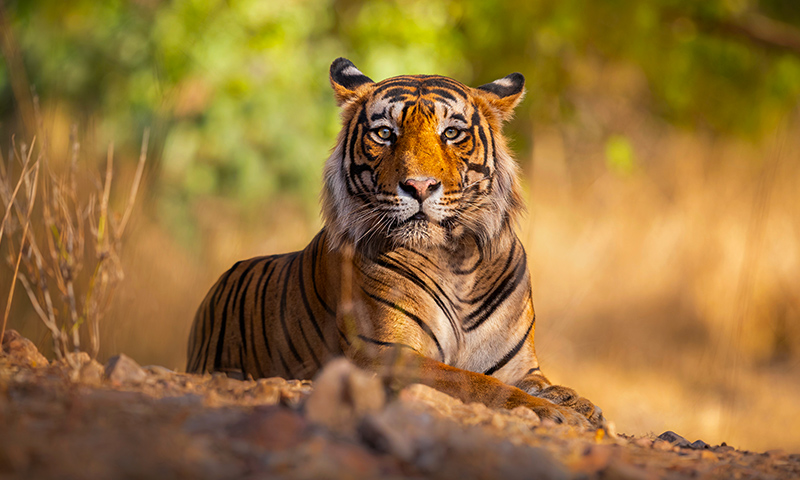
Jim Corbett National Park, Uttarakhand. India’s oldest park, notified 1936. The Dhikala grasslands along the Ramganga hold one of the densest tiger populations in the country.
Rajaji Tiger Reserve, Uttarakhand. Elephant country from Haridwar to Dehradun. The Chilla and Motichur zones are an easy add on to a Rishikesh trip.
Nanda Devi and Valley of Flowers National Parks, Uttarakhand. A UNESCO listed pair in Chamoli. The valley blooms July to early September, unusual timing for an Indian park.
Great Himalayan National Park, Himachal Pradesh. Inscribed by UNESCO in 2014. Access from Kullu is on foot only, which keeps visitor numbers genuinely low.
Pin Valley National Park, Himachal Pradesh. Cold desert habitat in Spiti above 3,500 metres, with winter snow leopard tracking based out of Kibber and Mudh.
Hemis National Park, Ladakh. The largest national park in the country by area and the most dependable snow leopard destination between January and March.
Dachigam National Park, Jammu and Kashmir. Barely 22 km from Srinagar, and the last stronghold of the hangul, or Kashmir stag, found nowhere else.
Dudhwa Tiger Reserve, Uttar Pradesh. Terai sal forest and swamp grassland in Lakhimpur Kheri, where tigers, swamp deer and reintroduced rhinos share one floodplain.
Pilibhit Tiger Reserve, Uttar Pradesh. Internationally recognised for doubling its tiger numbers. Narrow forest strips along the Sharda canal make sightings unusually close.
Ranthambhore National Park, Rajasthan. About 130 km from Jaipur. Dry deciduous forest, lakes and a tenth century fort produce India’s most photographed tigers.
Sariska Tiger Reserve, Rajasthan. Two hours from Alwar, and the first reserve anywhere repopulated with relocated tigers after a complete local extinction.
Western India
Gujarat and western Rajasthan are the strongest argument against treating a wildlife trip as a tiger trip. Lions, wild ass, bustards, coral reefs and blackbuck grassland sit within a single week of driving.
Keoladeo National Park, Bharatpur, Rajasthan. A UNESCO listed wetland covered best by cycle rickshaw. Waterbird numbers peak between November and February.
Desert National Park, Rajasthan. Dunes and sewan grassland near Jaisalmer, holding one of the last viable populations of the great Indian bustard.
Gir National Park and Wildlife Sanctuary, Gujarat. The only place on earth where Asiatic lions live wild. Safaris run from Sasan Gir, closed mid June to mid October.
Blackbuck National Park, Velavadar, Gujarat. Flat grassland near Bhavnagar with blackbuck herds, resident wolves and one of Asia’s largest harrier roosts each winter.
Wild Ass Sanctuary, Little Rann of Kutch, Gujarat. Salt flats supporting the world’s only surviving population of Indian wild ass, with flamingos in the adjoining creeks.
Marine National Park, Gulf of Kachchh, Gujarat. India’s first marine national park. Coral, octopus and sea anemones are viewed on foot at low tide off Jamnagar.
Bhimashankar Wildlife Sanctuary, Maharashtra. Western Ghats forest around a Jyotirlinga temple, protecting the Indian giant squirrel, the state animal of Maharashtra.
Mhadei Wildlife Sanctuary, Goa. Goa’s tiger reserve, in the Sattari hills near Valpoi. Known more for hornbills, king cobras and monsoon birding than big cats.
Central India: The Tiger Heartland
Madhya Pradesh, Maharashtra and Chhattisgarh hold the highest concentration of tiger reserves in India, close enough together to string three parks into one itinerary without long travel days.
Kanha Tiger Reserve, Madhya Pradesh. Sal forest broken by open maidans. The hard ground barasingha was brought back here from fewer than a hundred animals.
Bandhavgarh Tiger Reserve, Madhya Pradesh. Among the highest tiger densities in Asia. The Tala zone meadows and 39 rock cut caves sit inside the park boundary.
Pench Tiger Reserve, Madhya Pradesh and Maharashtra. Teak forest along the Pench river that gave Rudyard Kipling the setting for The Jungle Book. Strong on wild dog.
Satpura Tiger Reserve, Madhya Pradesh. One of very few Indian reserves permitting walking safaris, canoeing on the Denwa and regulated night drives in the buffer.
Panna Tiger Reserve, Madhya Pradesh. A textbook recovery. Tigers were reintroduced after 2009, and the Ken river gorge adds gharial and boat safaris.
Madhav Tiger Reserve, Madhya Pradesh. Notified in March 2025 as India’s 58th tiger reserve, near Shivpuri, reconnecting Ranthambhore with the central Indian corridor.
Tadoba Andhari Tiger Reserve, Maharashtra. The state’s oldest and largest park, near Chandrapur. Buffer zones here often outperform the core and cost less.
Melghat Tiger Reserve, Maharashtra. One of the original nine reserves declared under Project Tiger in 1973, in the rugged Satpura hills above Amravati.
Indravati Tiger Reserve, Chhattisgarh. Home to the state animal, the wild buffalo. Tourism access stays restricted, so confirm current permissions before planning.
Kanger Valley National Park, Chhattisgarh. Limestone caves at Kutumsar, the Tirathgarh waterfall and the Bastar hill myna, inside dense biodiverse forest.
South India and the Western Ghats
Sightings in the Ghats take more patience because the canopy is denser, but the biodiversity return is far higher. Endemic primates, hornbills, marine habitat and coffee estate landscapes feature in the same region.
Bandipur Tiger Reserve, Karnataka. Part of the Nilgiri Biosphere Reserve. Night traffic on the highway crossing the park is restricted to protect wildlife.
Nagarhole Tiger Reserve, Karnataka. The Kabini backwaters draw large elephant congregations in summer and produce India’s most consistent black panther sightings.
Bhadra Tiger Reserve, Karnataka. Near Chikmagalur, notable for India’s first fully voluntary relocation of forest villages, which transformed prey density.
Kali Tiger Reserve, Karnataka. The former Dandeli Anshi reserve in Uttara Kannada, strong on hornbills, black panthers and river activities near Dandeli.
Periyar Tiger Reserve, Kerala. Boat safaris across Periyar lake at Thekkady, with elephant herds on the shoreline and guided bamboo rafting for walkers.
Eravikulam National Park, Kerala. Above Munnar at Rajamalai, holding the largest population of Nilgiri tahr. Closes annually for the tahr calving season.
Silent Valley National Park, Kerala. Undisturbed tropical evergreen rainforest in Palakkad, saved from a hydel project, and the best site for lion tailed macaque.
Wayanad Wildlife Sanctuary, Kerala. The Muthanga and Tholpetty ranges link Bandipur and Mudumalai, forming a critical elephant corridor in southern India.
Mudumalai Tiger Reserve, Tamil Nadu. On the Nilgiri slopes below Ooty, contiguous with Bandipur and Wayanad. Dependable elephant and gaur sightings.
Anamalai Tiger Reserve, Tamil Nadu. Reached through the Valparai tea estates, with Topslip as the safari base and lion tailed macaques on the approach road.
Gulf of Mannar Marine National Park, Tamil Nadu. Twenty one islands off Rameswaram and Tuticorin, protecting dugongs, sea grass meadows and healthy coral reefs.
Nagarjunsagar Srisailam Tiger Reserve, Andhra Pradesh and Telangana. The largest tiger reserve in the country, across the Nallamala hills along the Krishna river.
East and Northeast India
The east is where the formats change completely. Mangrove, floodplain grassland, freshwater lake and subtropical rainforest each demand different logistics, and several of these parks are best explored by boat rather than jeep.
Sundarbans National Park, West Bengal. A UNESCO listed mangrove delta explored entirely by boat, where tigers swim between islands and every creek runs tidal.
Simlipal Tiger Reserve, Odisha. The Mayurbhanj highlands, known for pseudo melanistic tigers recorded nowhere else, plus the Barehipani and Joranda waterfalls.
Bhitarkanika National Park, Odisha. Mangrove creeks holding India’s largest saltwater crocodiles, beside the Gahirmatha olive ridley nesting coast.
Palamau Tiger Reserve, Jharkhand. Another of the original 1973 reserves, centred on Betla, with sal forest, elephants and two historic Chero forts.
Valmiki Tiger Reserve, Bihar. In West Champaran along the Gandak, contiguous with Nepal’s Chitwan, and the fastest improving reserve in eastern India.
Kaziranga National Park, Assam. A UNESCO site of 42,996 hectares holding roughly two thirds of the world’s one horned rhinos, with a very high tiger density.
Manas National Park, Assam. UNESCO listed and joined to Bhutan’s Royal Manas. The pygmy hog and golden langur survive here and almost nowhere else.
Namdapha Tiger Reserve, Arunachal Pradesh. The only protected area on record with four big cats: tiger, leopard, clouded leopard and snow leopard.
Keibul Lamjao National Park, Manipur. The world’s only floating national park, on Loktak lake, and the last refuge of the sangai or brow antlered deer.
Best Time to Visit National Parks in India
Seasonality drives sighting odds more than any other factor, and the honest answer depends on what a traveller will tolerate.
October to March. Peak season nationwide. Comfortable temperatures, strong birding, full park access. Book permits and lodges two to three months out for Ranthambhore, Bandhavgarh and Kanha.
April to June. Physically demanding, with central Indian temperatures crossing 45 degrees Celsius, but the best odds for tiger sightings as animals concentrate at shrinking waterholes.
July to September. Most core zones close for the monsoon and breeding season. Buffer zones, Western Ghats sanctuaries, Kabini and the Valley of Flowers stay open and look their best.
Fixed closures. Gir shuts mid June to mid October, Kaziranga generally closes May to October because of Brahmaputra flooding, and Eravikulam closes for Nilgiri tahr calving.
Photographers should plan around light and habitat rather than sighting probability alone, a point covered in detail in our guide to wildlife photography tours in India.
How to Plan a Wildlife Trip That Actually Delivers
Most disappointing safari holidays fail for structural reasons, not bad luck. A few planning decisions change the outcome disproportionately:
Give each park two nights minimum. A single safari is a coin toss. Four safaris across two full days is the realistic floor for a fair chance at a tiger.
Choose the zone, not just the park. Tala in Bandhavgarh, Dhikala in Corbett and Kolara in Tadoba behave like separate destinations, with their own permit quotas and booking windows.
Book permits before flights. Core zone permits at popular reserves open 120 days ahead and sell out within hours during Indian holiday periods.
Pair wilderness with a city. Ranthambhore with Jaipur, Bandhavgarh with Khajuraho, Kaziranga with Guwahati. This keeps the trip viable for mixed groups.
Match physical demand to the group. Boat based Periyar and Sundarbans, or rickshaw based Keoladeo, suit senior travellers far better than long jeep drives on rough tracks.
How individual parks compare on access, comfort and sighting odds is set out in our breakdown of the best wildlife safari experiences across Indian reserves.
Travelling Responsibly Inside Protected Areas
Tourism funds a real share of frontline protection, but only within limits. Stay in the vehicle, keep to marked tracks, avoid crowding a sighting, refuse any driver who offers to break speed or distance rules, and carry out all packaging. Lodges that employ local naturalists and buy from nearby villages keep the economic case for conservation intact.
Building Your Own Route
Fifty sites is a menu, not an itinerary. Most travellers do best with two or three parks in one region, sequenced so travel between them stays under five hours, with the strongest reserve placed last. Season, group fitness and permits decide the rest.
We have been arranging wildlife itineraries across these reserves since 2005: permit management, naturalist led safaris and forest lodges booked ahead of the rush. Share your dates and interests through the Memorable India contact page and we will build a route around the parks that suit your travel window, not just the famous ones.
Frequently Asked Questions
How many tiger reserves are there in India?
India has 58 tiger reserves as of 2026, governed under Project Tiger and administered by the National Tiger Conservation Authority. The most recent addition is Madhav Tiger Reserve in Madhya Pradesh, notified in March 2025. Madhya Pradesh holds the largest number of reserves of any state.
Which national park in India is best for tiger sightings?
Bandhavgarh and Ranthambhore offer the highest sighting probability because of their tiger density and open terrain. Tadoba, Kanha and Pench follow closely. For the best odds at any of them, travel between April and June, when animals gather around limited water sources.
What is the difference between a national park and a wildlife sanctuary in India?
A national park carries stricter protection. Grazing, settlement and forest produce collection are prohibited, and entry is tightly regulated. A wildlife sanctuary permits certain regulated human activities and existing rights, which is why villages, roads or temples sometimes sit within sanctuary boundaries.
Which national parks in India are UNESCO World Heritage Sites?
Kaziranga, Manas, Keoladeo, Sundarbans, Nanda Devi and Valley of Flowers, and Great Himalayan National Park all hold UNESCO World Heritage status. Kaziranga was inscribed in 1985 and covers 42,996 hectares of Brahmaputra floodplain in Assam.
Which Indian national parks stay open during the monsoon?
Yes. Most core safari zones close from July to September, but buffer zones in central India stay open, as do Periyar, Wayanad, Kabini, Silent Valley and the Valley of Flowers. The Western Ghats are at their most spectacular during these months.
How many days do I need for a wildlife safari in India?
Plan a minimum of three nights for a single park, which allows four safaris and one buffer day for weather. A two park circuit needs six to seven nights, and a three park central India route works comfortably in nine to ten nights.
 +919871148514
 info@memorableindia.com