 +919871148514
 info@memorableindia.com
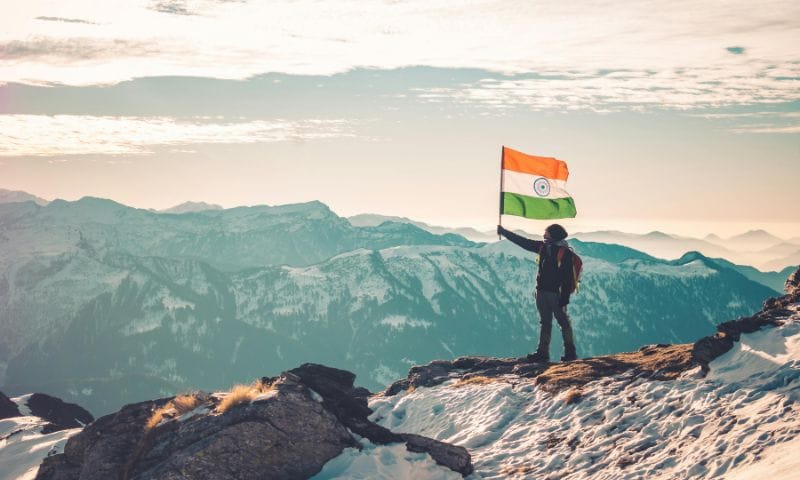
The Indian Himalayas stretch across six states and two union territories, from Jammu and Kashmir in the west to Arunachal Pradesh in the east. Within this arc, altitudes range from forested foothills at 2,000 metres to glaciated passes above 5,000 metres and trekking summits that touch 6,000. That vertical range is what makes high-altitude trekking in India distinct from the Nepal or Bhutan circuits. You can trek through monsoon-fed meadows in Uttarakhand one week and cross a cold desert pass in Ladakh the next, all within a single country and often a single trip.
High-altitude treks, defined here as routes reaching above 3,500 metres, demand more preparation than standard hill walks. Acclimatisation schedules, layered clothing systems, and awareness of Acute Mountain Sickness (AMS) symptoms become non-negotiable. But the rewards scale with the effort: unobstructed views of 7,000 and 8,000-metre peaks, glacial lakes with no footprint of tourism, and mountain communities whose daily lives are shaped by terrain that most visitors experience only briefly.
These 15 routes, organised by region, cover the full spectrum from accessible moderate treks to summit-level expeditions.
Duration: 8 to 9 days | Difficulty: Very Challenging | Max Altitude: 6,153 metres (Summit) | Best Season: Mid-June to September
India’s highest trekking peak, Stok Kangri stands above the Indus Valley at 6,153 metres. The route climbs from Stok Village through moraines and glacial terrain to a base camp at roughly 4,900 metres before a pre-dawn summit push. The summit offers 360-degree views of the Zanskar and Karakoram ranges. Crampons and ice axes are needed for the final ascent, making this a borderline mountaineering expedition rather than a standard trek.
The Stok Kangri trek package includes acclimatisation days in Leh and guided glacier crossings.
Duration: 6 to 8 days | Difficulty: Moderate to Challenging | Max Altitude: 5,260 metres (Kongmaru La) | Best Season: June to September
The most popular multi-day trek in Ladakh, the Markha Valley route winds through Hemis National Park, passing whitewashed Buddhist villages, terraced barley fields, and the imposing Kongmaru La pass at 5,260 metres. The trail offers wildlife sighting opportunities, including blue sheep and, in winter, the snow leopard. Homestays in villages like Skiu and Markha reduce the need for full camping gear.
The Markha Valley trek is suited to trekkers with moderate Himalayan experience.
Duration: 9 days | Difficulty: Challenging | Max Altitude: 3,400 metres | Best Season: January to February
No other trek in India resembles the Chadar. During the peak of winter, the Zanskar River freezes into a thick ice sheet, and trekkers walk directly on the frozen surface through a narrow gorge flanked by vertical rock walls. Temperatures regularly drop to minus 25 to minus 30 degrees Celsius. Night camps are in riverside caves with bonfires. The trek ends at the frozen Nerak waterfall, a cascading wall of blue ice.
This is a winter-only route. The ice sheet is unpredictable, and sections can crack and refreeze overnight. A licensed guide and experienced support team are essential.
Duration: 7 to 8 days | Difficulty: Challenging | Max Altitude: 5,029 metres (Roopkund Lake) | Best Season: May to June, September to October
Roopkund, the “Skeleton Lake,” sits in a glacial hollow at 5,029 metres in the Garhwal Himalayas. The human skeletal remains visible at the lake’s edge have been dated to the 9th century and continue to intrigue researchers. The trail to the lake passes through the expansive alpine meadows of Bedni Bugyal and Ali Bugyal, two of the most photographed high-altitude grasslands in India, before climbing steeply through snow to the lake.
Trekkers drawn to Uttarakhand’s most demanding routes can explore more options in the most challenging treks in India guide.
Duration: 6 to 7 days | Difficulty: Moderate to Challenging | Max Altitude: 4,590 metres (Summit) | Best Season: March to May, September to November
Pangarchulla is a summit trek in the Garhwal region that rewards with direct views of Nanda Devi (7,816 metres), Dronagiri, Chaukhamba, and Hathi Ghodi Parvat. The route starts from Joshimath and ascends through Dhak Village and Khullara campsite before the final push to the peak. The summit day involves a steep snow climb that requires crampon use in early season.
This is an increasingly popular option for trekkers who want a summit experience at a more accessible altitude than Stok Kangri.
Duration: 5 to 6 days | Difficulty: Moderate | Max Altitude: 4,264 metres (Kuari Pass) | Best Season: March to May, September to November
Originally surveyed by Lord Curzon in the early 20th century, the Kuari Pass trail in the Garhwal Himalayas offers some of the most accessible high-altitude panoramas in India. The pass provides views of Nanda Devi, Kamet (7,756 metres), Dronagiri, and Trishul in a single sweep. The trail passes through oak and rhododendron forests, alpine meadows at Gorson Bugyal, and remote Garhwali villages.
First-time Himalayan trekkers can compare this with other accessible routes in the beginner Himalayan trails guide.
Duration: 5 to 6 days | Difficulty: Easy to Moderate | Max Altitude: 3,810 metres (Summit) | Best Season: December to April (winter trek)
India’s most popular winter trek, Kedarkantha is located in the Govind Wildlife Sanctuary in the Tons Valley. The trail from Sankri Village climbs through snow-laden pine forests, emerges into open meadows at Juda Ka Talab, and ascends to a summit with views of Swargarohini, Bandarpoonch, and the Yamuna Valley. The summit day is manageable even for trekkers with limited experience, and the campsite at Juda Ka Talab beside a frozen lake is one of the most atmospheric in Indian trekking.
Duration: 10 to 12 days | Difficulty: Very Challenging | Max Altitude: 5,319 metres (Pin Parvati Pass) | Best Season: July to September
This trans-Himalayan crossing connects the lush Parvati Valley in Kullu with the arid Pin Valley in Spiti, traversing one of the most dramatic ecological transitions in the Indian Himalayas. The trail climbs from Barsheni through hot springs at Kheerganga, glacial moraines, and a challenging pass at 5,319 metres before descending into the stark Buddhist landscape of Spiti.
Snow cover, crevasses, and unpredictable weather make this one of the most demanding treks in India. Prior high-altitude experience above 4,500 metres is strongly recommended.
Duration: 4 to 5 days | Difficulty: Moderate | Max Altitude: 4,270 metres (Hampta Pass) | Best Season: June to September
The Hampta Pass trail is one of the shortest high-altitude crossings in Himachal Pradesh, connecting the green Kullu Valley with the barren Lahaul Valley in under five days. The pass itself sits at 4,270 metres, and the contrast between the two sides is stark: dense birch and rhododendron forests on the Kullu face give way to a dry, rocky descent toward Chandratal Lake on the Lahaul side.
Chandratal, a crescent-shaped glacial lake at 4,300 metres, is typically added as a day extension. This trek suits trekkers looking for a high-altitude experience within a compact timeframe.
Duration: 7 to 8 days | Difficulty: Moderate to Challenging | Max Altitude: 4,650 metres (Rupin Pass) | Best Season: May to June, September to October
The Rupin Pass trail connects Dhaula in Himachal Pradesh with Dodra in Uttarakhand, crossing a state boundary at altitude. The highlight is the Rupin waterfall visible from the pass itself, a cascading flow set against snow slopes. The route passes through terraced villages, dense forests, and high meadows, offering one of the most diverse landscape sequences on any Indian trek.
Duration: 7 days | Difficulty: Moderate to Challenging | Max Altitude: 4,572 metres (Buran Ghati Pass) | Best Season: May to June, September to October
Buran Ghati connects Shimla’s Pabbar Valley with the Baspa Valley in Kinnaur, crossing a pass that features a steep snow wall on the descent. The route passes through Barua village, Dayara meadows (distinct from Uttarakhand’s Dayara Bugyal), and the frozen Chandranahan Lake before the technical pass crossing. The snow wall descent typically requires a rope setup, making this one of the more technically involved treks in Himachal.
Duration: 7 to 8 days | Difficulty: Moderate | Max Altitude: 4,200 metres (Gadsar Pass) | Best Season: July to September
Seven alpine lakes in seven days. The Kashmir Great Lakes trail passes through Vishansar, Kishansar, Gadsar, Satsar, and Gangabal, each lake set in a different glacial valley with its own colour and character. The route crosses three passes above 4,000 metres and traverses some of the finest alpine meadows in the western Himalayas.
The trail starts from Sonamarg (accessible by road from Srinagar) and ends at Naranag. July to September is the only trekking window, as snow closes the passes for the rest of the year.
Duration: 7 to 9 days | Difficulty: Moderate | Max Altitude: 3,570 metres (Gangabal Lake) | Best Season: June to September
Gangabal sits at the base of Mount Haramukh (5,380 metres) and is the largest alpine lake in Kashmir. The trek from Sonamarg passes through Nichinai Pass, Vishansar and Kishansar lakes, and the Gadsar valley before reaching Gangabal. The trail overlaps with parts of the Great Lakes route but continues to a less-visited corner where Nundkol Lake sits adjacent to Gangabal.
The Gangabal Lake trekking tour package includes guided logistics from Srinagar.
Duration: 10 to 11 days | Difficulty: Challenging | Max Altitude: 4,940 metres (Goechala Pass) | Best Season: March to May, October to November
The Goechala trek in western Sikkim brings you face-to-face with Kanchenjunga (8,586 metres), the world’s third-highest peak. The route starts from Yuksom, the first capital of Sikkim, and passes through the Kanchenjunga National Park. The trail climbs through dense rhododendron forests, past Samiti Lake, and up to the Goechala viewpoint where the southeast face of Kanchenjunga fills the horizon at sunrise.
Spring brings rhododendron blooms that colour the lower trail sections in vivid reds and pinks. A Sikkim trekking permit is required, obtainable through the Tourism Department in Gangtok.
Duration: 7 days | Difficulty: Moderate | Max Altitude: 3,556 metres (Har Ki Dun Valley) | Best Season: April to June, September to November
Har Ki Dun, meaning “Valley of Gods,” is a cradle-shaped valley in the Govind Pashu Vihar National Park in Uttarakhand’s Tons Valley. The trek from Taluka follows the Supin River through ancient villages like Osla and Seema, where traditional Kinnori-style timber architecture has survived for centuries. The valley floor offers views of Swargarohini (6,252 metres), Hata Peak, and Black Peak.
This trek connects thematically with routes in the spiritual trekking guide for the Himalayas, given its mythological associations with the Mahabharata.
Above 3,000 metres, never increase sleeping altitude by more than 500 metres per day. Build rest days into every itinerary. In Ladakh, spend at least two days in Leh (3,500 metres) before starting any trek. Carry Diamox as a preventive measure after consulting a doctor, and learn to recognise AMS symptoms: headache, nausea, dizziness, and loss of appetite. Descend immediately if symptoms worsen.
Uttarakhand and Himachal treks are best from May to June and September to October. Kashmir treks open from July to September. Ladakh treks run from June to September, with the Chadar Trek limited to January and February. Sikkim has a spring window (March to May) and an autumn window (October to November). Winter treks like Kedarkantha are best from December to March.
Ladakh treks in the Nubra, Pangong, or Changthang regions require an Inner Line Permit (ILP). Kashmir treks do not require special permits beyond standard registration. Sikkim treks in Kanchenjunga National Park require a Sikkim trekking permit. The Chadar Trek and Pin Parvati Pass require registration with the local administration.
Layered clothing, a four-season sleeping bag rated to minus 10 degrees Celsius, waterproof trekking boots, gaiters, trekking poles, sun protection (SPF 50+), and a comprehensive first-aid kit. For a detailed gear checklist, the Himalayan packing guide covers essentials by category.
India’s high-altitude trekking routes are not interchangeable. A frozen river walk in Zanskar shares nothing with a rhododendron-lined ascent in Sikkim beyond the common demand for preparation, respect for altitude, and a willingness to move at the mountain’s pace. Choosing the right trek means matching your fitness, experience, and interests to the terrain and season.
Memorable India’s trekking specialists can build a guided itinerary around any of these 15 routes, handling permits, logistics, equipment, and local guides. Get in touch to start planning your trek.
Stok Kangri in Ladakh, standing at 6,153 metres, is the highest trekking peak in India that does not require a formal mountaineering expedition permit. The summit push involves glacier travel and crampon use, but no technical rock or ice climbing. The trek typically takes eight to nine days including acclimatisation.
The Kedarkantha Trek in Uttarakhand is the most accessible high-altitude trek in India, reaching 3,810 metres over five to six days. It is well-marked, has established campsites, and is manageable for trekkers with moderate fitness. The Kuari Pass Trek is another strong option, reaching 4,264 metres with a gentle gradient.
The best window depends on the region. Uttarakhand and Himachal Pradesh are optimal from May to June and September to October. Ladakh opens from June to September. Kashmir treks run from July to September. Sikkim is best in spring (March to May) and autumn (October to November). Winter treks like Kedarkantha and Chadar have their own dedicated seasons.
Guides are strongly recommended for all treks above 4,000 metres and essential for technical routes like Stok Kangri, Pin Parvati Pass, and the Chadar Trek. On well-established routes like Kedarkantha and Hampta Pass, experienced trekkers with GPS navigation can manage independently, though a guide improves safety and logistics.
For moderate treks (Kuari Pass, Hampta Pass, Kedarkantha), you should be able to walk six to eight hours on hilly terrain with a daypack. Start cardiovascular training four to six weeks before departure. For challenging and very challenging treks (Roopkund, Goechala, Stok Kangri), prior trekking experience above 4,000 metres is recommended, along with at least eight weeks of dedicated fitness preparation including stair climbing, running, and loaded hiking.
Permit requirements vary by state and region. Ladakh treks in restricted zones (Nubra, Pangong, Changthang) need an Inner Line Permit obtainable from the DC Office in Leh. Sikkim treks in Kanchenjunga National Park require a Sikkim trekking permit from the Tourism Department. Most Uttarakhand and Himachal treks within national parks require entry fees but no special permits. Your trekking operator will typically handle all permit logistics.
15 Amazing Temple Fairs in India: A Traveller’s Guide to Faith, Colour and Living Tradition
30 Sep 2026
13 Best Places to Explore in the Youngest State of Telangana
29 Sep 2026
12 Less Explored Destinations in Maharashtra Worth Adding to Your Travel List
28 Sep 2026
11 Must-Visit Museums in India for Wildlife Lovers
27 Sep 2026
11 Best Places in India to Celebrate Christmas
26 Sep 2026


