 +919871148514
 info@memorableindia.com
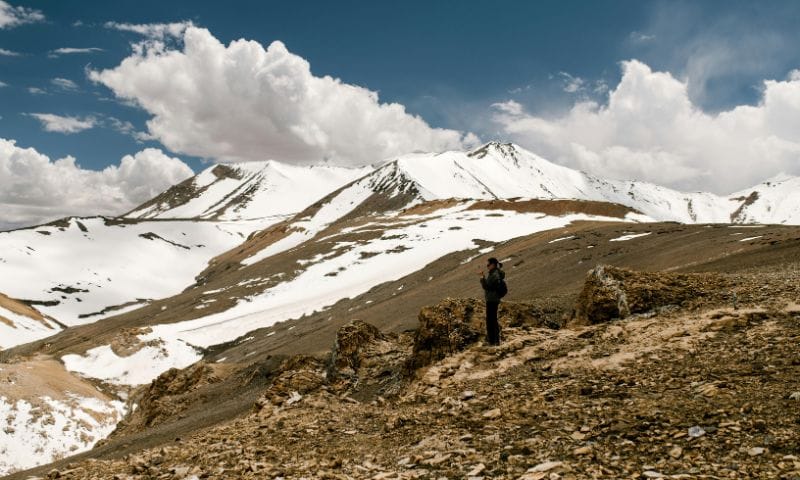
At 3,500 metres, the air in Leh is thin enough to slow your breathing before you even lace up your trekking boots. That altitude keeps casual visitors on sightseeing circuits and draws serious trekkers toward multi-week expeditions across the Zanskar range or Changthang plateau. But between those two extremes sits a third category of traveller: someone with five or six days to spare, reasonable fitness, and a strong desire to walk through Ladakh rather than just drive past it. This guide is for that traveller.
Short treks in Ladakh, ranging from two to six days, cover remarkable ground. They cross passes above 4,000 metres, thread through villages where Indo-Tibetan culture is lived rather than exhibited, and deliver the same high-altitude desert landscapes that define the region. The difference is logistics. Shorter routes require less specialised gear, lighter packing, and less time away from Leh as a base. Several can even be done with homestays instead of tents.
Here are nine trails that deliver Ladakh’s best trekking within a compact timeframe, arranged from the gentlest to the most demanding.
Duration: 3 to 4 days | Difficulty: Easy | Max Altitude: 3,750 metres (Mebtak La) | Best Season: May to October
Known locally as the Baby Trek, the Sham Valley trail is where most first-time trekkers in Ladakh begin. The route starts at Likir, roughly 58 kilometres west of Leh, and passes through Yangthang, Hemis Shukpachen, Ang, and Temisgam. Along the way, you cross three passes: Phobe La (3,580 metres), Tsermangchen La (3,750 metres), and Mebtak La (3,750 metres). None requires technical skill.
What makes this trek stand out is its village-to-village format. Homestays are available in nearly every settlement along the route, so you can walk with a light daypack and eat home-cooked Ladakhi meals each evening. Barley fields, apricot orchards, mani walls, and small monasteries line the trail. The Sham Valley is one of the few trekking routes in Ladakh that remains accessible even in the shoulder season months, since the passes do not accumulate heavy snowpack.
Planning tip: Start early each day. The Sham region gets surprisingly warm by midday, and there is little shade between villages. If you are planning a broader Ladakh itinerary, the Sham Valley trek pairs well with monastery visits in the Indus Valley.
Duration: 2 to 3 days | Difficulty: Easy to Moderate | Max Altitude: 4,855 metres (Stok La) | Best Season: June to September
This is the shortest multi-day trek in Ladakh that still delivers a genuine high-altitude pass crossing. The trail begins at Spituk Monastery, just seven kilometres from Leh, crosses the Indus River, and climbs through Zingchen to the village of Rumbak. From Rumbak, you ascend to Stok La at 4,855 metres before descending to Stok village.
The Rumbak Valley is part of Hemis National Park, and the chances of spotting blue sheep (bharal) on the hillsides are reasonably high. In winter months, this same valley is used for snow leopard tracking expeditions. The Stok Palace Museum at the trek’s end point provides a cultural anchor for the final day.
Planning tip: This trail shares its opening section with the Stok Kangri trek
and the Snow Leopard trek. If you want to test your acclimatisation before committing to a longer route, the Spituk to Stok trail works as a reliable warm-up.
Duration: 3 to 4 days | Difficulty: Moderate | Max Altitude: 3,750 metres (Konze La) | Best Season: June to September
The trail connecting two of Ladakh’s most significant monasteries is among the region’s most rewarding short treks. Lamayuru, 127 kilometres west of Leh, sits within a lunar landscape of eroded clay formations. Alchi, at the trail’s end, houses some of the finest Buddhist wall paintings in the western Himalayas, dating back to the 11th century.
Between the two, the route passes through Wanla and the narrow Ripchar gorge before climbing to Konze La. The terrain shifts from barren moonscape to green riverside valleys and back again, offering a compressed sample of Ladakh’s geographic extremes. The village of Wanla has a small monastery perched above the settlement that is worth a brief detour.
Planning tip: This trek works well as part of a wider road trip that includes the Leh-Srinagar Highway. Combine the trek with a drive through the 15 best places to visit in Ladakh for a comprehensive experience.
Duration: 5 to 6 days | Difficulty: Moderate to Challenging | Max Altitude: 5,260 metres (Kongmaru La) | Best Season: June to September
The Markha Valley is Ladakh’s most popular trek, and the shorter route starting from Chilling reduces the standard itinerary by one or two days compared to the Spituk start point. This variant skips the Ganda La crossing and enters the valley directly via the Zanskar River gorge.
The valley itself runs parallel to the Indus, flanked by the Stok Kangri massif to the north and the Zanskar range to the south. Small settlements like Skiu, Markha, and Hankar appear at intervals, each with whitewashed houses and terraced fields. The high point, Kongmaru La at 5,260 metres, rewards the climb with views of the Karakoram range. The trail passes through Hemis National Park, where wildlife sightings are possible.
Planning tip: The Markha Valley trek is a good stepping stone before attempting summit treks. Carrying a tent is recommended, though homestays are available in the larger villages.
Duration: 4 to 5 days | Difficulty: Moderate | Max Altitude: 4,950 metres (Konze La) | Best Season: June to September
The Ripchar Valley is the quieter neighbour of the Lamayuru-Alchi corridor, and trekkers who venture here find themselves in near-complete solitude. The route typically starts from Lamayuru, drops into the Shillakong gorge, and climbs through the narrow Ripchar Valley past the settlement of Hinju before crossing Konze La and descending to the Zanskar River near Chilling.
This trail appeals to trekkers who want a genuine wilderness experience without the expedition-level commitment of trans-Zanskar routes. The valley floor is lined with willows, and the higher sections pass through scrub-dotted moraines. There are very few, if any, homestay options along this stretch, so full camping gear is essential.
Planning tip: The Ripchar Valley can be linked with the Lamayuru-Alchi route for a week-long itinerary. For trekkers comfortable with self-supported camping, Ladakh’s trekking tours can be customised to include this route.
Duration: 4 to 5 days | Difficulty: Moderate to Challenging | Max Altitude: 5,450 metres (Lasermo La) | Best Season: Mid-July to September
Most visitors reach Nubra Valley by road over Khardung La. This trek takes the old foot route from Phyang, a village 24 kilometres west of Leh, over Lasermo La and down into the Nubra basin. The pass at 5,450 metres is the highest point on any trek in this list, and the altitude demands strong acclimatisation.
The payoff is significant. The descent from Lasermo La opens into the wide Nubra Valley, where sand dunes sit between rocky peaks and double-humped Bactrian camels graze near Hunder village. The contrast between the stark alpine pass and the almost Saharan valley floor makes this trek visually dramatic.
Planning tip: Combine this trek with a visit to Nubra Valley for Diskit Monastery and the Hunder sand dunes. An Inner Line Permit (ILP) is required for the Nubra Valley portion, obtainable from the DC Office in Leh.
Duration: 3 to 4 days | Difficulty: Moderate | Max Altitude: 4,900 metres (Base Camp) | Best Season: June to September
Not every trekker aiming for the Stok Kangri region needs to summit the 6,153-metre peak. The base camp trek is a standalone short trail that offers high-altitude camping, views of the Stok Kangri massif, and an introduction to glacier-adjacent terrain without requiring mountaineering skills or equipment.
The route climbs from Stok Village (accessible by road from Leh in about 30 minutes) through increasingly barren terrain to the base camp at approximately 4,900 metres. The trail passes moraines and seasonal streams, and the base camp itself offers a direct line of sight to the Stok Kangri summit.
Planning tip: Use this as a fitness and acclimatisation test if you are considering a summit attempt later. The Stok Palace Museum in the village is worth visiting before or after the trek.
Duration: 5 to 6 days | Difficulty: Easy to Moderate | Max Altitude: Approximately 4,600 metres (Digar La) | Best Season: June to September
Saboo village, just 7 kilometres from Leh, is the starting point for this underrated traverse into the Shyok Valley. The trail moves through Saboo Phu, crosses Digar La, and descends through Digar village toward Khalsar on the Leh-Panamik road, offering views of both the Stok range and the Karakoram.
The route is culturally rich. You pass through settlements where traditional Ladakhi farming practices continue largely unchanged, and the trek ends in the Nubra Valley corridor. The gradual altitude gain makes it a solid option for trekkers still acclimatising to Ladakh’s elevation.
Planning tip: An ILP is needed for the Nubra Valley section. This trail connects naturally with a visit to Diskit and Turtuk if you continue by road from Khalsar.
Duration: 3 to 4 days | Difficulty: Moderate | Max Altitude: Approximately 4,400 metres | Best Season: June to September
One of the least publicised trails in Ladakh, the Saspotse to Skuru route passes through a narrow river valley southeast of Leh before climbing to a ridge with views of the Indus Valley. The trail is rough and largely unmarked, which limits foot traffic but rewards those who attempt it with genuine isolation and undisturbed scenery.
Village interactions along this route feel less curated than on more popular trails. The terrain alternates between riverside paths, scree slopes, and open ridgelines.
Planning tip: A local guide is strongly recommended, as trail markings are minimal. This is a good option for experienced trekkers who have already completed one of the more established routes and want something off the standard circuit.
Your choice should depend on three factors: available days, acclimatisation status, and comfort with camping.
If you have just arrived in Ladakh and have two to three days, the Sham Valley Trek or Spituk to Stok are the most practical options. Both have manageable altitude gains and strong logistical support. If you have already spent three or four days acclimatising, the Lamayuru to Alchi or Stok Kangri Base Camp treks offer more elevation and solitude without stretching into a full week. The Nubra Valley and Markha Valley treks are best reserved for those with five or more trekking days and proven high-altitude fitness.
Homestay treks (Sham Valley, Spituk to Stok) require less gear and suit solo travellers or small groups. Camping treks (Ripchar Valley, Nubra Valley, Saspotse to Skuru) need full equipment and, ideally, a support crew with mules or porters.
The adventure activities guide for Leh Ladakh covers more options beyond trekking, including river rafting, mountain biking, and camel safaris, for those looking to round out their itinerary.
Spend at least two full days in Leh before starting any trek. Walk slowly around town, stay hydrated, and avoid alcohol. Acute Mountain Sickness (AMS) can affect anyone regardless of fitness level, and pushing through symptoms is dangerous.
Treks passing through Nubra Valley, Pangong, or Changthang require an Inner Line Permit. This can be obtained from the DC Office in Leh or through a registered tour operator. Some treks within Hemis National Park also require entry fees.
The window from mid-June to mid-September is the most reliable. July and August bring occasional rainfall from the Indian monsoon system, which can cause localised flooding on some trails. September offers stable weather and thinner crowds. For broader planning context, the Himalayan trails guide for beginners covers seasonal considerations across multiple Indian trekking regions.
Layered clothing, a reliable down jacket, sun protection (SPF 50+), a reusable water bottle with purification tablets, sturdy trekking boots, trekking poles, and a basic first-aid kit including Diamox (after consulting a doctor). On homestay treks, a 30-litre daypack is sufficient. For camping treks, a 50 to 60-litre pack is the minimum.
If you are ready to plan a trekking trip in Ladakh, Memorable India’s destination specialists can build a custom itinerary around any of these trails, including permits, accommodation, local guides, and airport transfers.
Get in touch with the team to start planning.
The Sham Valley Trek, often called the Baby Trek, is the easiest short trek in Leh Ladakh. It takes three to four days, crosses passes below 3,800 metres, and has homestay accommodation in every village along the route. No prior high-altitude trekking experience is needed, though basic fitness is required.
A guide is not legally required for most short treks in Ladakh, but it is strongly recommended, especially on less-marked trails like Saspotse to Skuru and the Ripchar Valley. On well-trodden routes like Sham Valley and Spituk to Stok, experienced trekkers with GPS navigation can manage independently.
A minimum of two full acclimatisation days in Leh (3,500 metres) is essential before starting any trek. Three days is preferable if your trek crosses passes above 4,500 metres. Rushing acclimatisation is the single most common reason trekkers are forced to abandon their route.
The Markha Valley Trek takes five to six days via the shorter Chilling route, which places it at the upper boundary of short treks in Ladakh. The full route from Spituk takes seven to eight days and is better classified as a medium-duration trek. The Chilling entry shortens the itinerary without sacrificing the valley’s main highlights.
September is widely considered the best month for short treks in Ladakh. Monsoon moisture has receded, skies are clear, passes are open, and tourist numbers have dropped from the July-August peak. June is the earliest reliable month, though snow may linger on passes above 5,000 metres.
The Sham Valley Trek and the Spituk to Stok Trek can both be completed using village homestays, removing the need for tents, sleeping bags, and cooking equipment. Most other short treks, including the Ripchar Valley, Nubra Valley, and Lamayuru to Alchi trails, require full camping gear.
15 Amazing Temple Fairs in India: A Traveller’s Guide to Faith, Colour and Living Tradition
30 Sep 2026
13 Best Places to Explore in the Youngest State of Telangana
29 Sep 2026
12 Less Explored Destinations in Maharashtra Worth Adding to Your Travel List
28 Sep 2026
11 Must-Visit Museums in India for Wildlife Lovers
27 Sep 2026
11 Best Places in India to Celebrate Christmas
26 Sep 2026


